Mercedes-AMG GT 4-Door Coupé Returns as an Electric Performance Flagship
Mercedes-AMG GT 4-Door Coupé enters a new electric era with up to 1,169 hp, axial-flux motors, 600 kW charging and a simulated V8 driving experience.
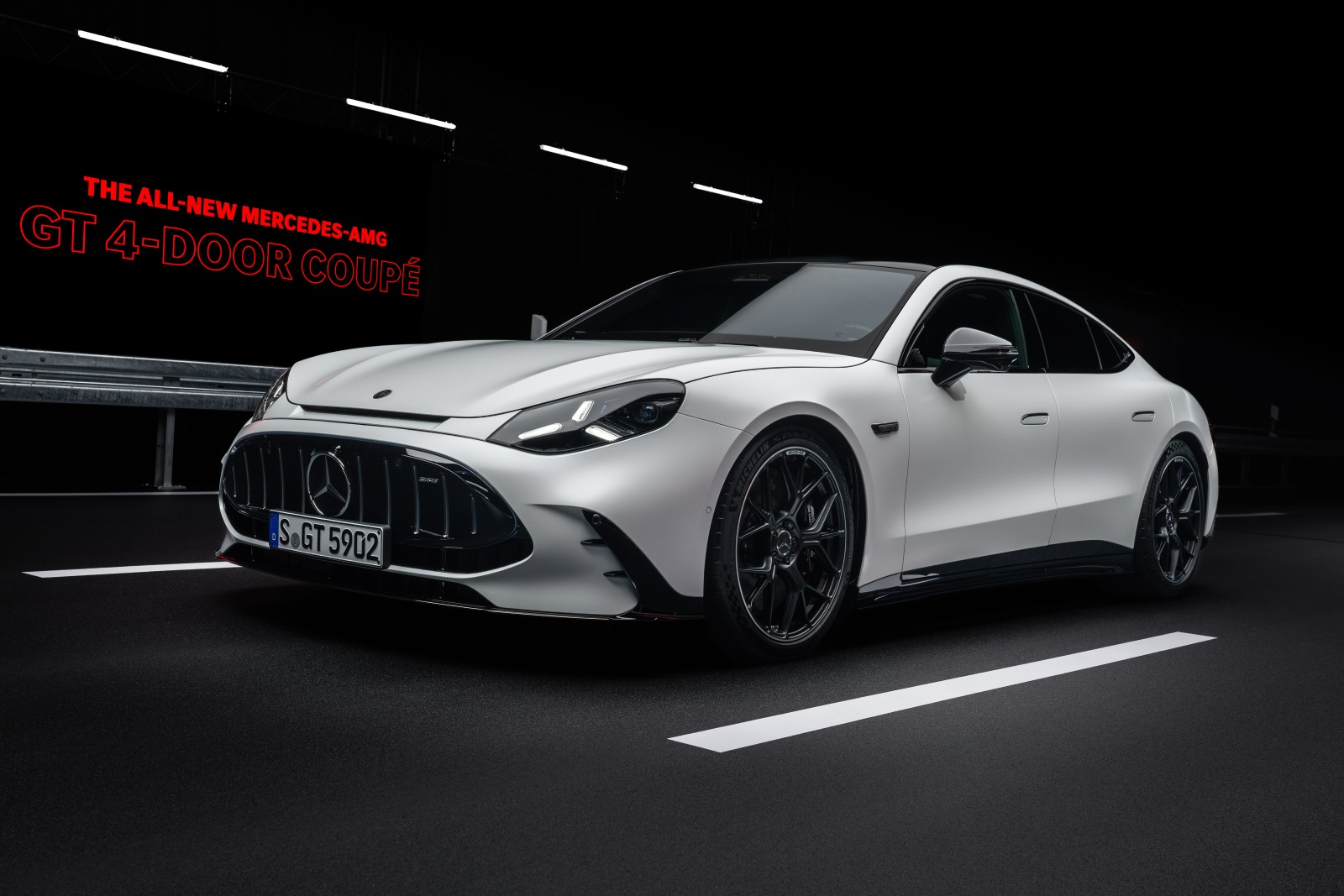
Mercedes-AMG is taking its four-door GT into a completely new era. The new Mercedes-AMG GT 4-Door Coupé is no longer a combustion-powered grand tourer, but a fully electric performance car built on the new AMG.EA architecture. Despite that shift, AMG is clearly trying to preserve the emotional side of its identity: extreme power, aggressive dynamics and even a dedicated V8-style sound and shift experience.
At launch, the lineup includes two versions: the AMG GT 55 4-Door Coupé and the more powerful AMG GT 63 4-Door Coupé. Both use three axial-flux electric motors — two at the rear and one at the front — making this the first series-production EV to use this type of motor layout. The GT 55 produces 816 hp, while the GT 63 reaches a peak output of 1,169 hp.
Performance is extreme even by AMG standards. The GT 63 can accelerate from 0 to 100 km/h in 2.1 seconds and from 0 to 200 km/h in 6.4 seconds. With the optional Driver’s Package, top speed is 300 km/h.
The new motors were developed using technology from YASA, the British electric-motor specialist owned by Mercedes-Benz. Axial-flux motors are far more compact than conventional radial-flux units and allow AMG to deliver high output repeatedly, not just in short bursts. That matters because Mercedes is positioning this car not only as fast, but as capable of sustaining performance over long distances.
The battery follows the same philosophy. Inspired by Formula 1 and the AMG One, it uses an 800-volt system with directly cooled cylindrical cells. Each cell is cooled individually by a non-conductive oil-based coolant, helping the battery maintain stable temperatures during hard driving and fast charging.
Charging performance is one of the headline figures. With suitable infrastructure, the GT 4-Door Coupé can charge at up to 600 kW, adding more than 460 km of WLTP range in 10 minutes. A 10–80 percent charge takes around 11 minutes.
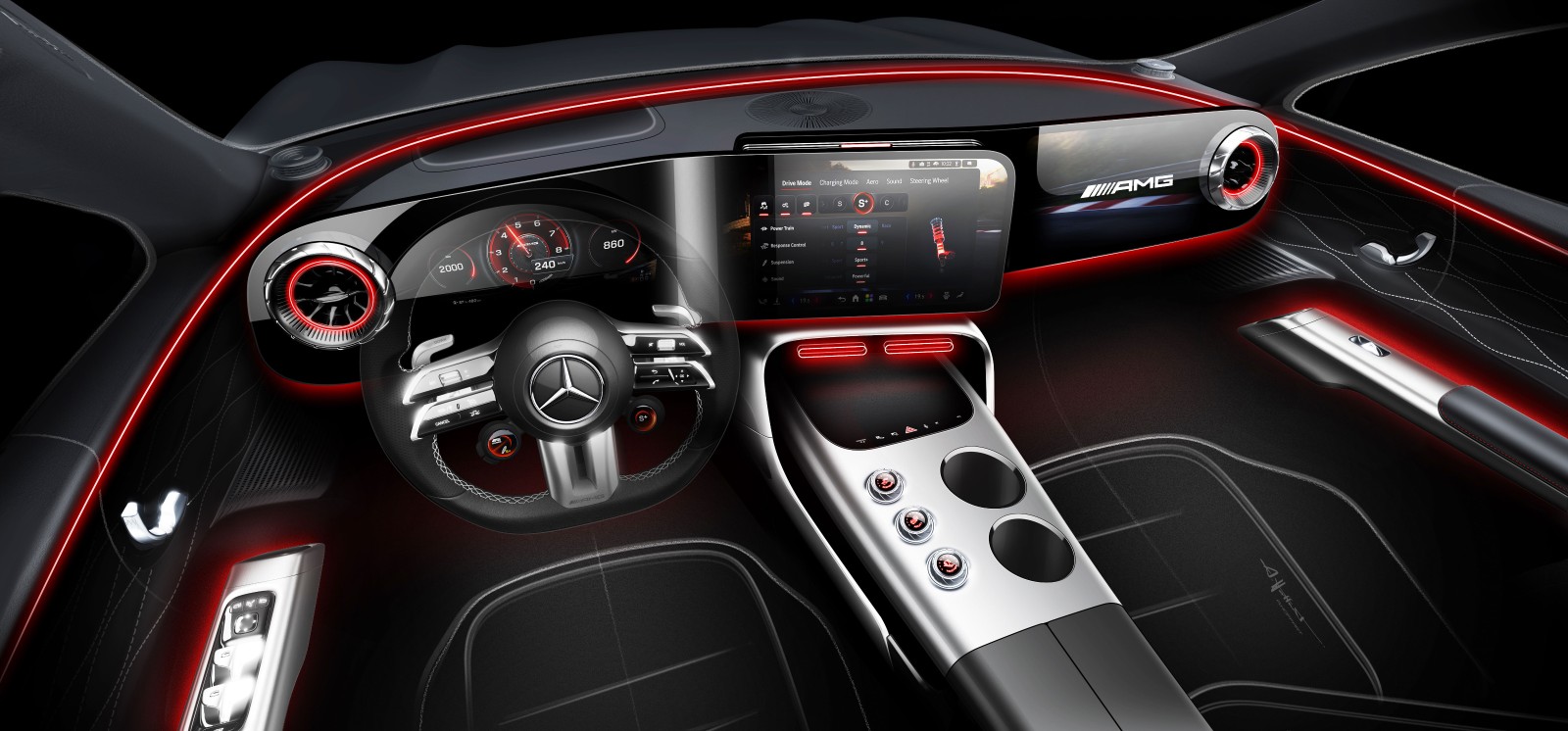
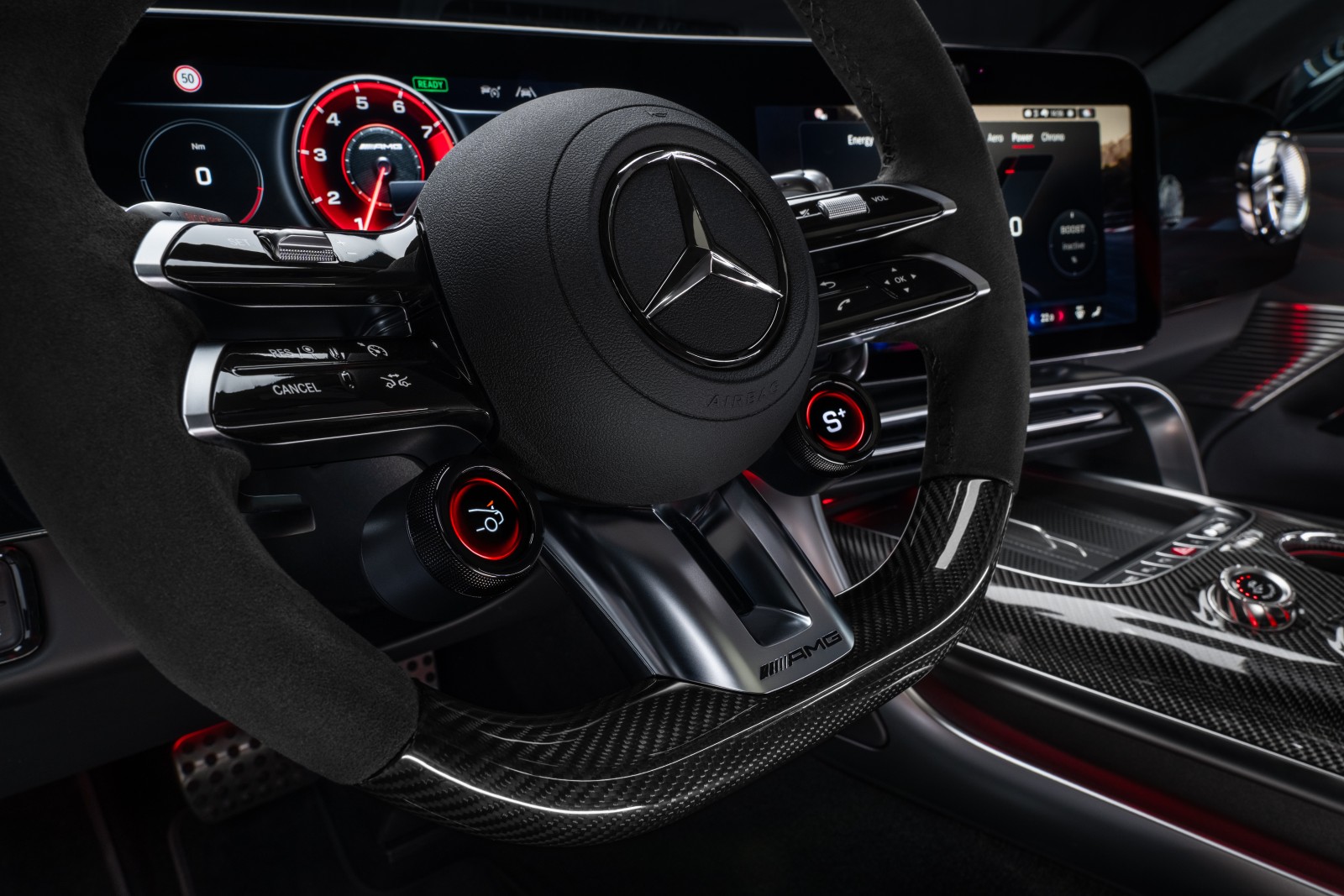
AMG has also tried to solve one of the biggest criticisms of electric performance cars: lack of emotion. In AMGFORCE S+ mode, the car simulates the character of a high-powered AMG V8, including sound, haptic feedback and artificial gearshift interruptions. The system uses more than 1,600 sound files and adapts the experience in real time depending on throttle input, acceleration and driving style.
The chassis is just as advanced. Standard AMG Active Ride Control air suspension uses semi-active roll stabilization instead of conventional anti-roll bars, allowing the car to switch between long-distance comfort and sharp cornering behavior. Rear-wheel steering turns the rear wheels by up to 6 degrees, improving agility at low speeds and stability at higher speeds.
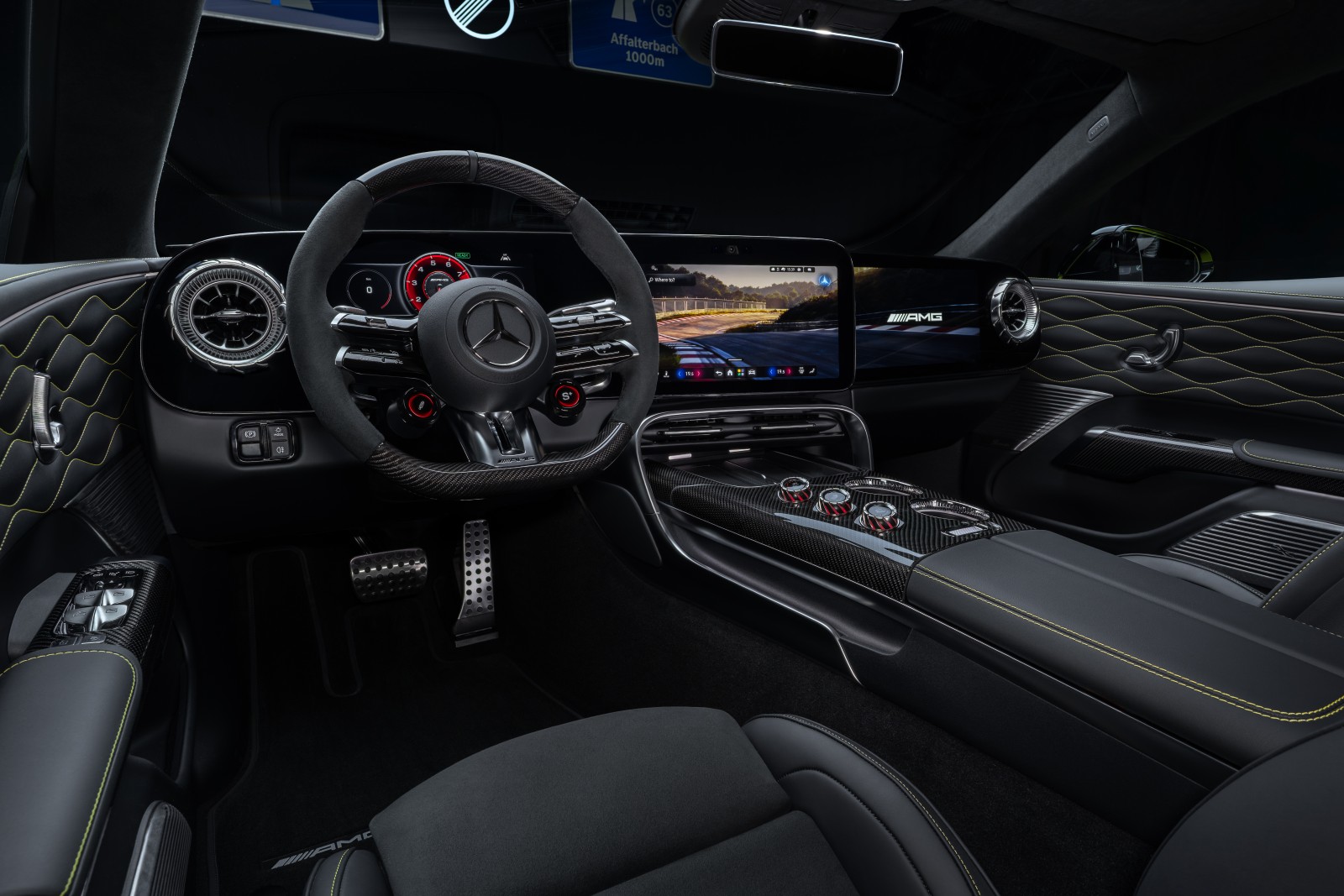
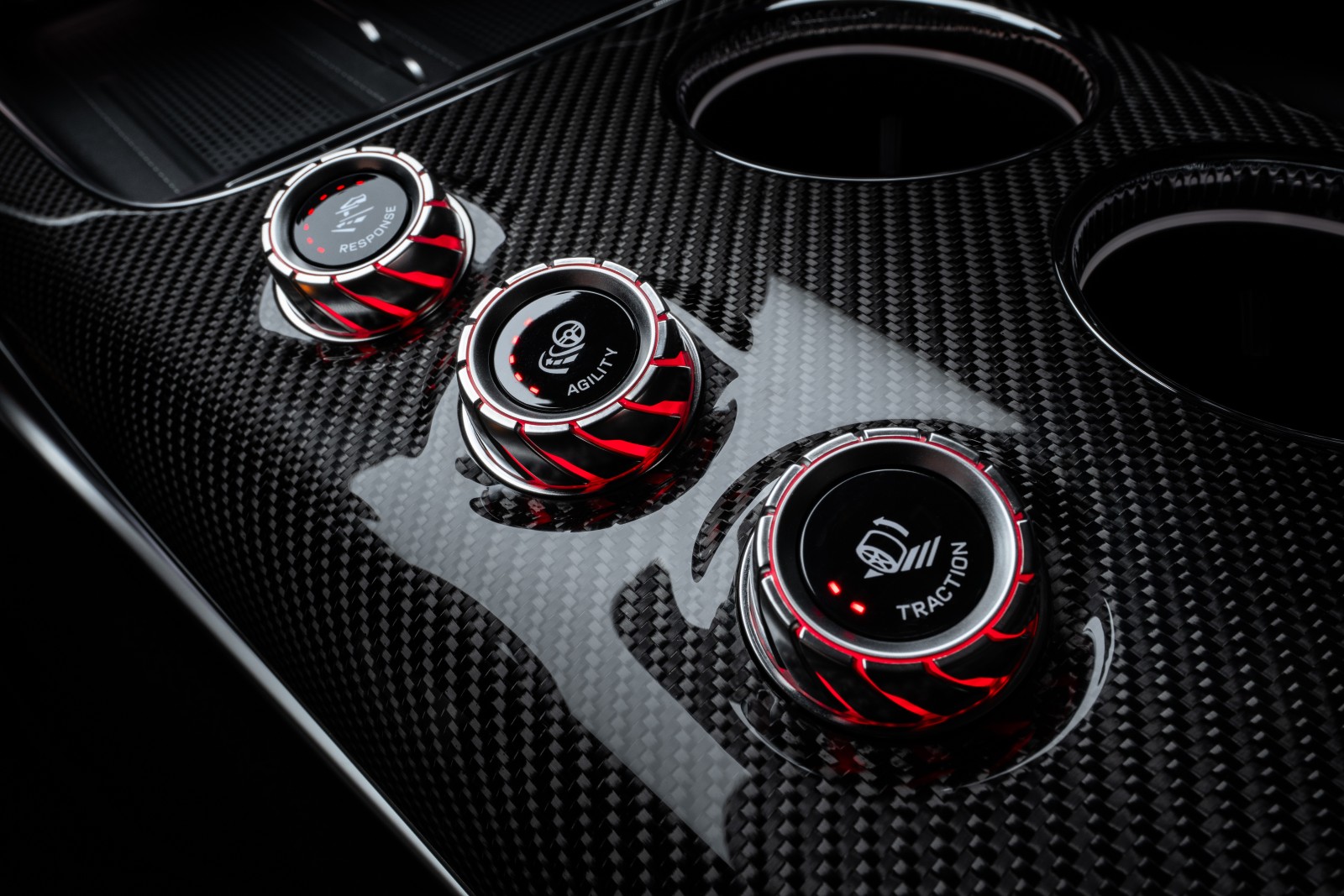
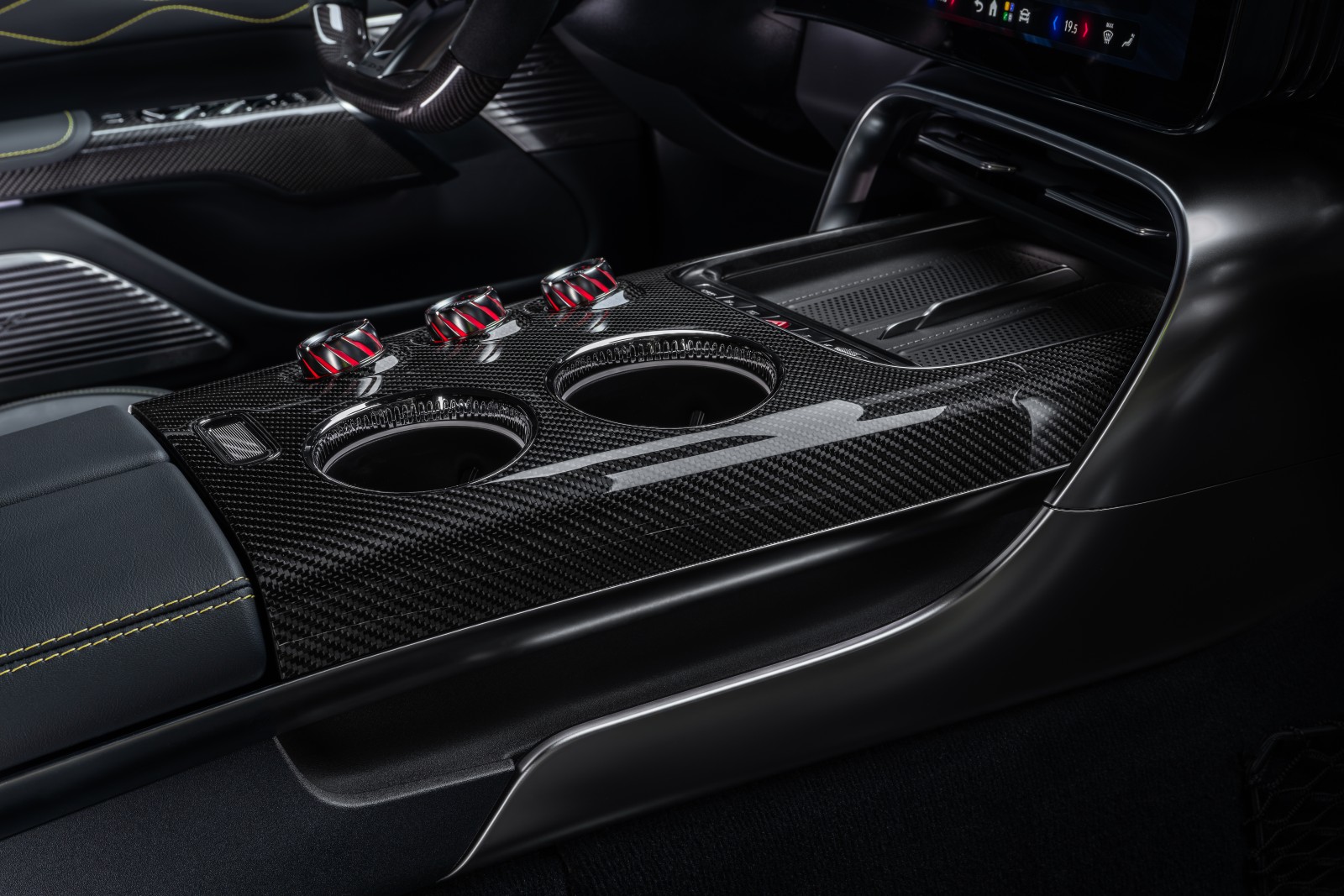
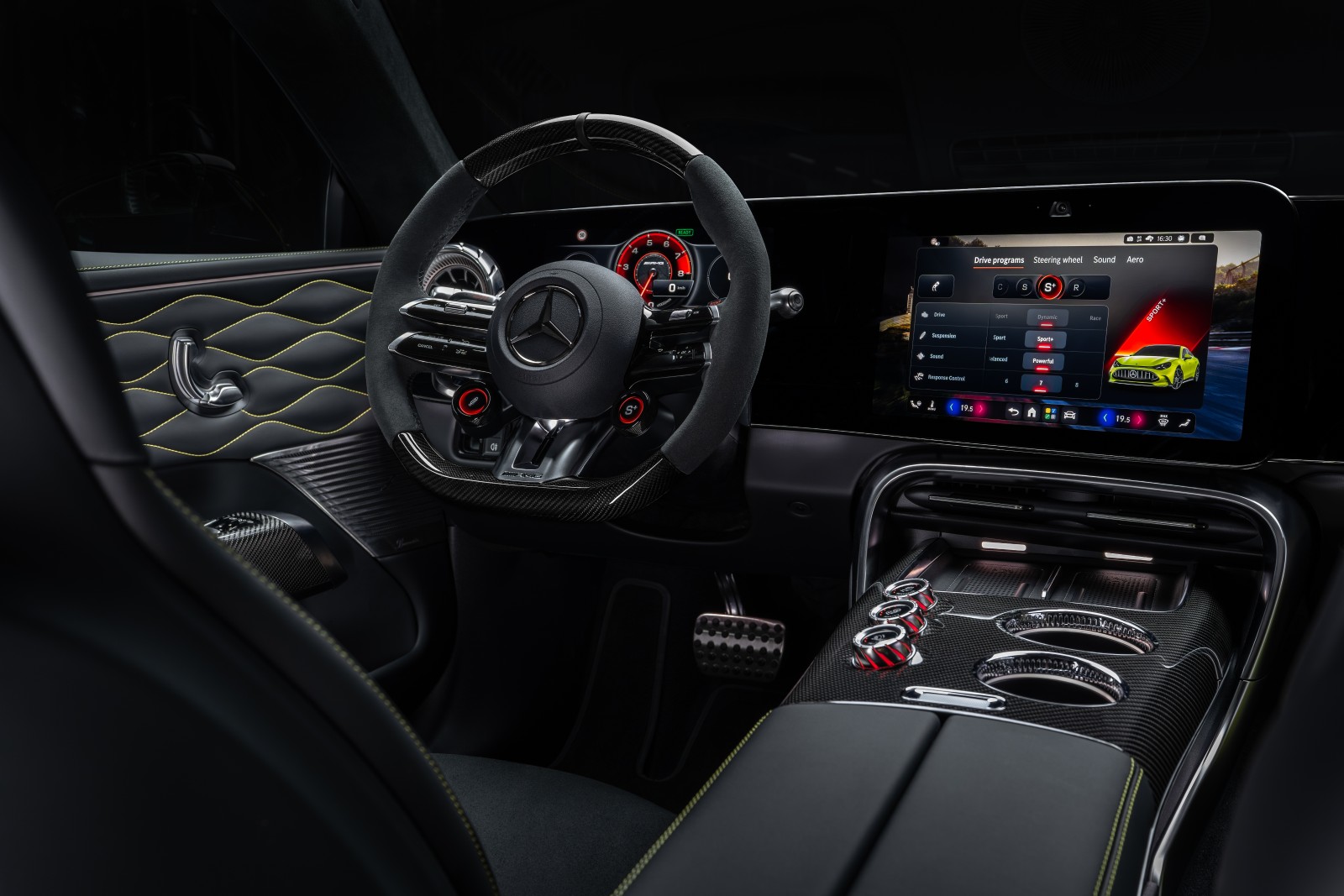
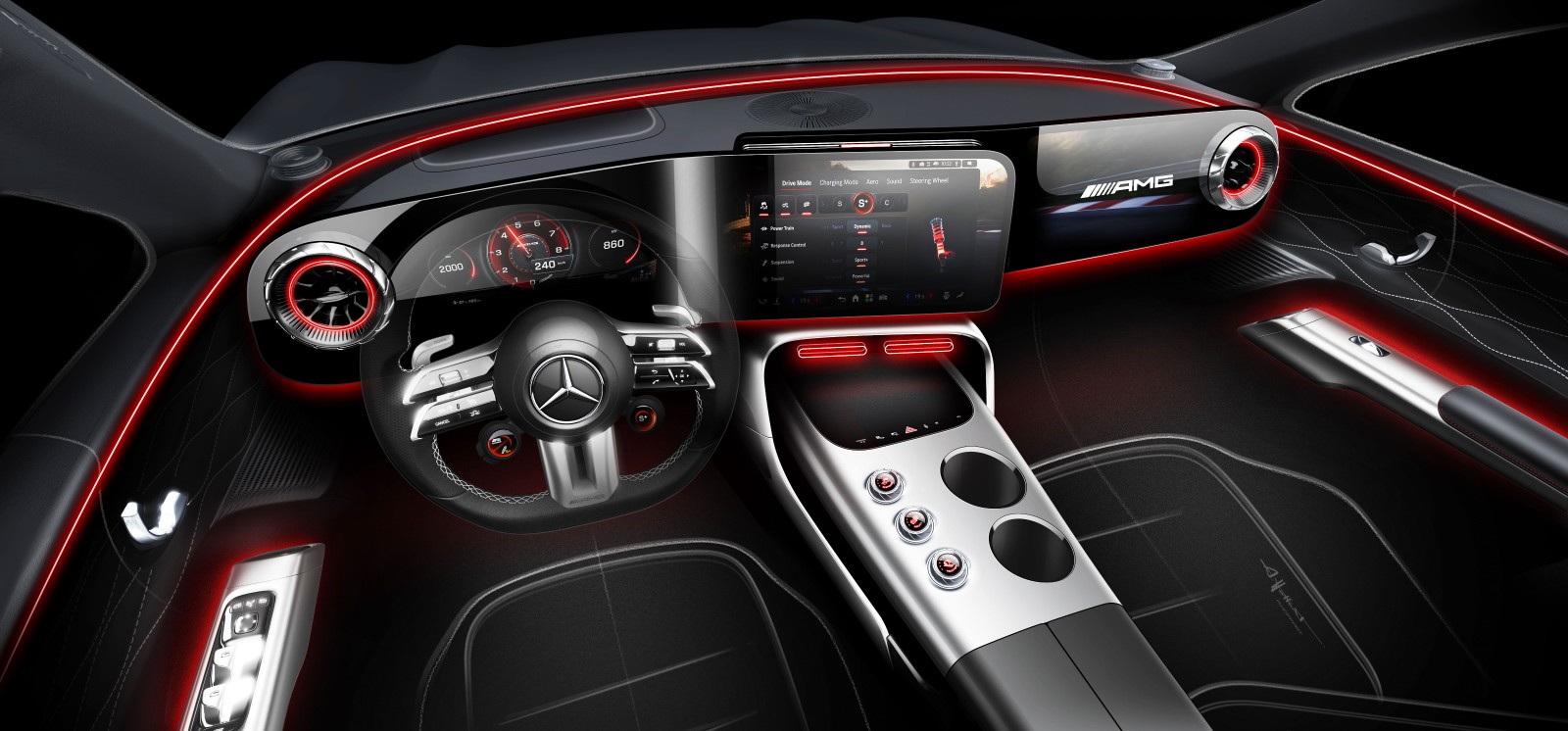
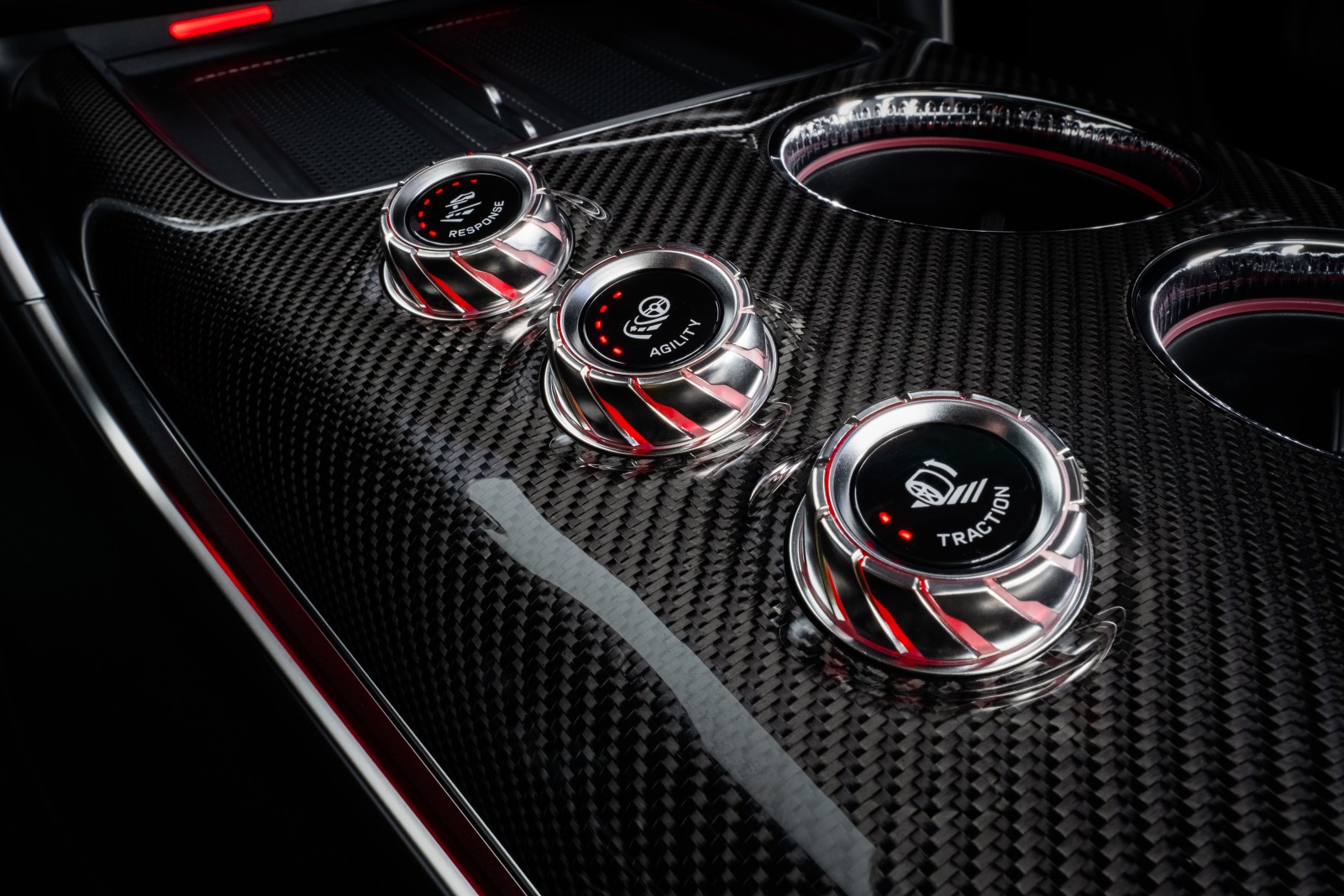
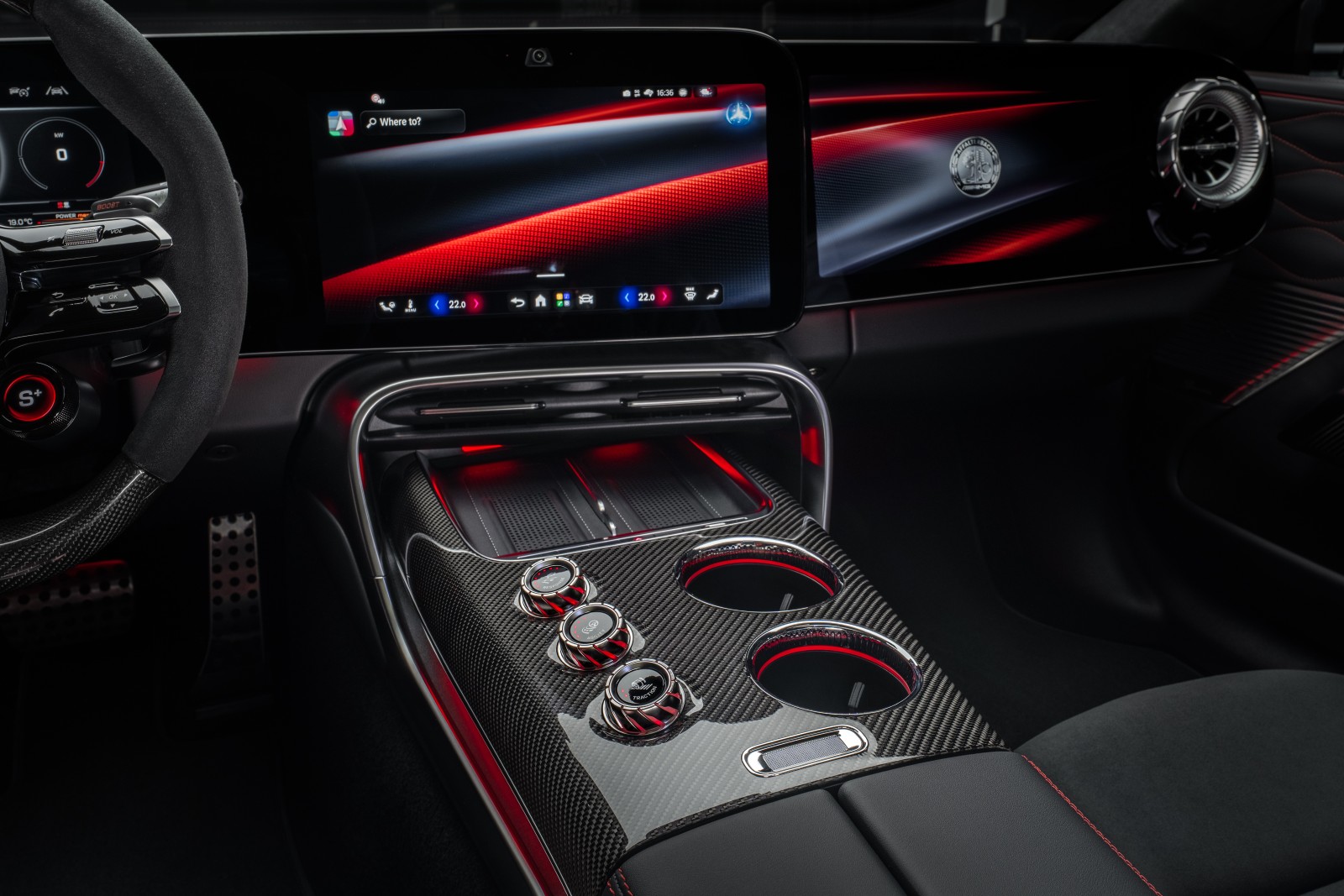
AMG’s new Race Engineer system gives the driver deeper control over the car’s behavior. Three physical rotary controllers on the center console adjust response, agility and traction. This allows the driver to fine-tune how aggressively the powertrain reacts, how the car behaves in corners and how much slip is allowed.
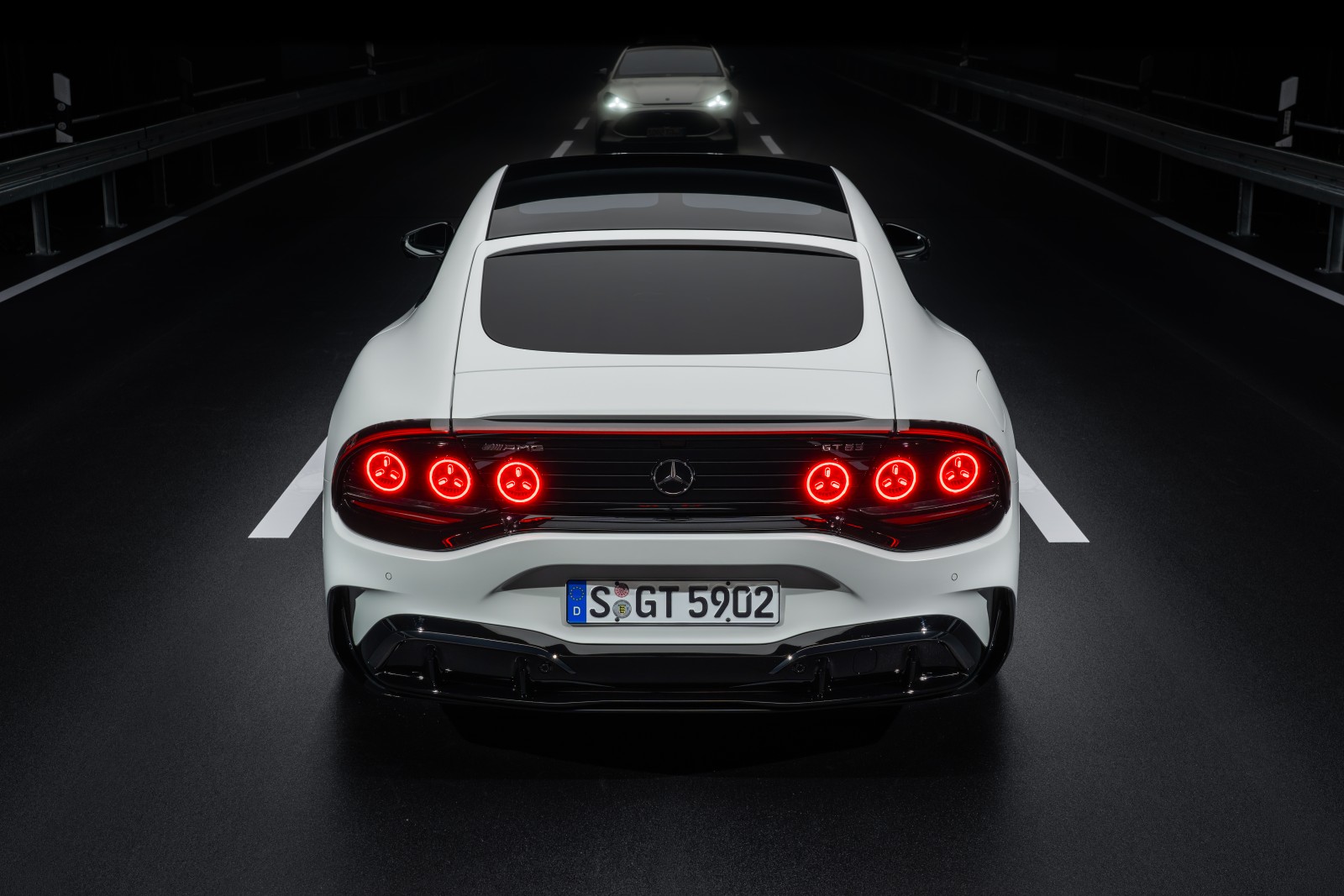
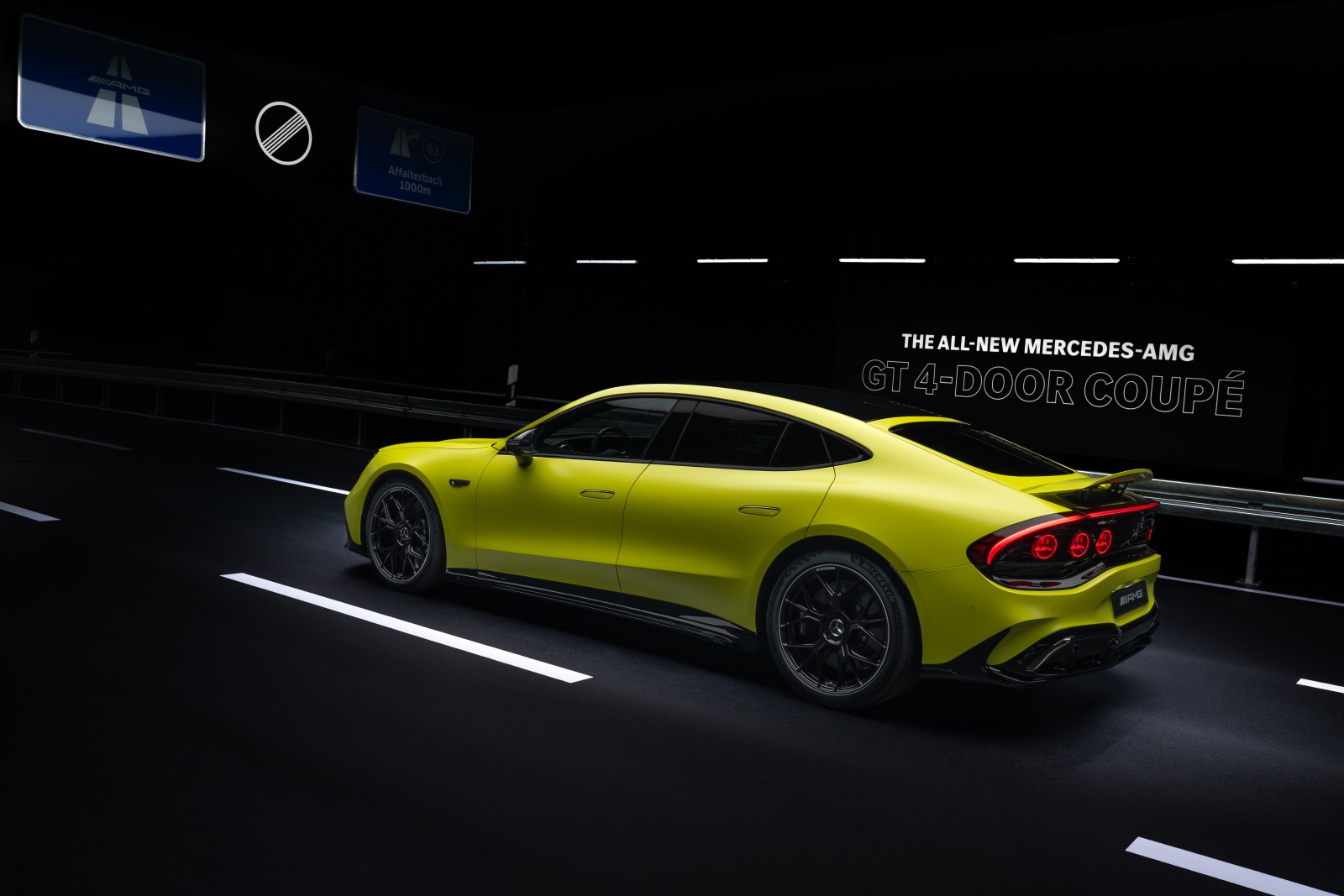
Aerodynamics are active as well. The car uses deployable underbody Venturi elements, an active rear diffuser, an adaptive rear spoiler and active front air panels. Together, these systems adjust cooling, drag and downforce depending on speed and driving style.
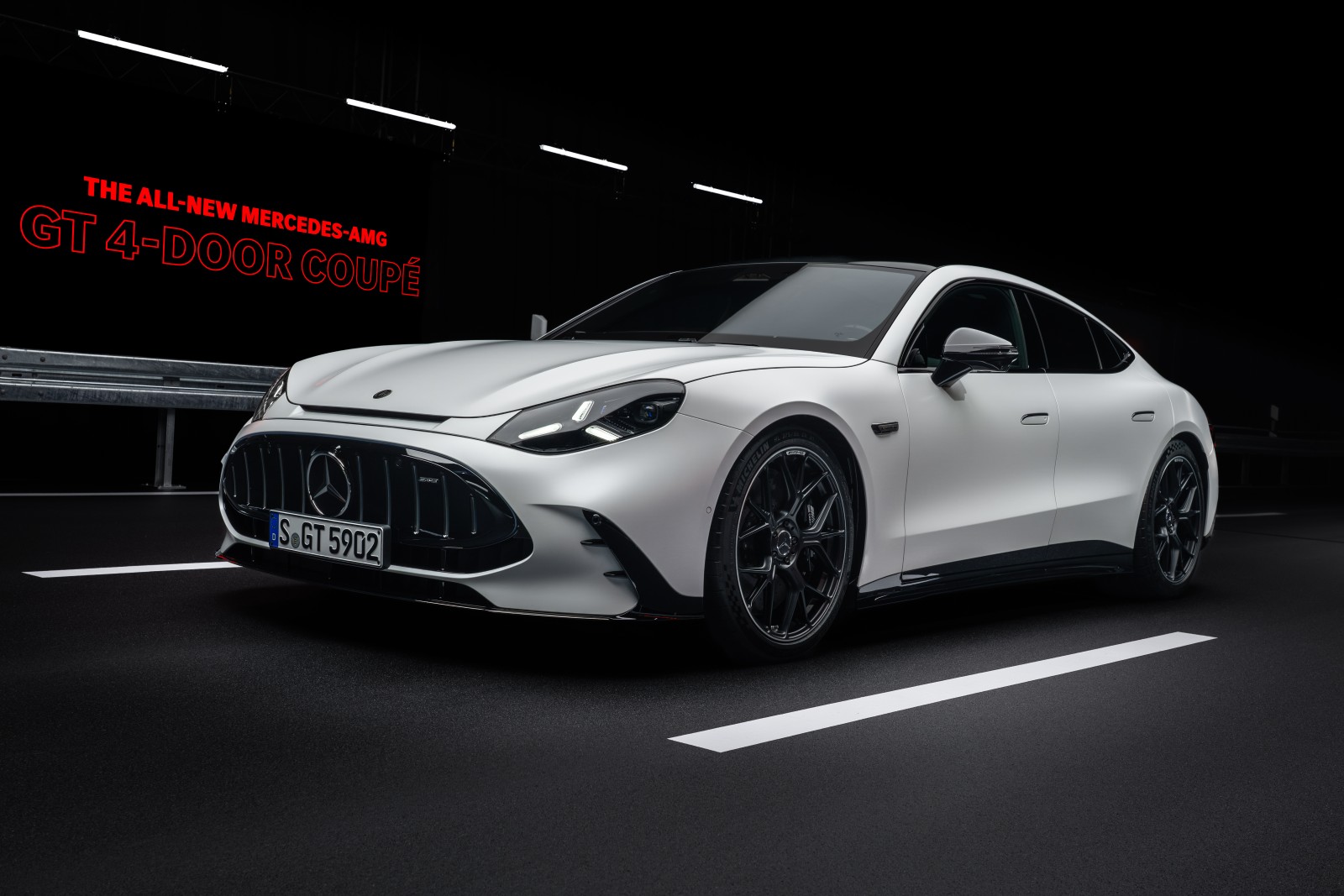
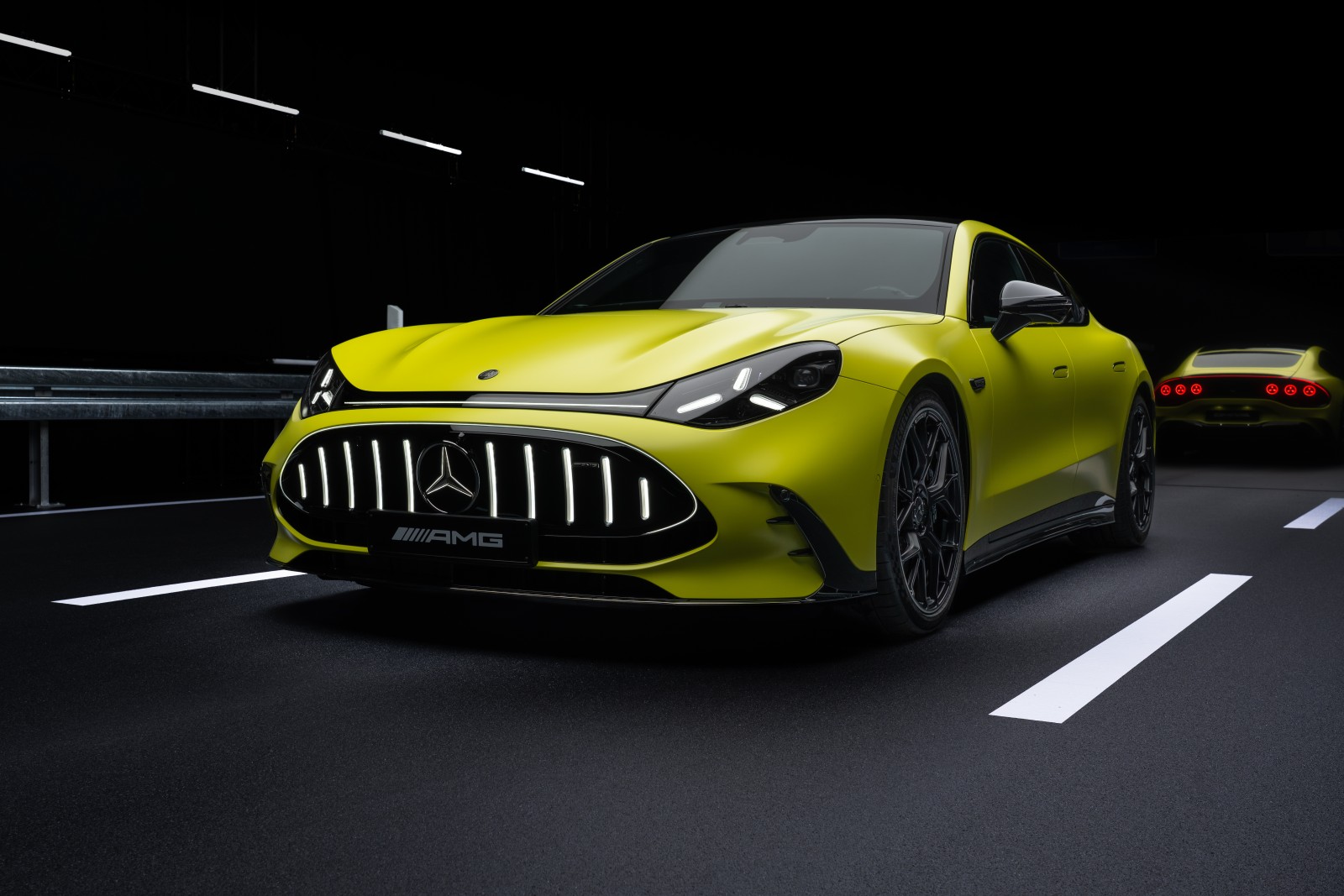
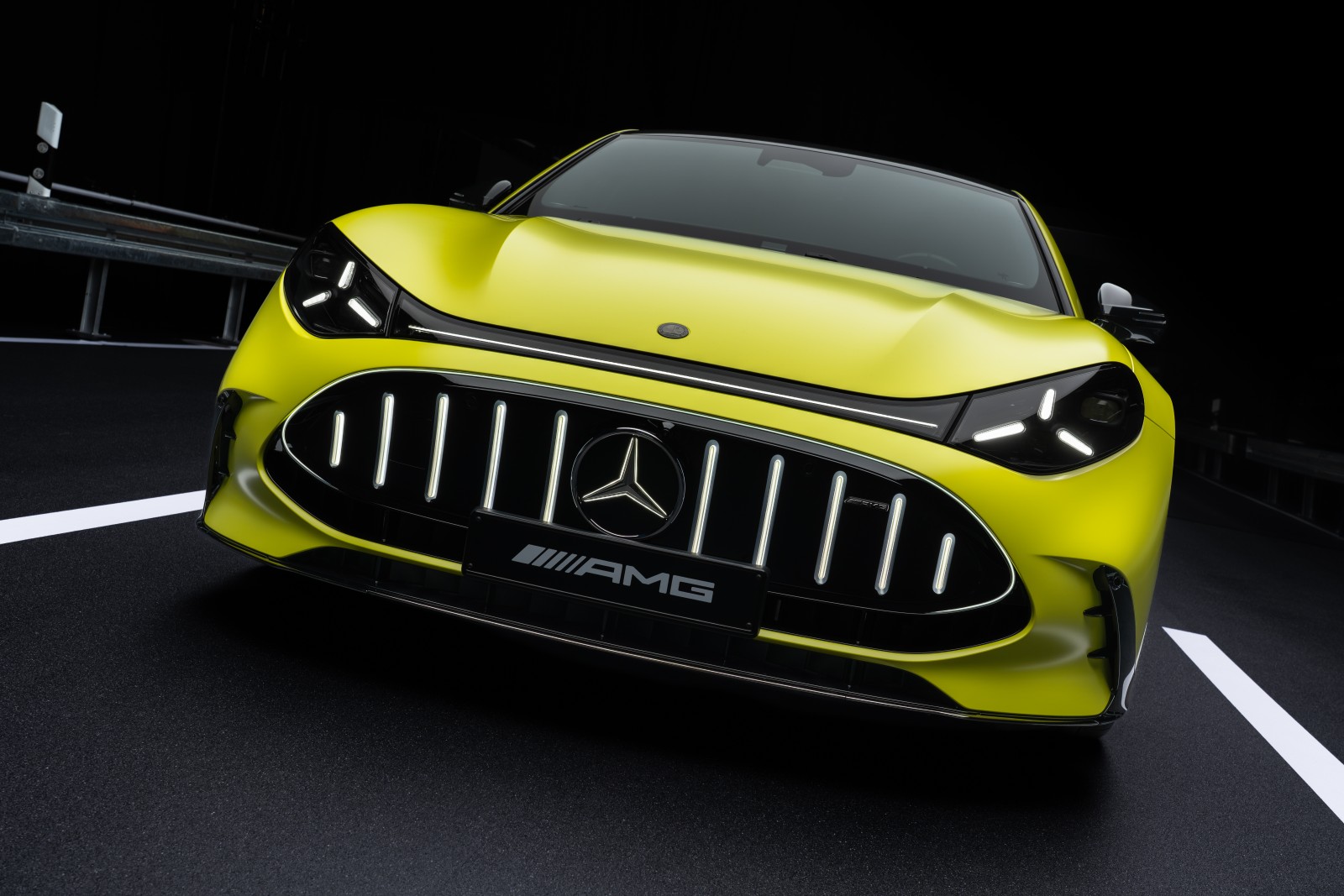
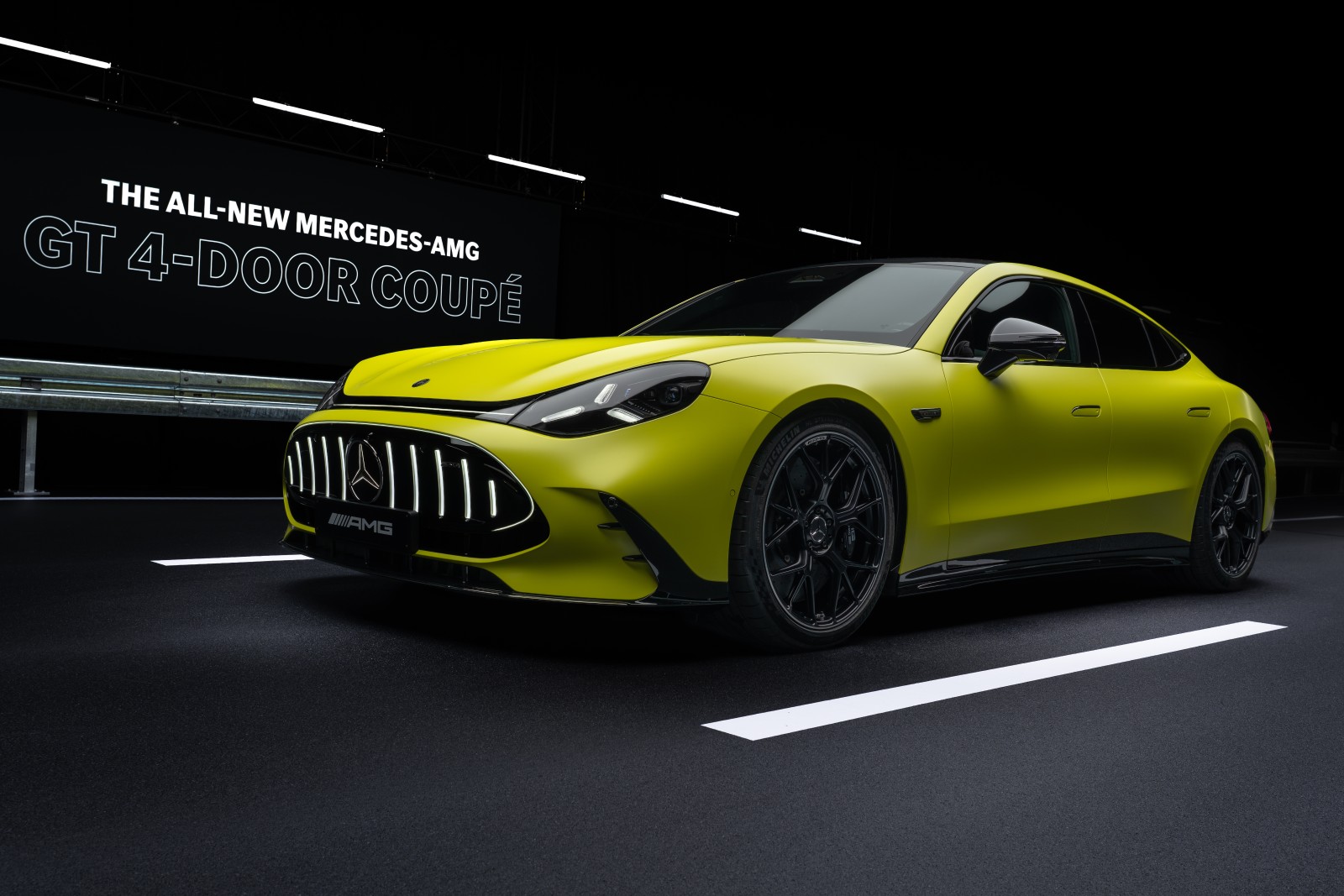
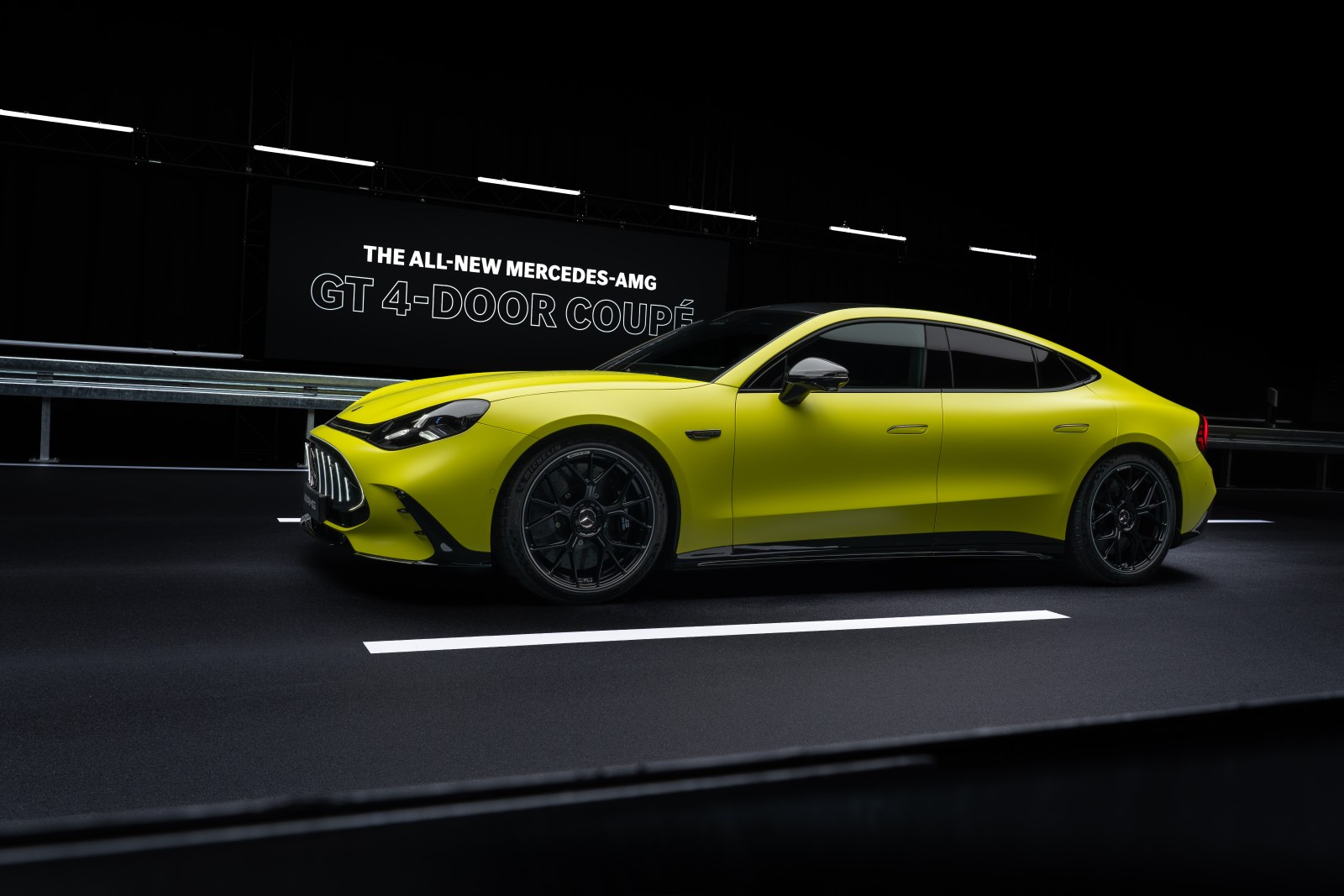
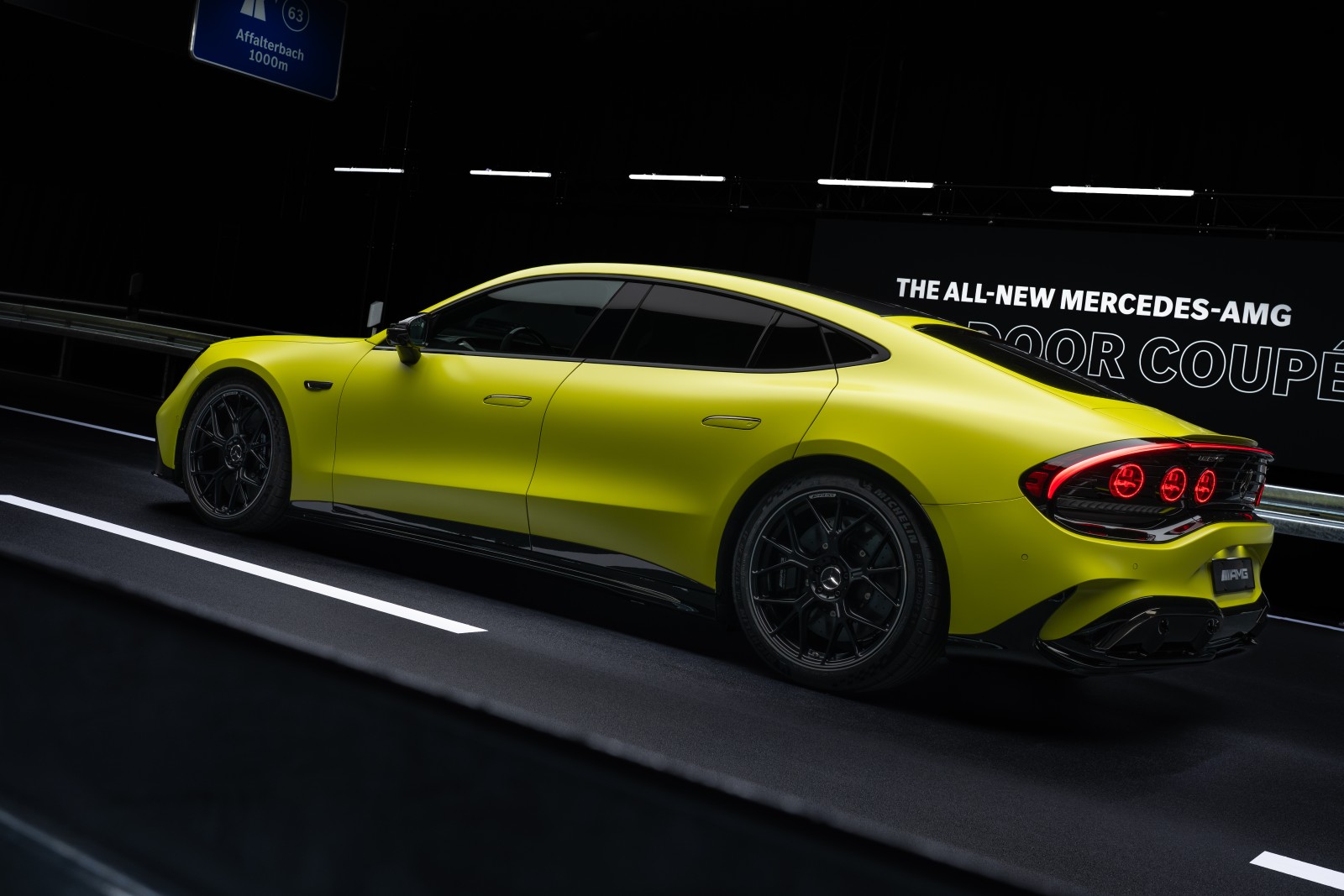
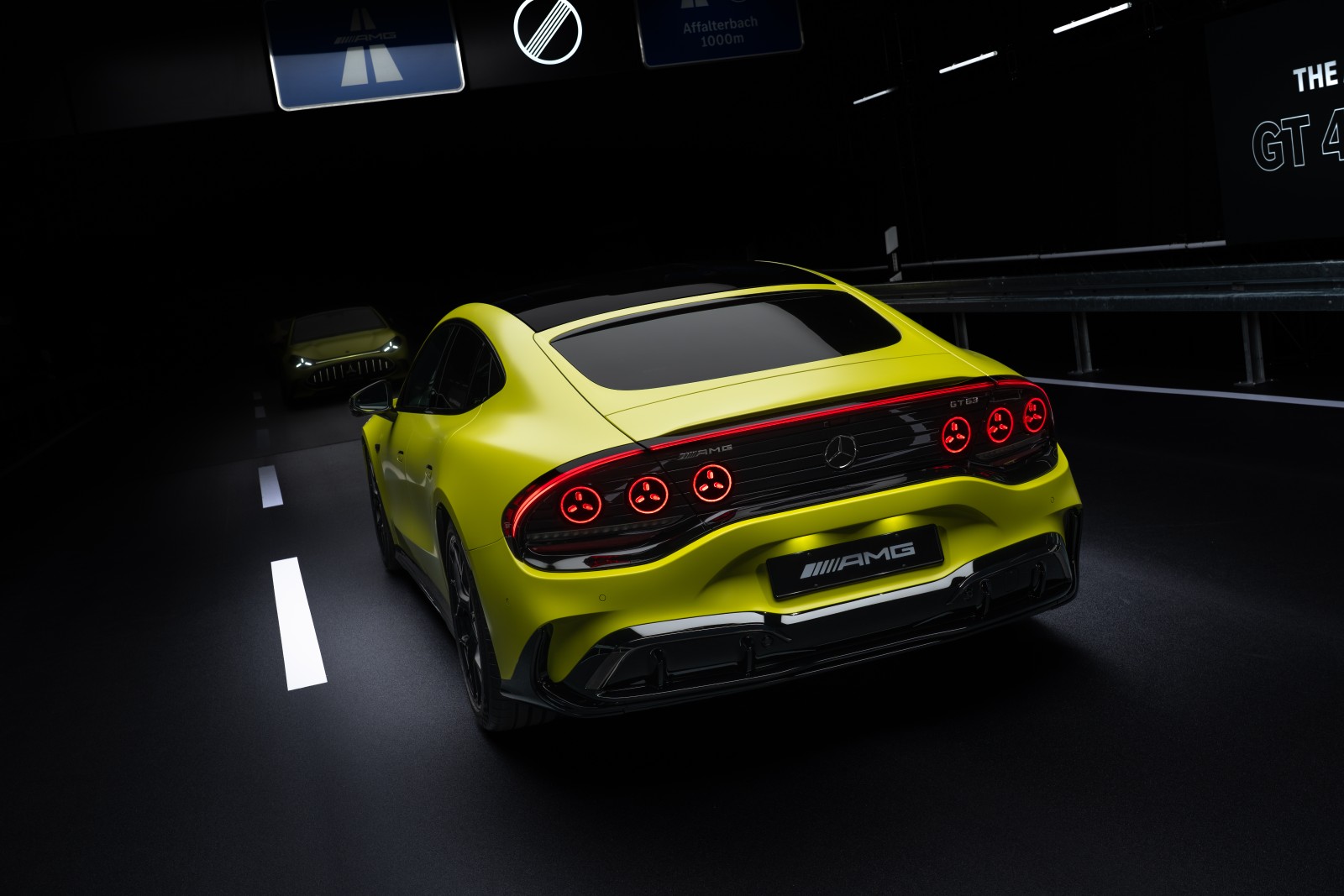
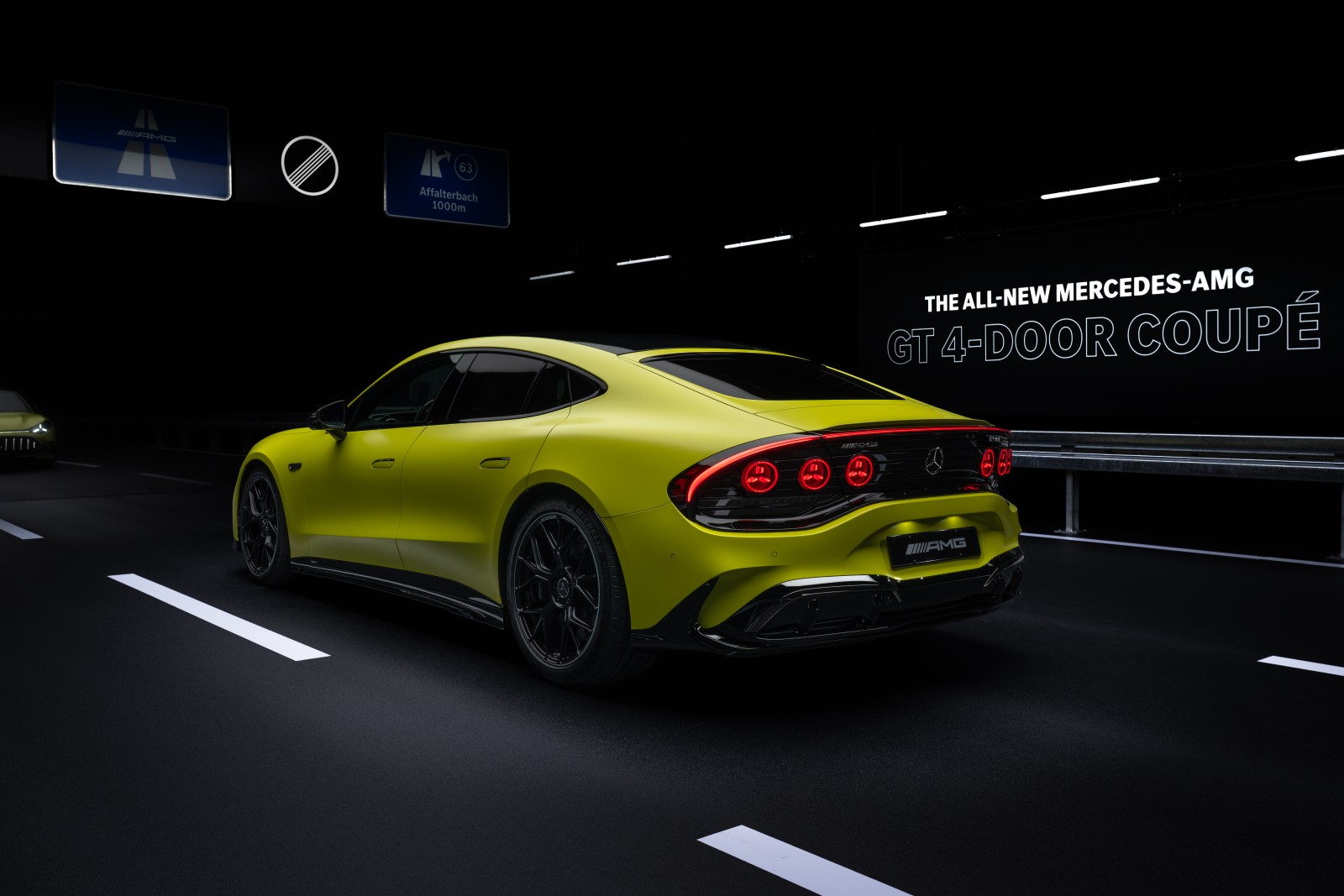
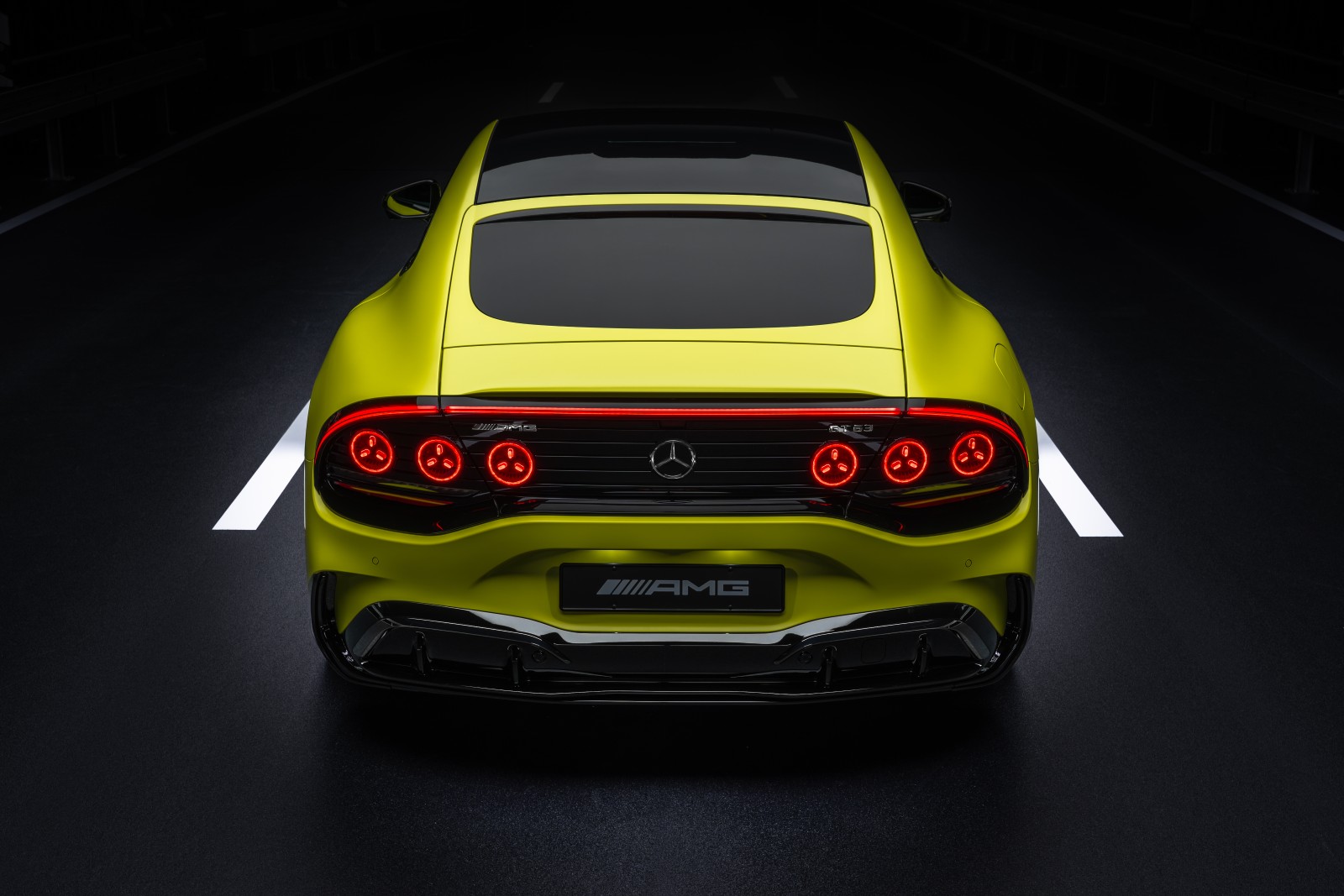
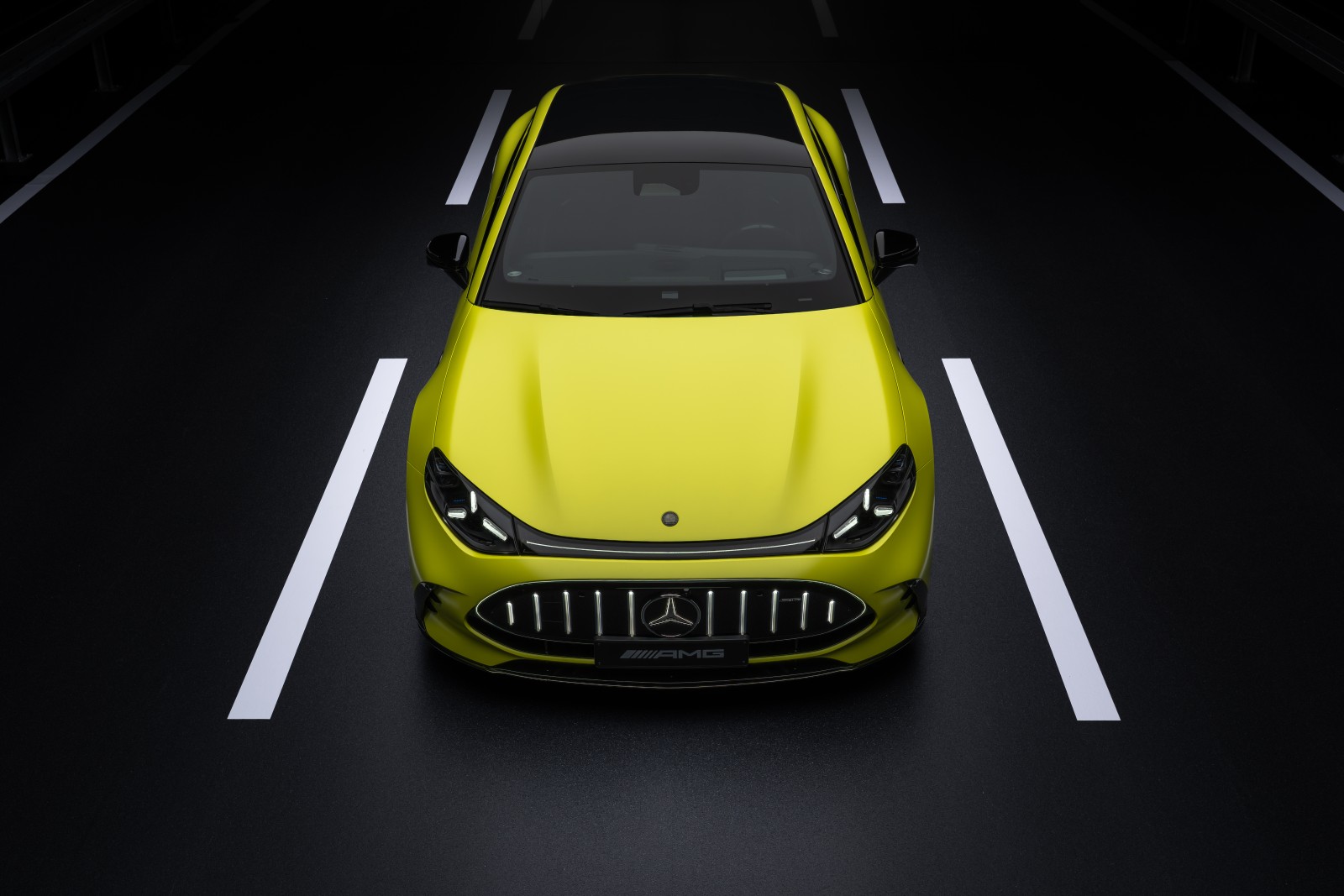
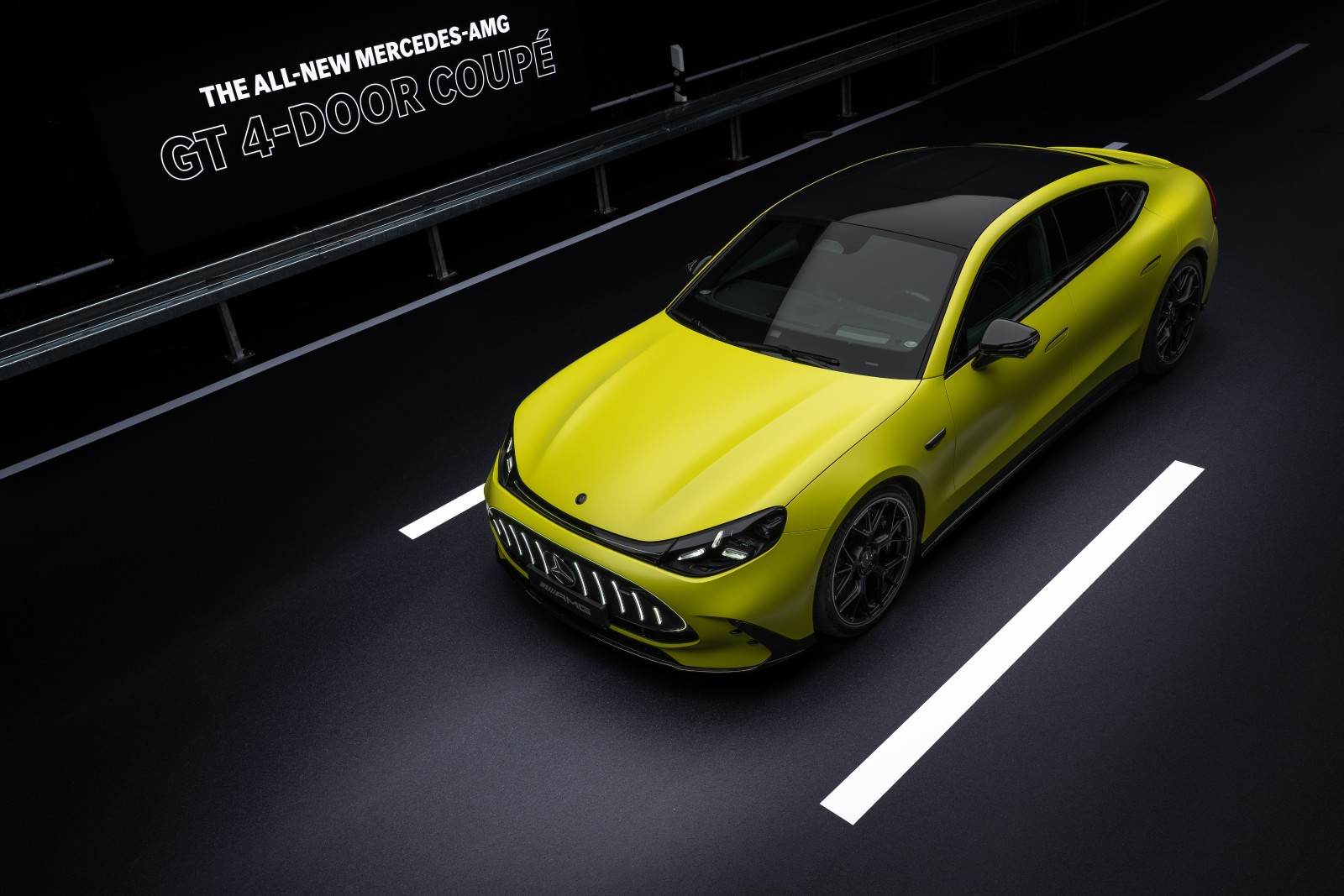
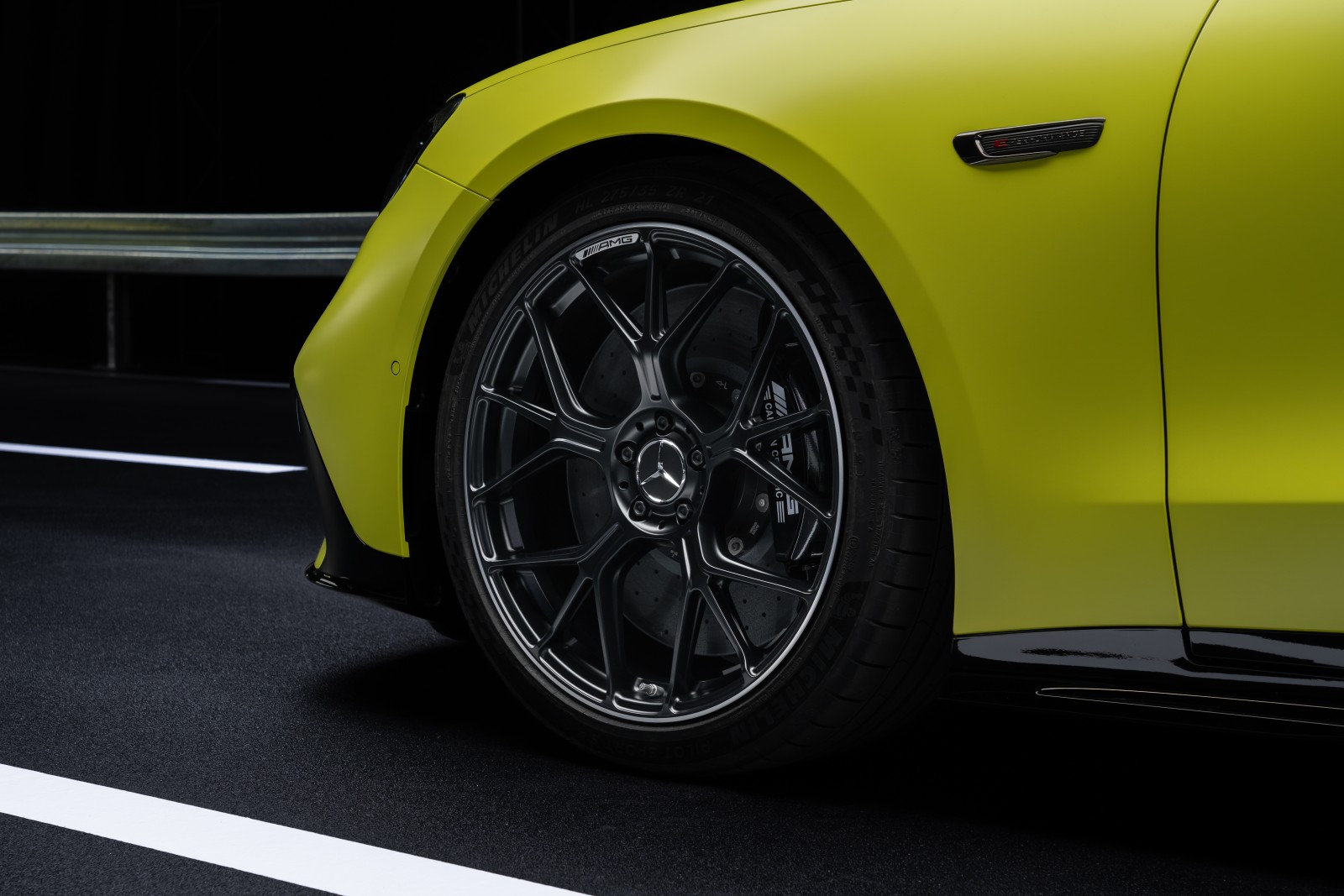
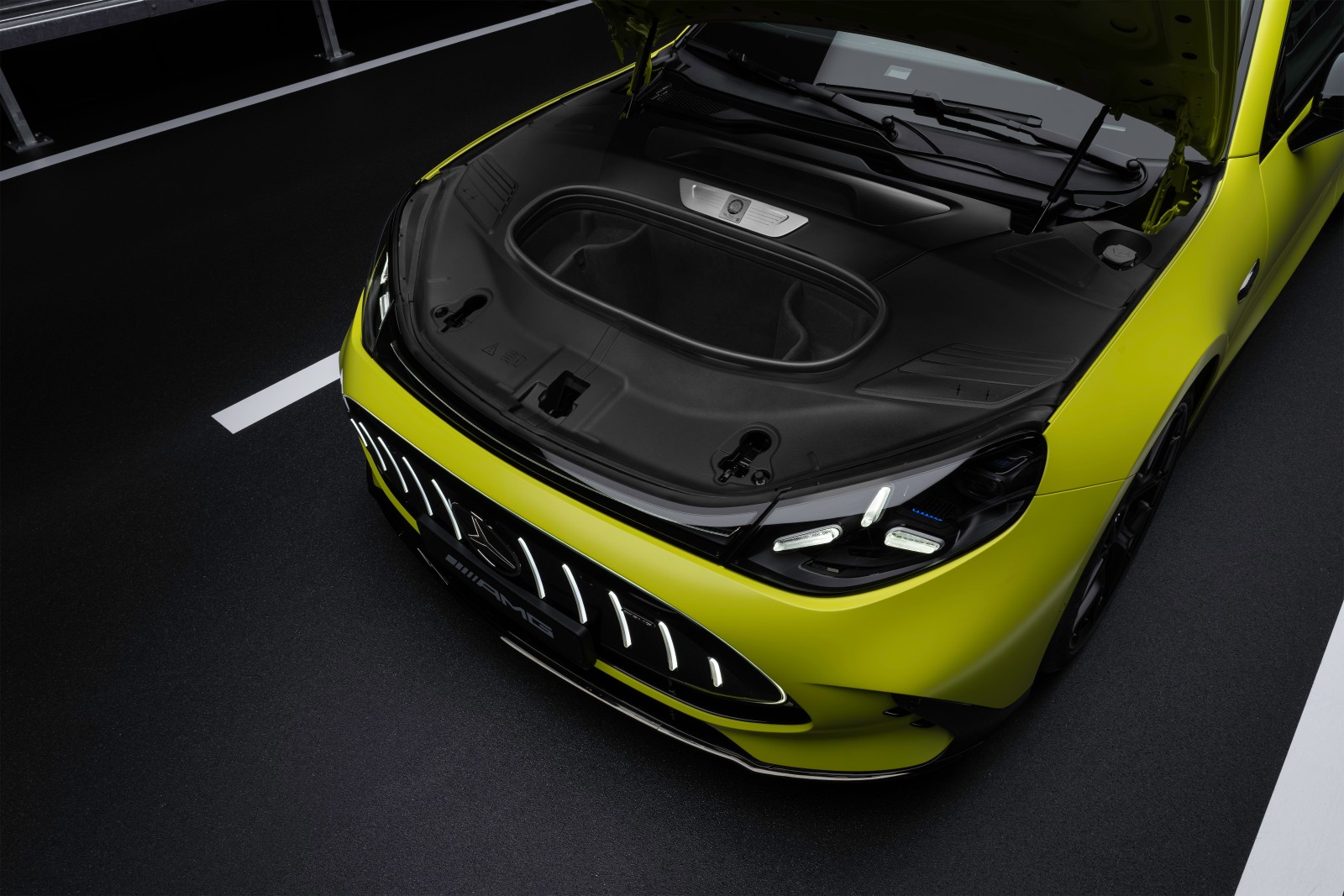
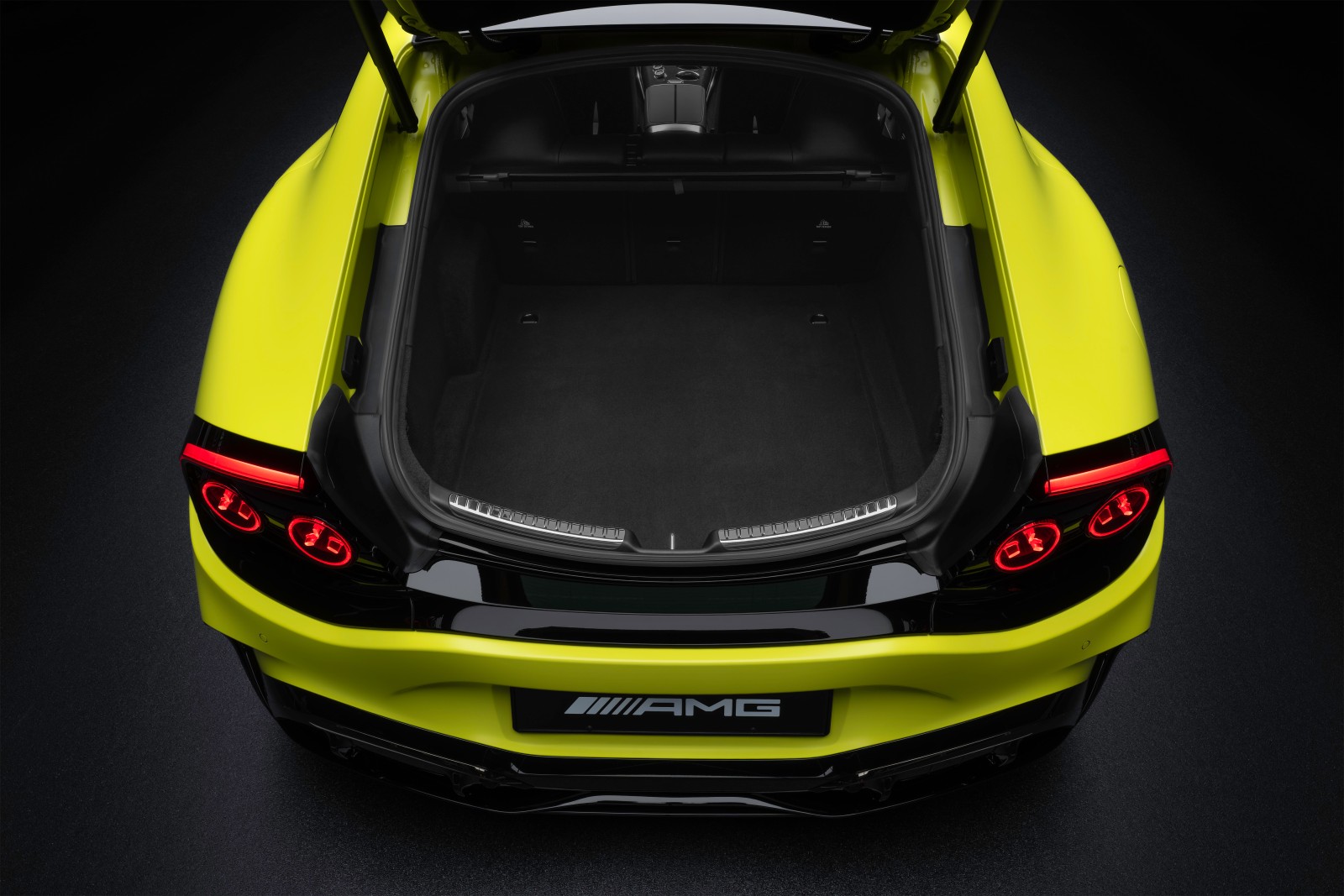
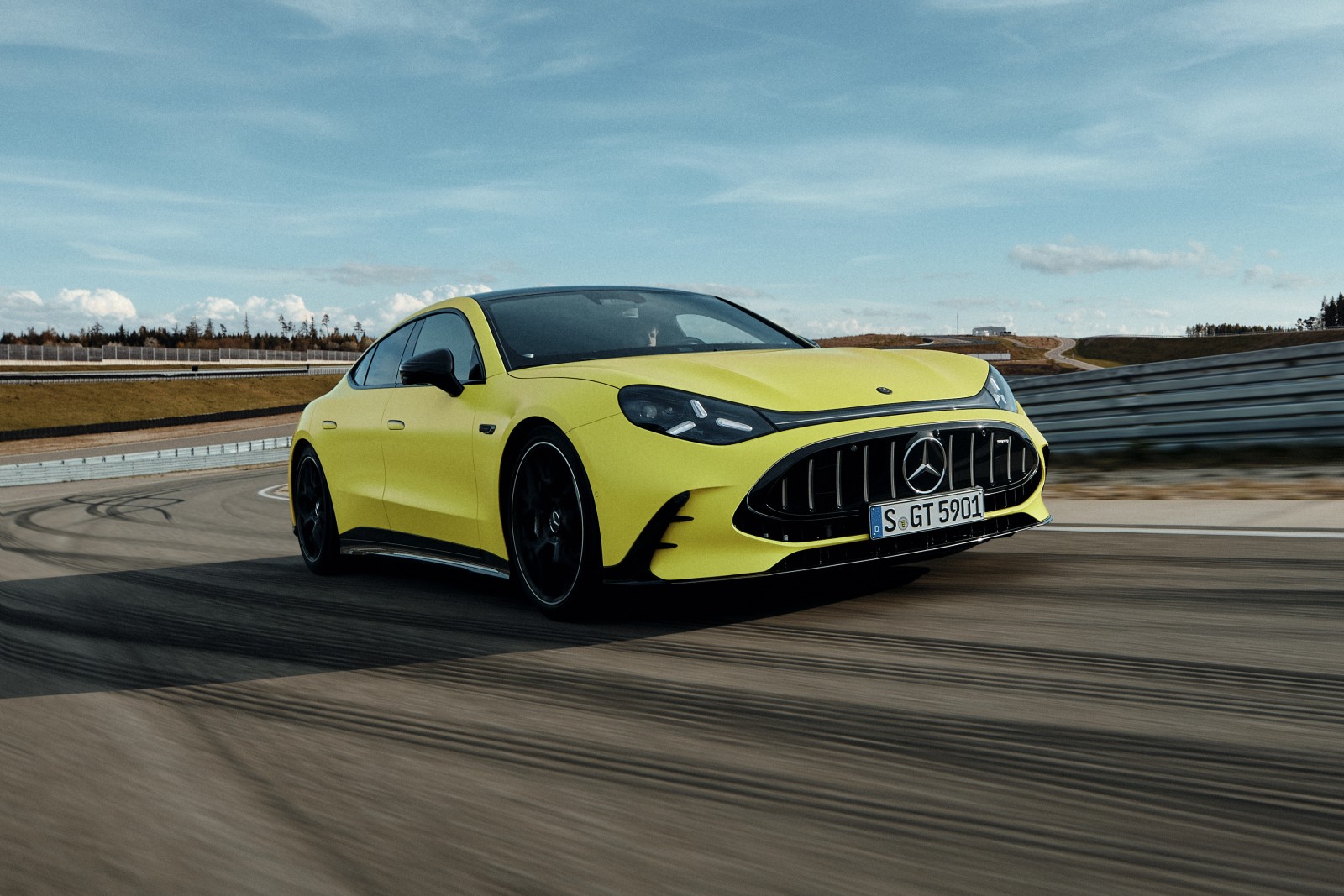
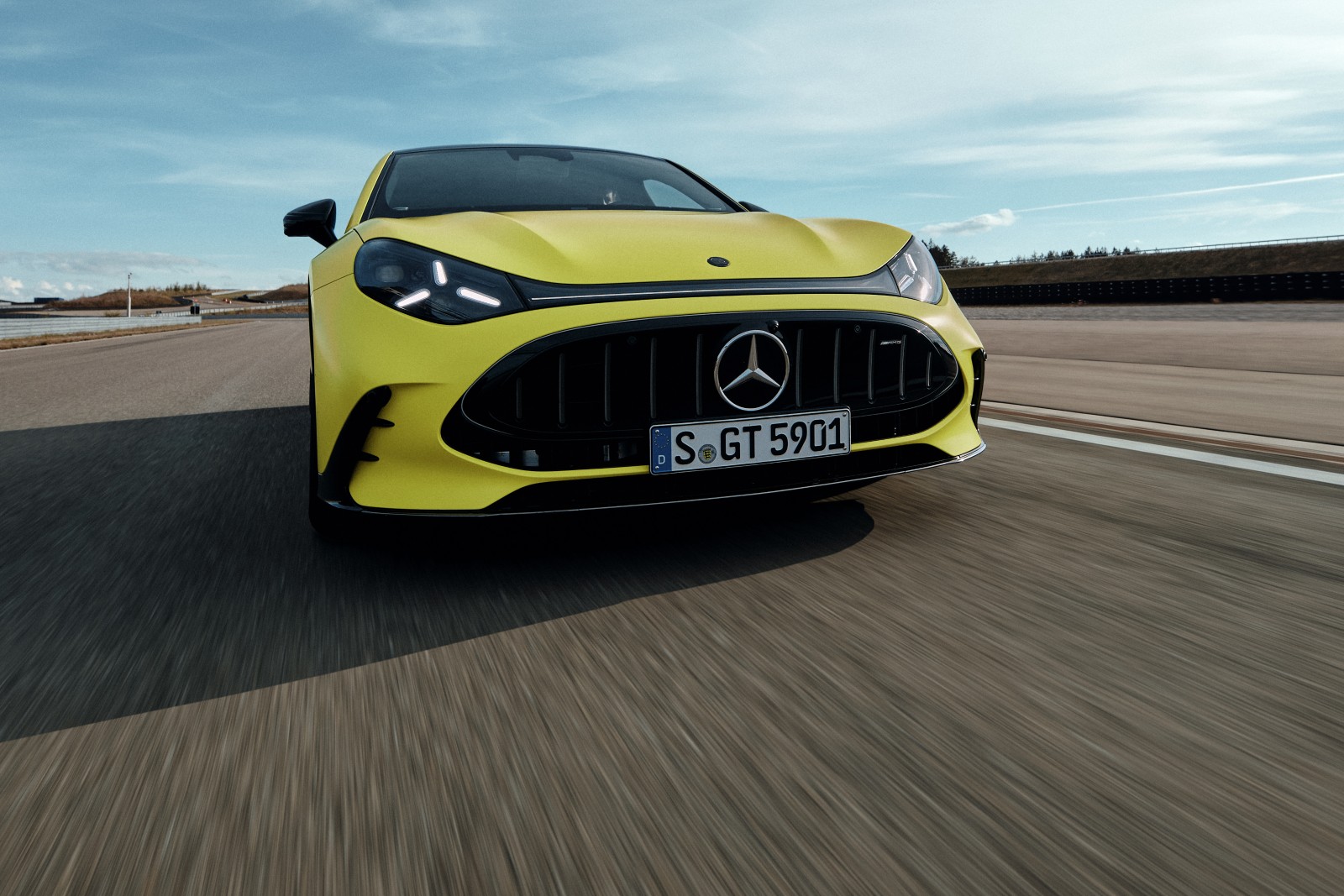
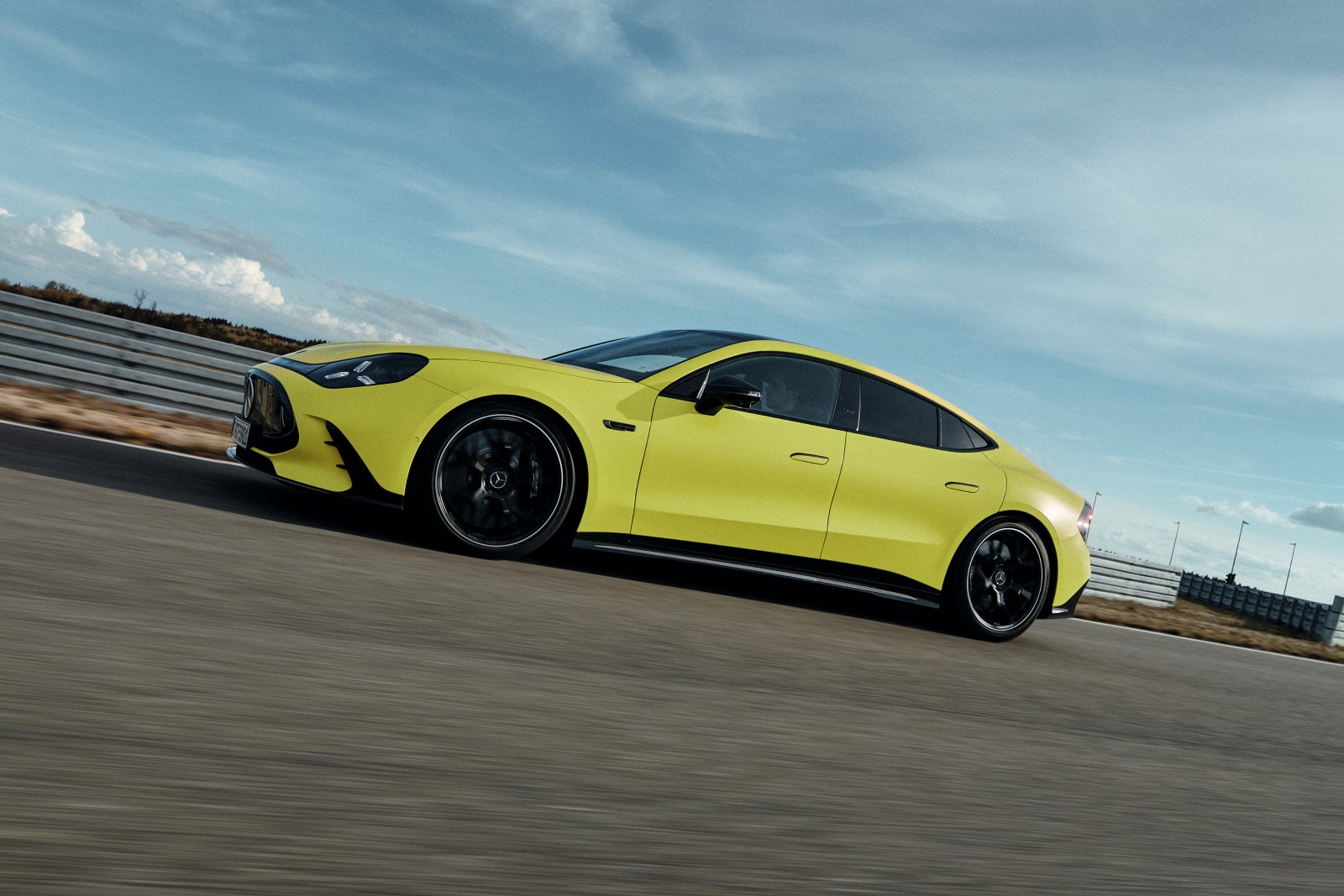
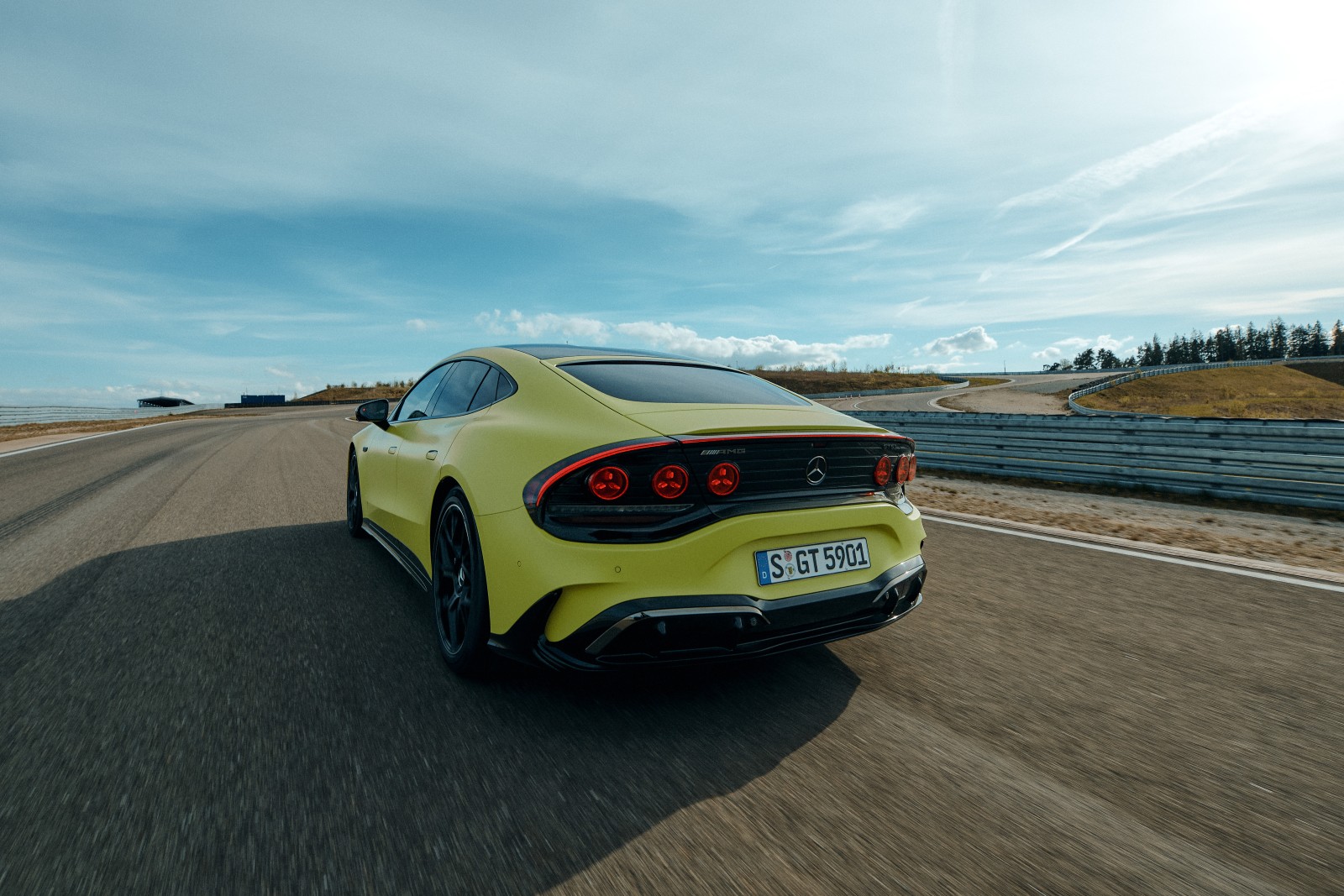
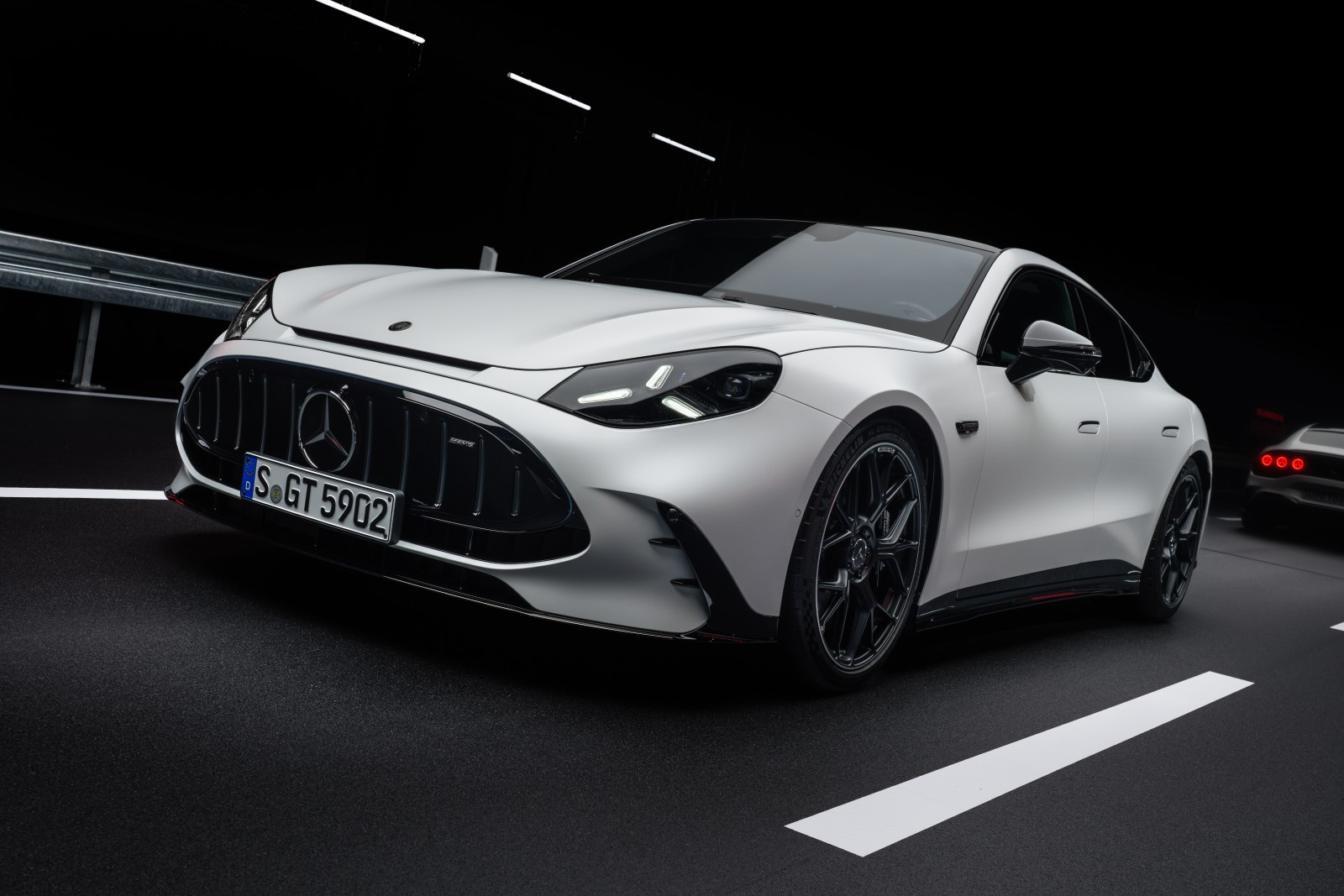
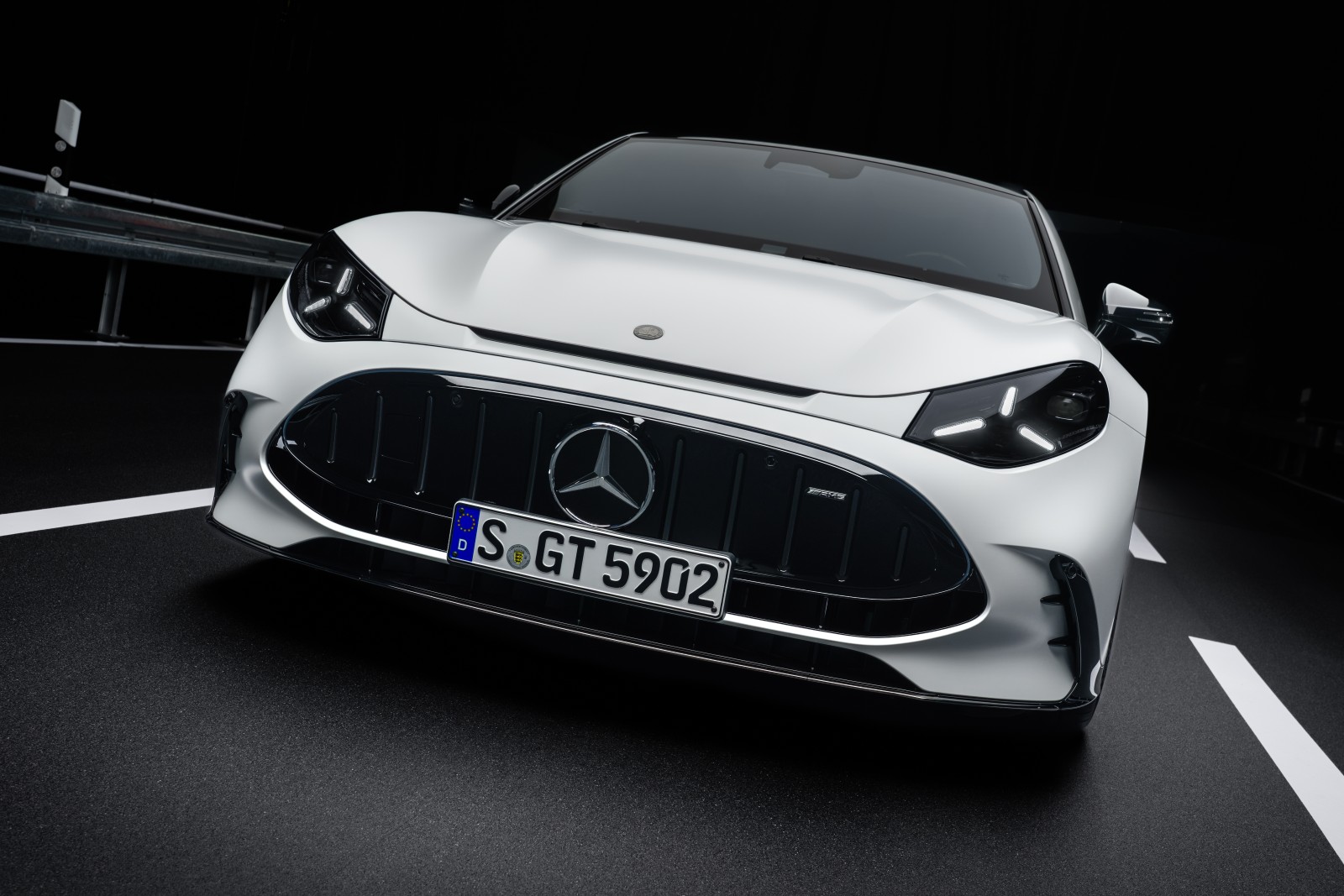
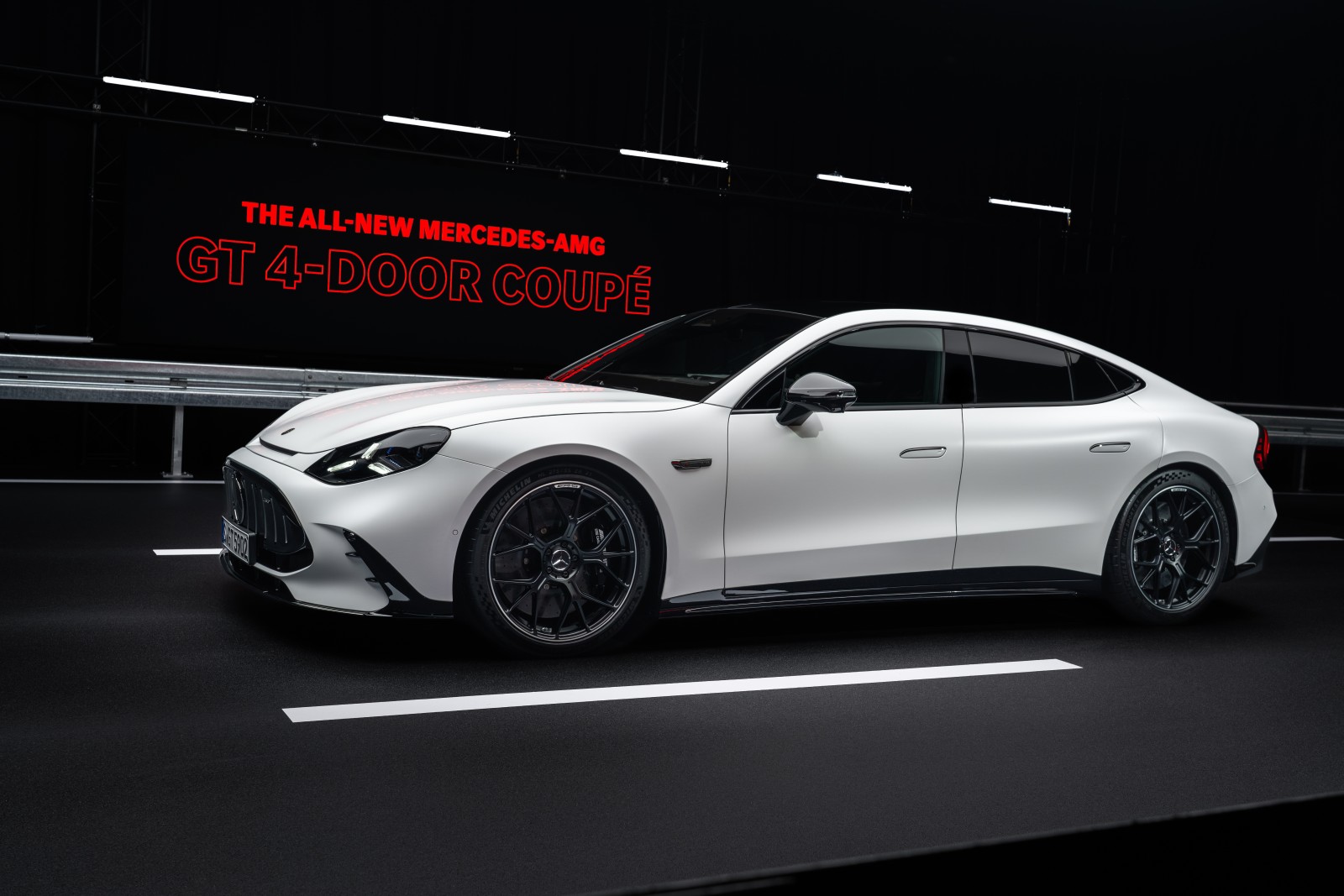
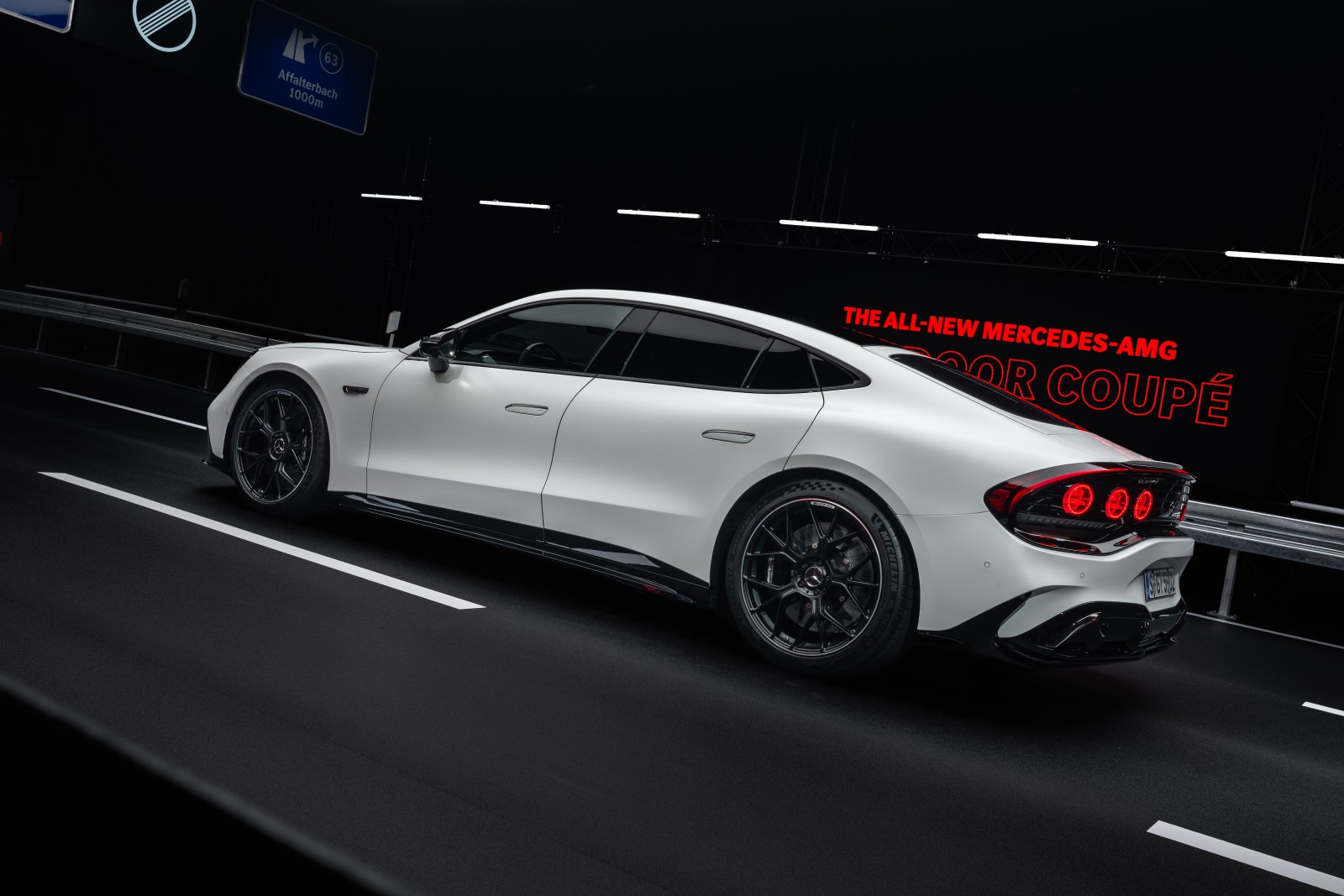
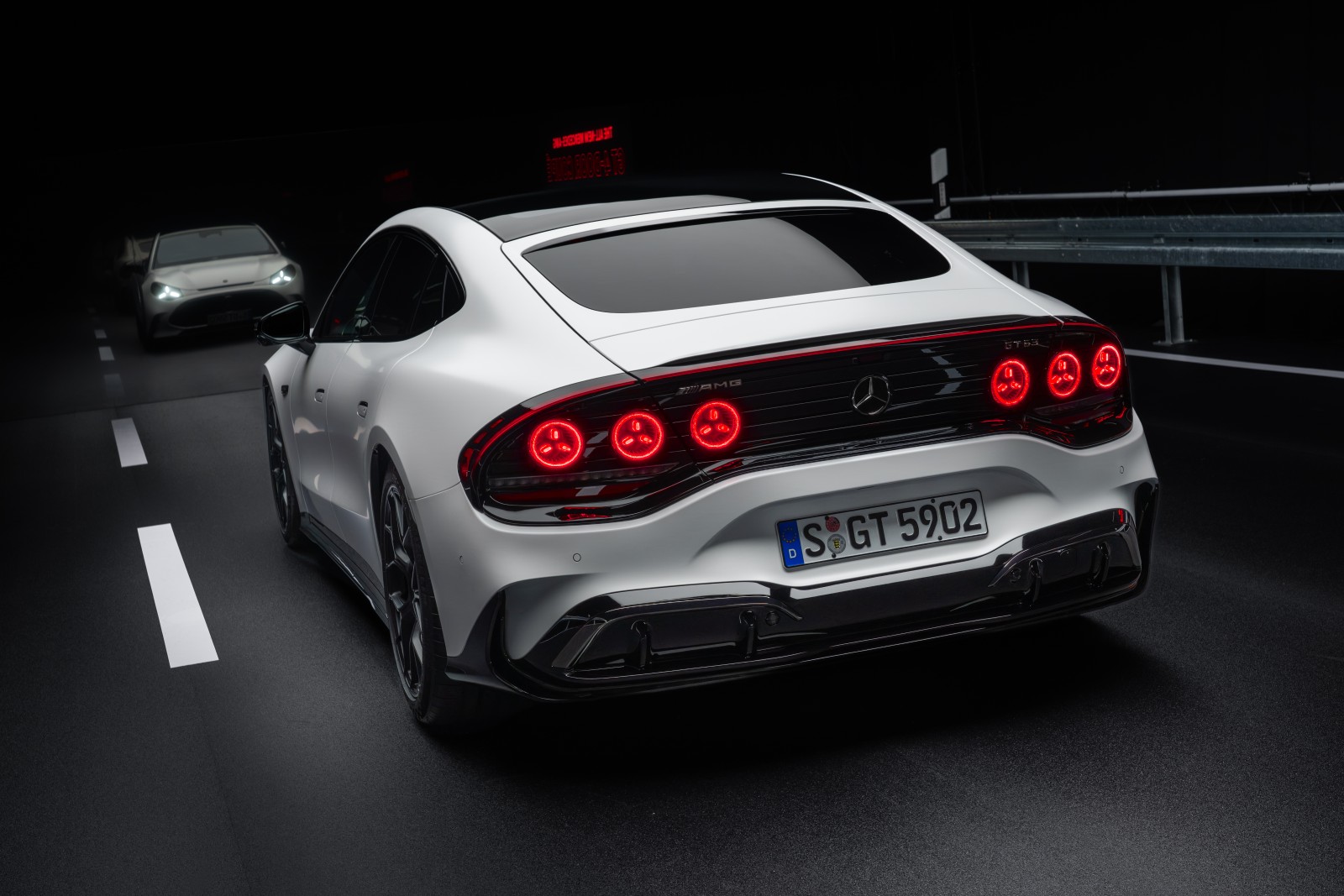
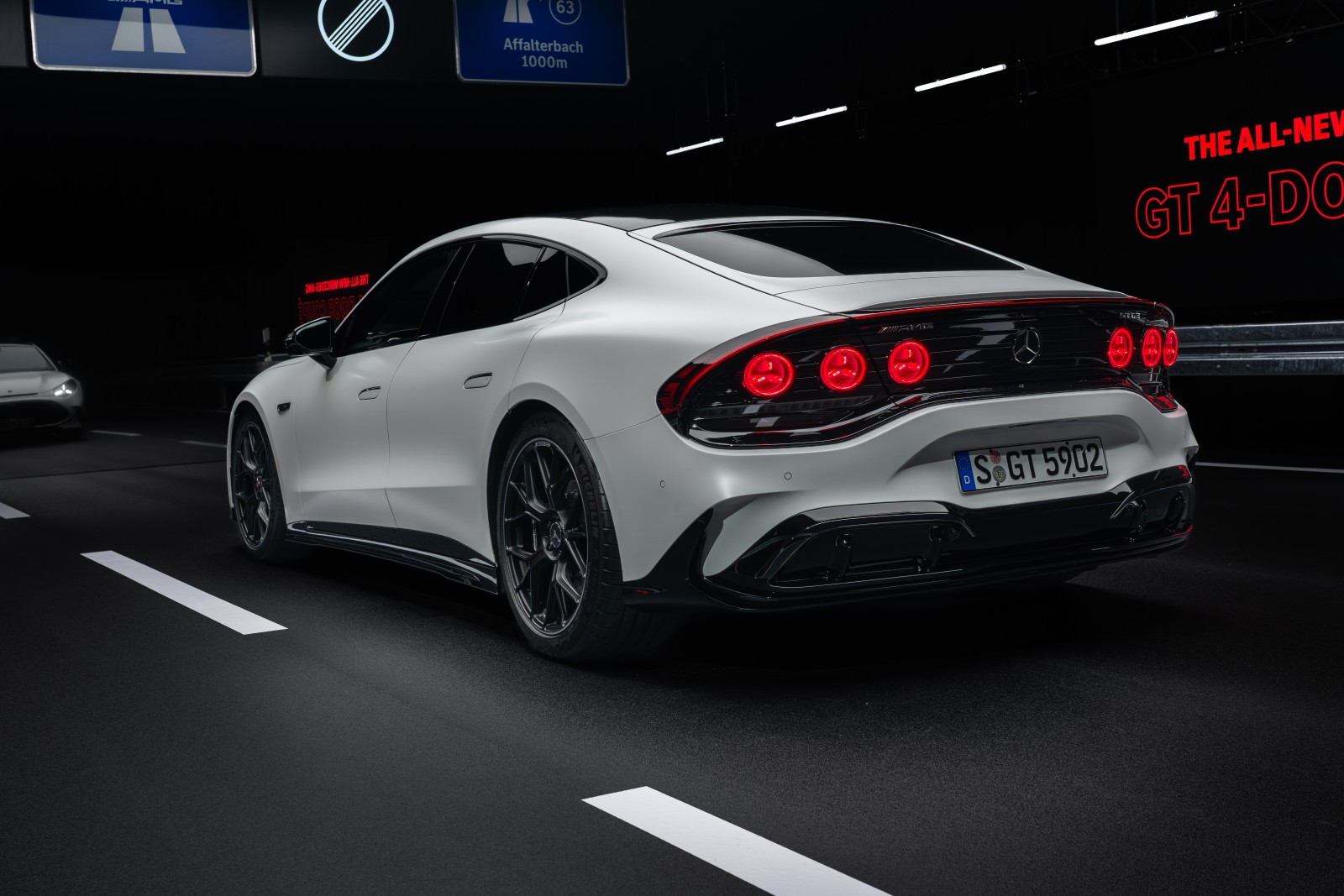
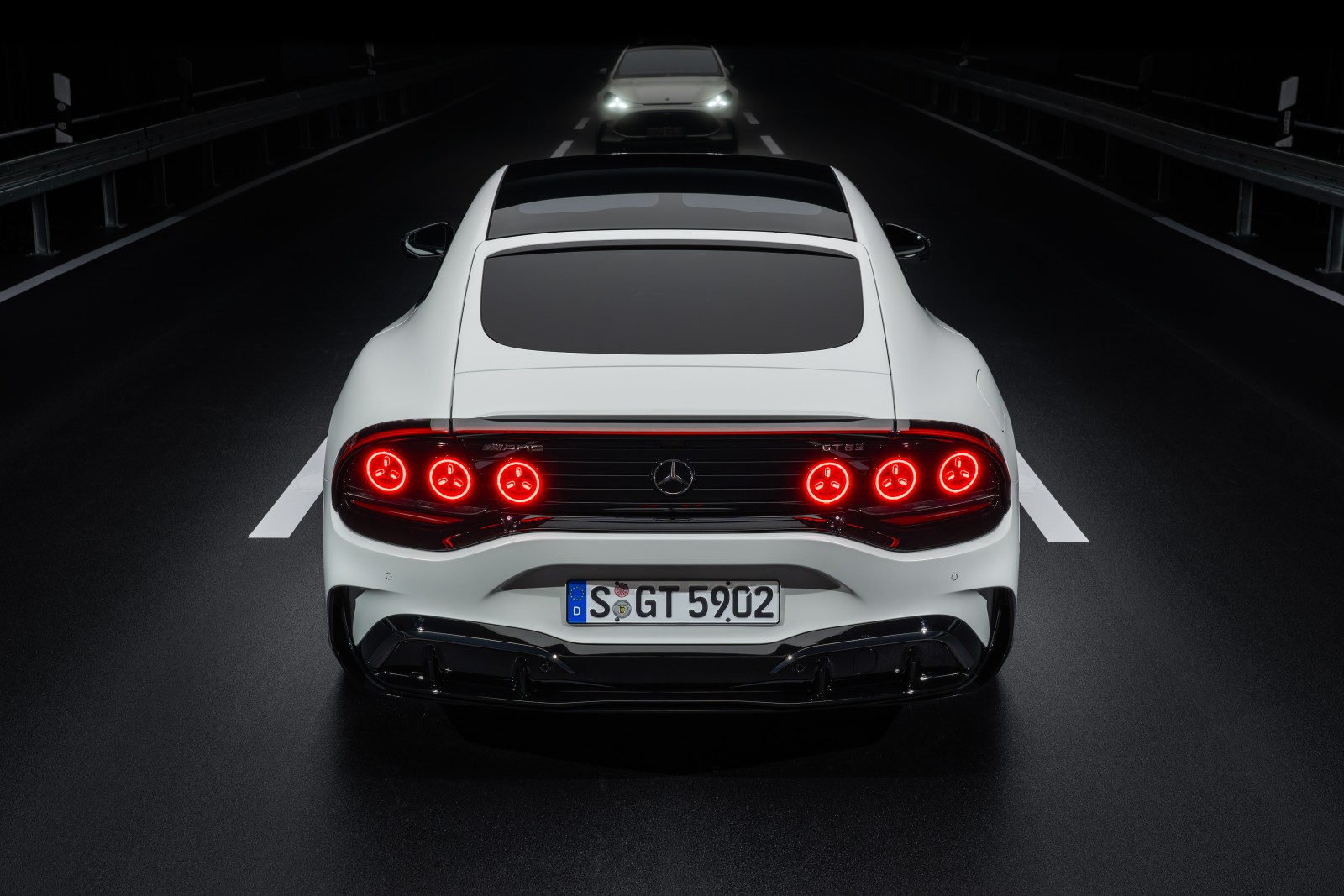
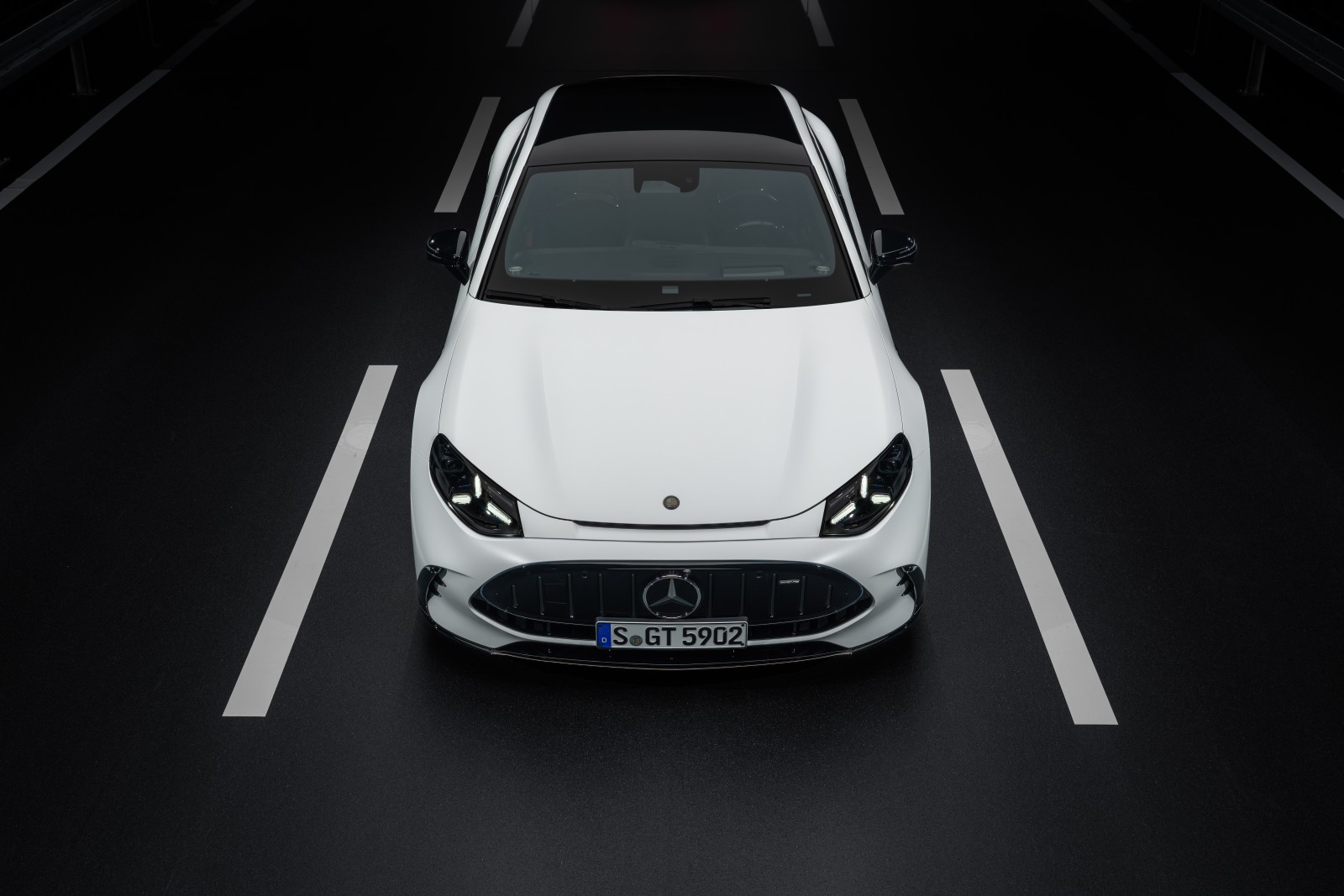
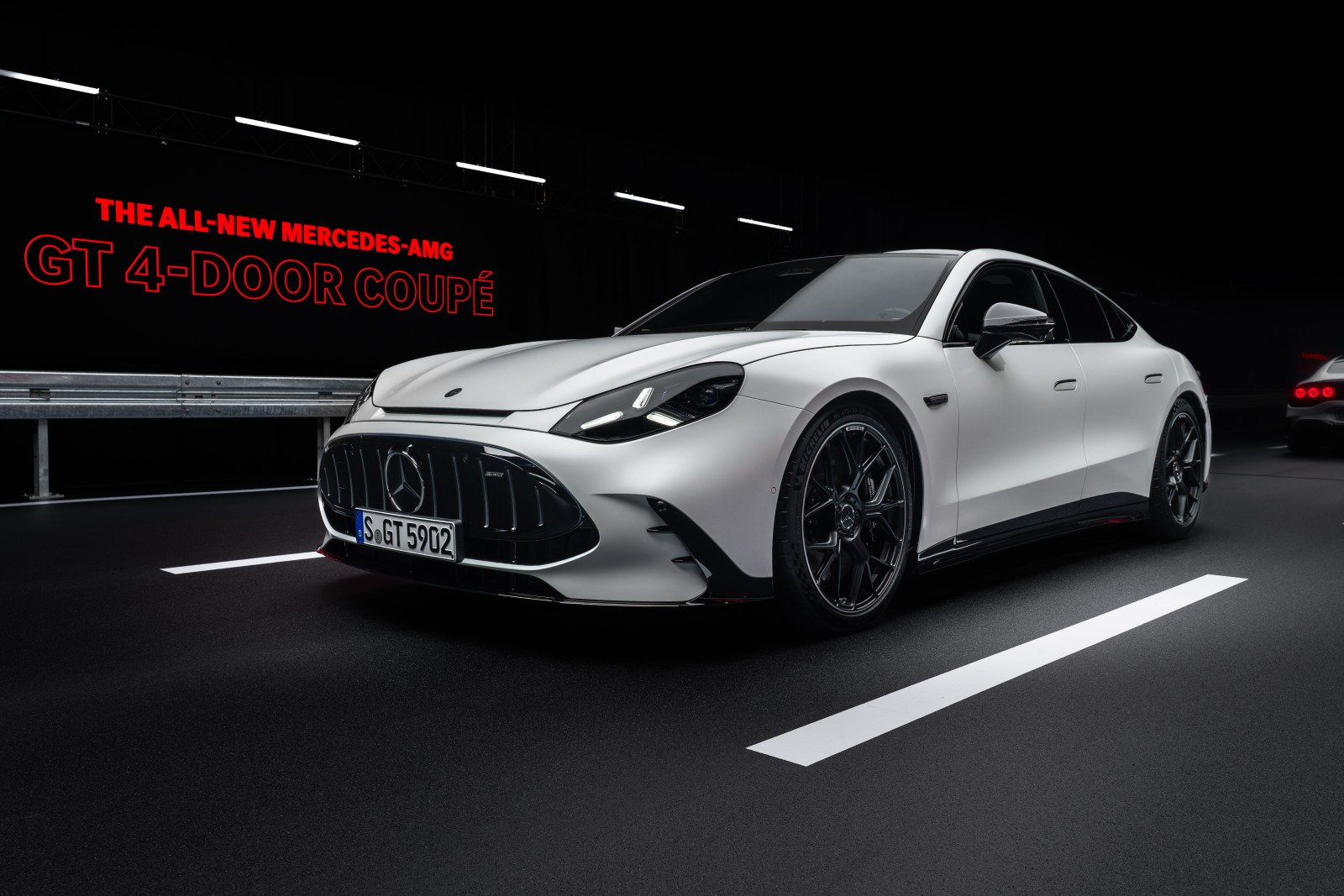
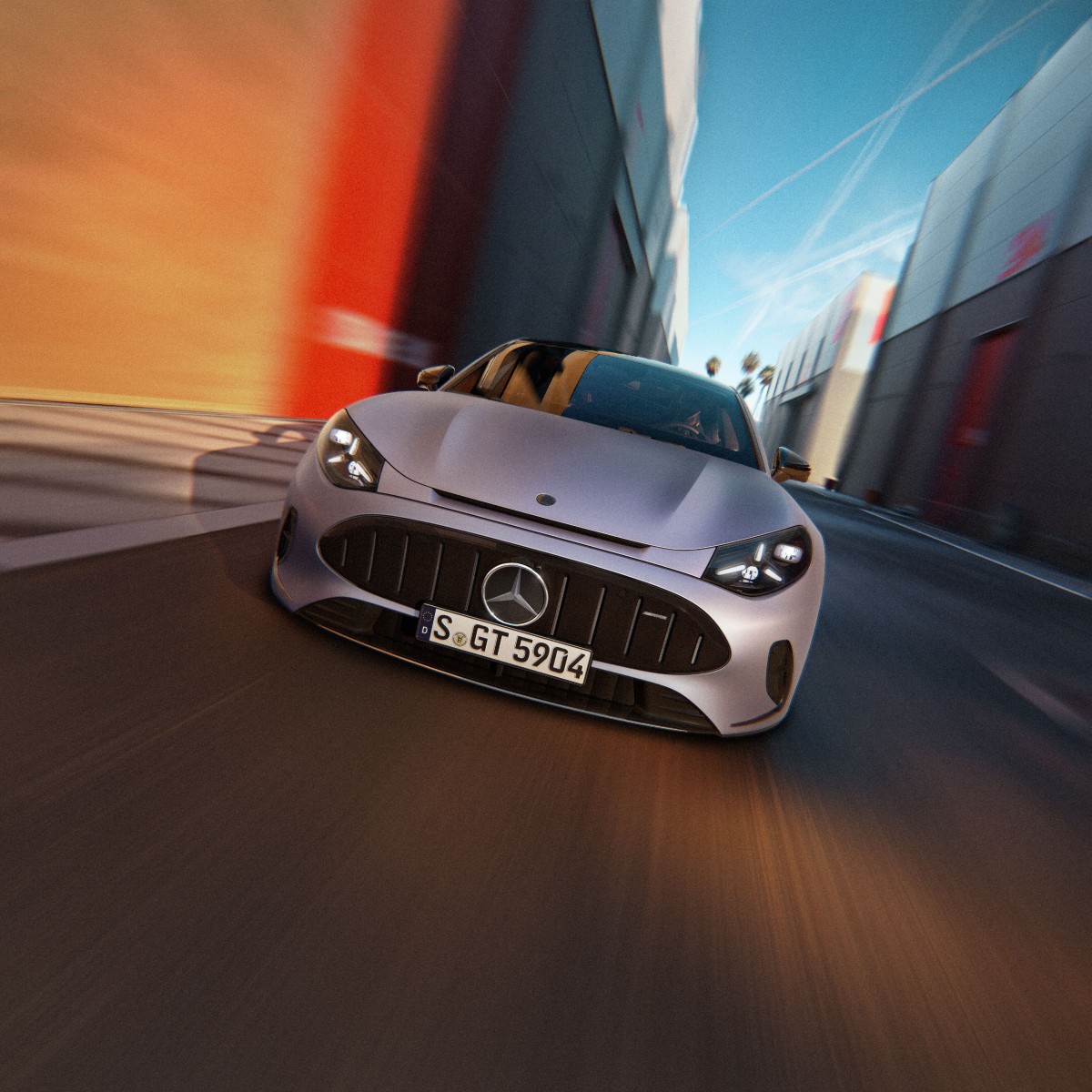
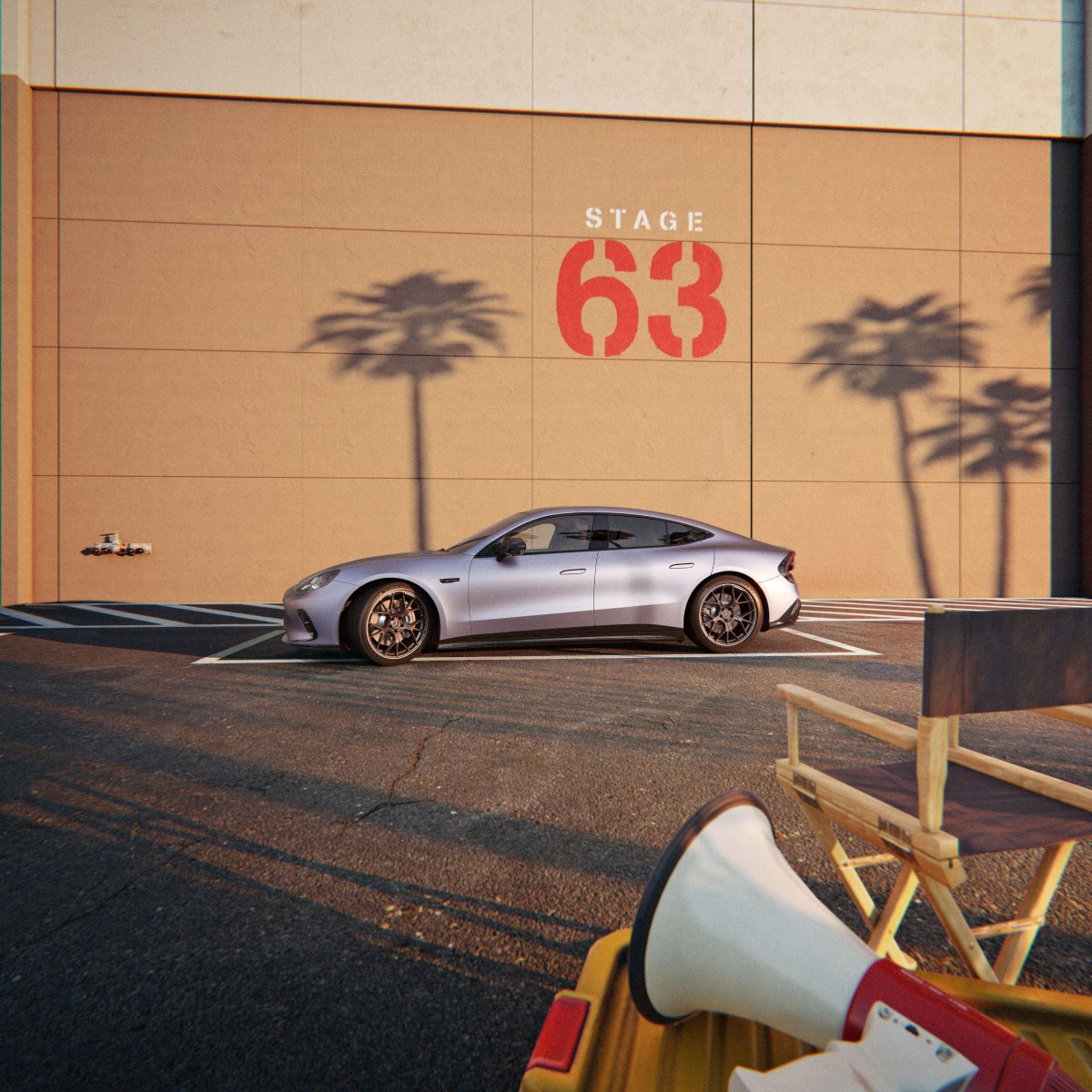
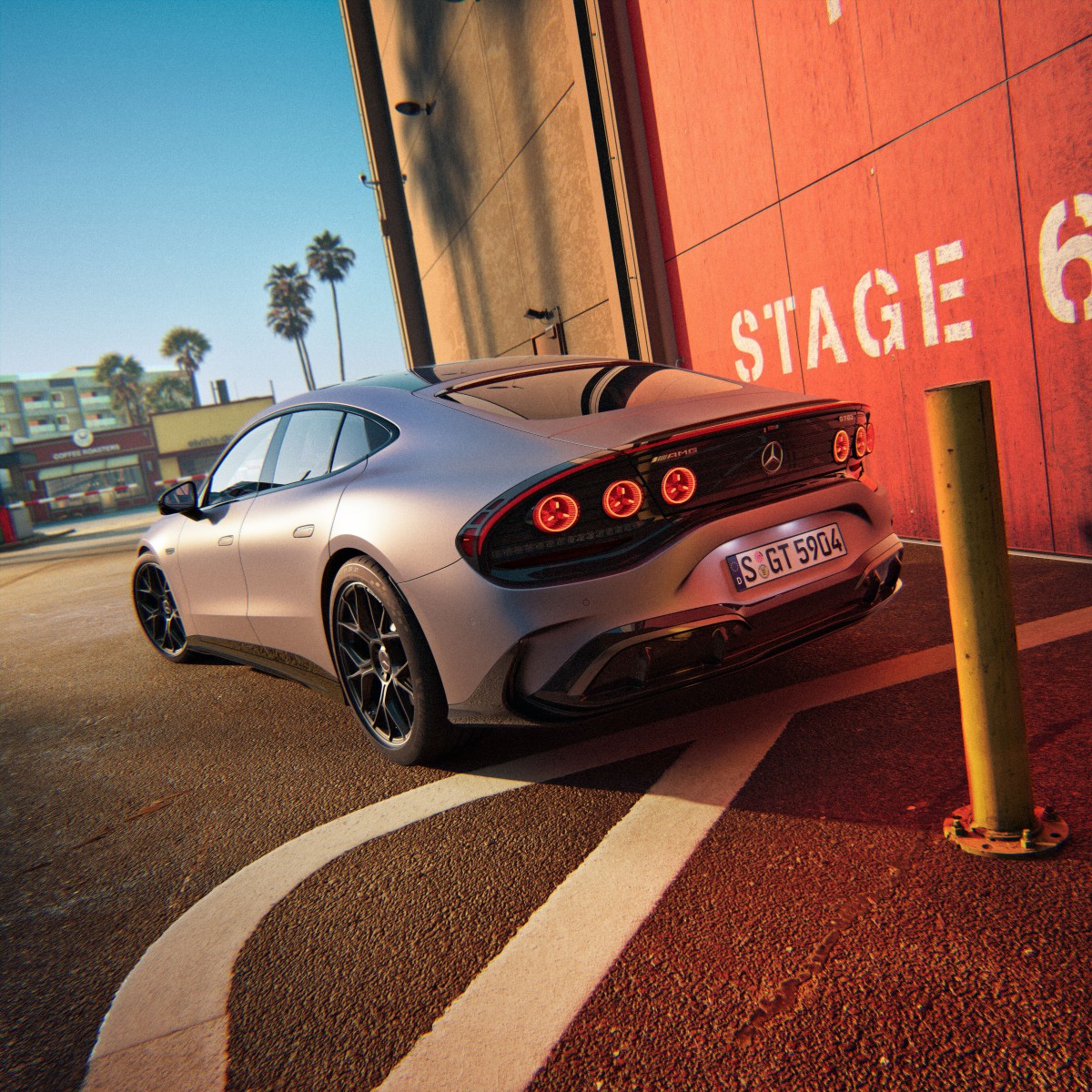
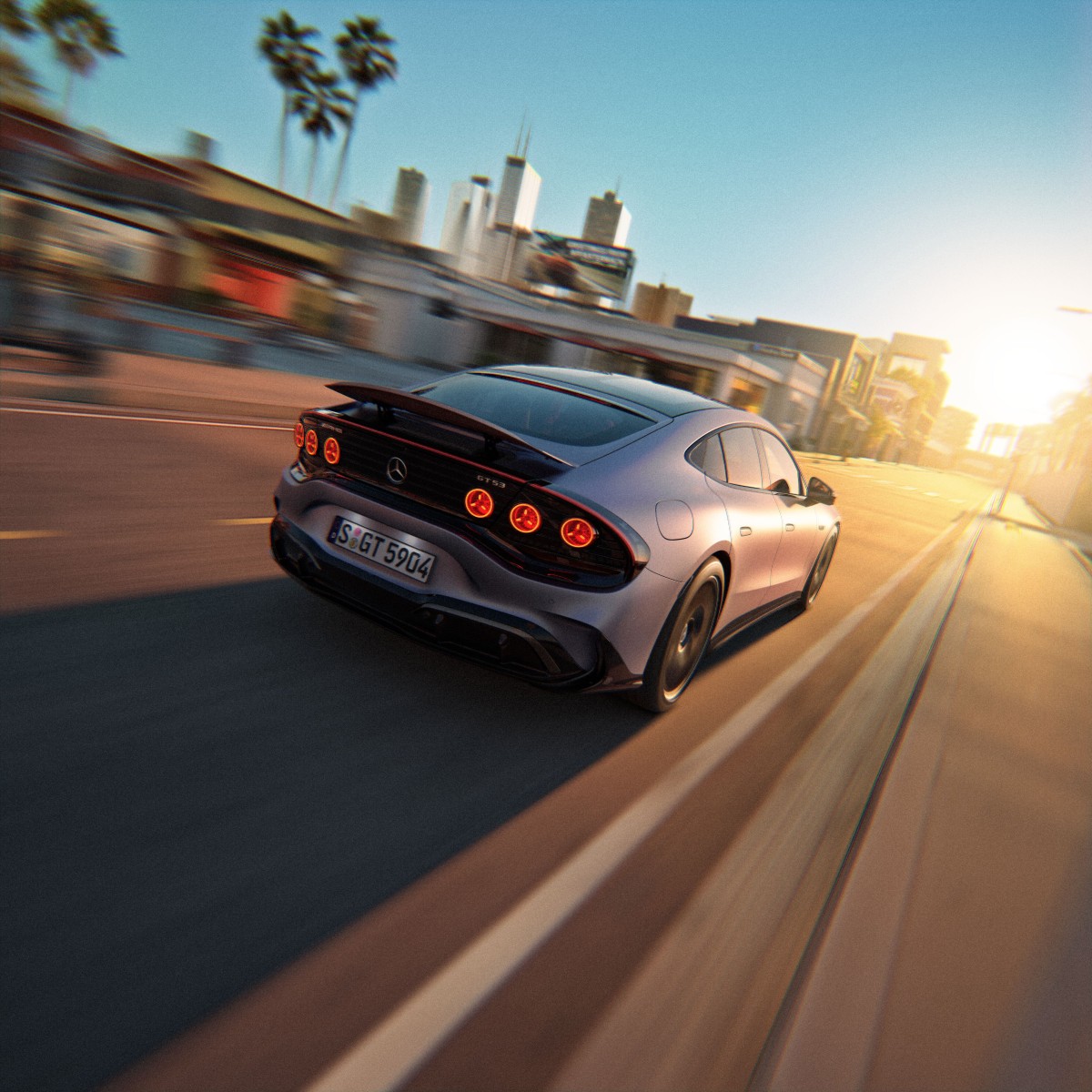
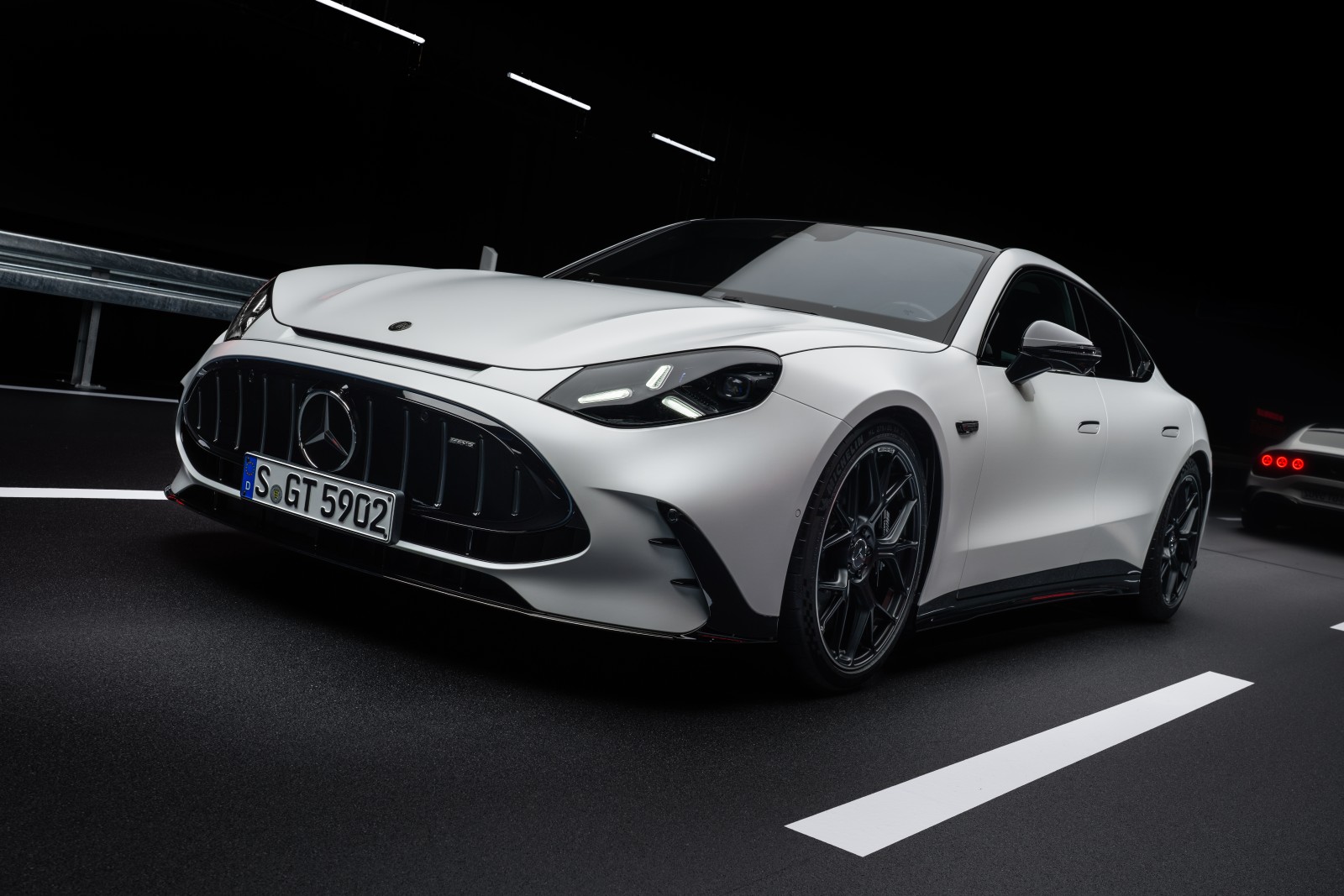
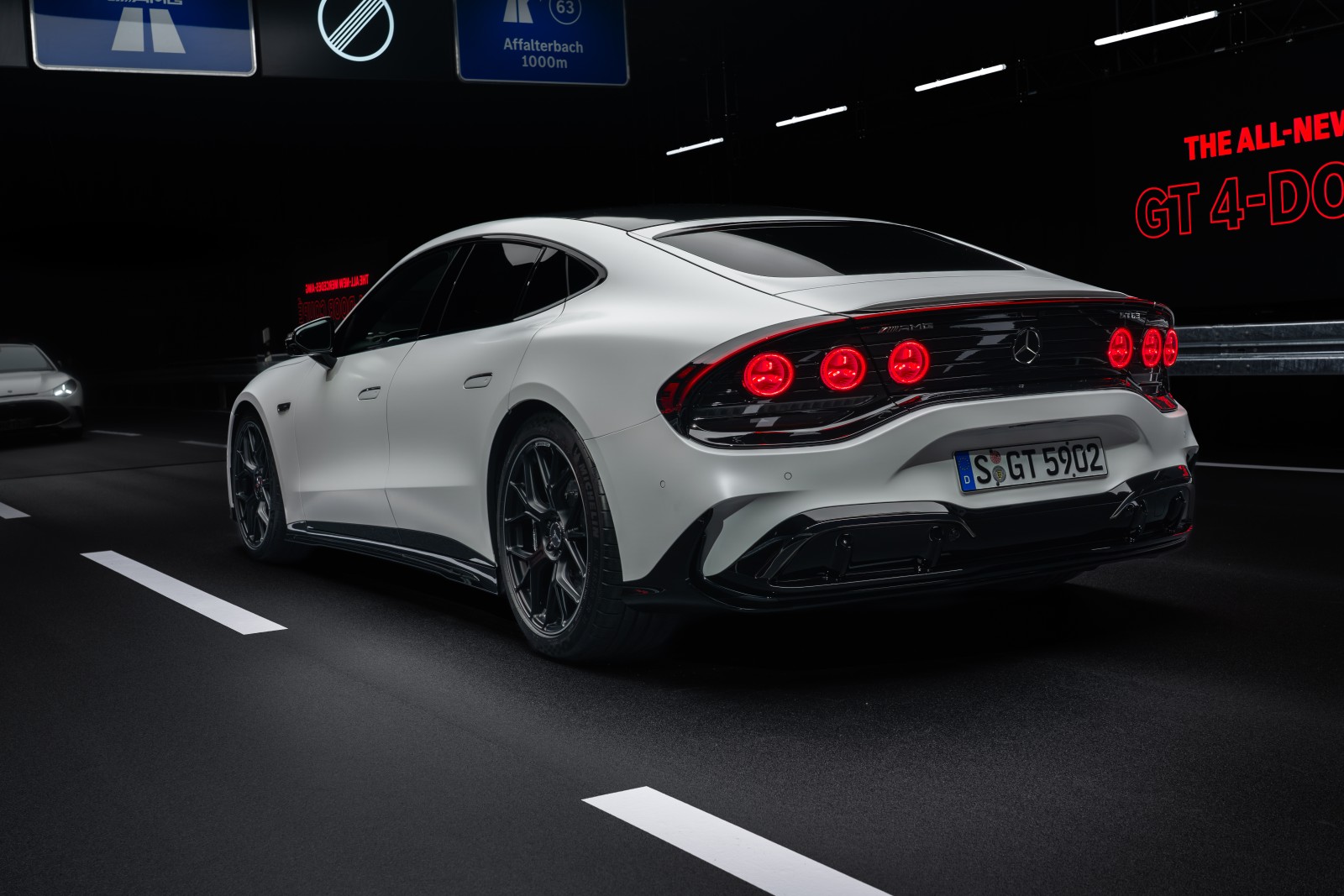
The design keeps the fastback silhouette of the previous GT 4-Door, but with more radical proportions. The car sits lower than before, despite the battery in the floor, and features a long hood, short overhangs, flush door handles and a muscular rear end. The AMG grille can be illuminated for the first time, while star-shaped lighting graphics give the front and rear a more futuristic identity.
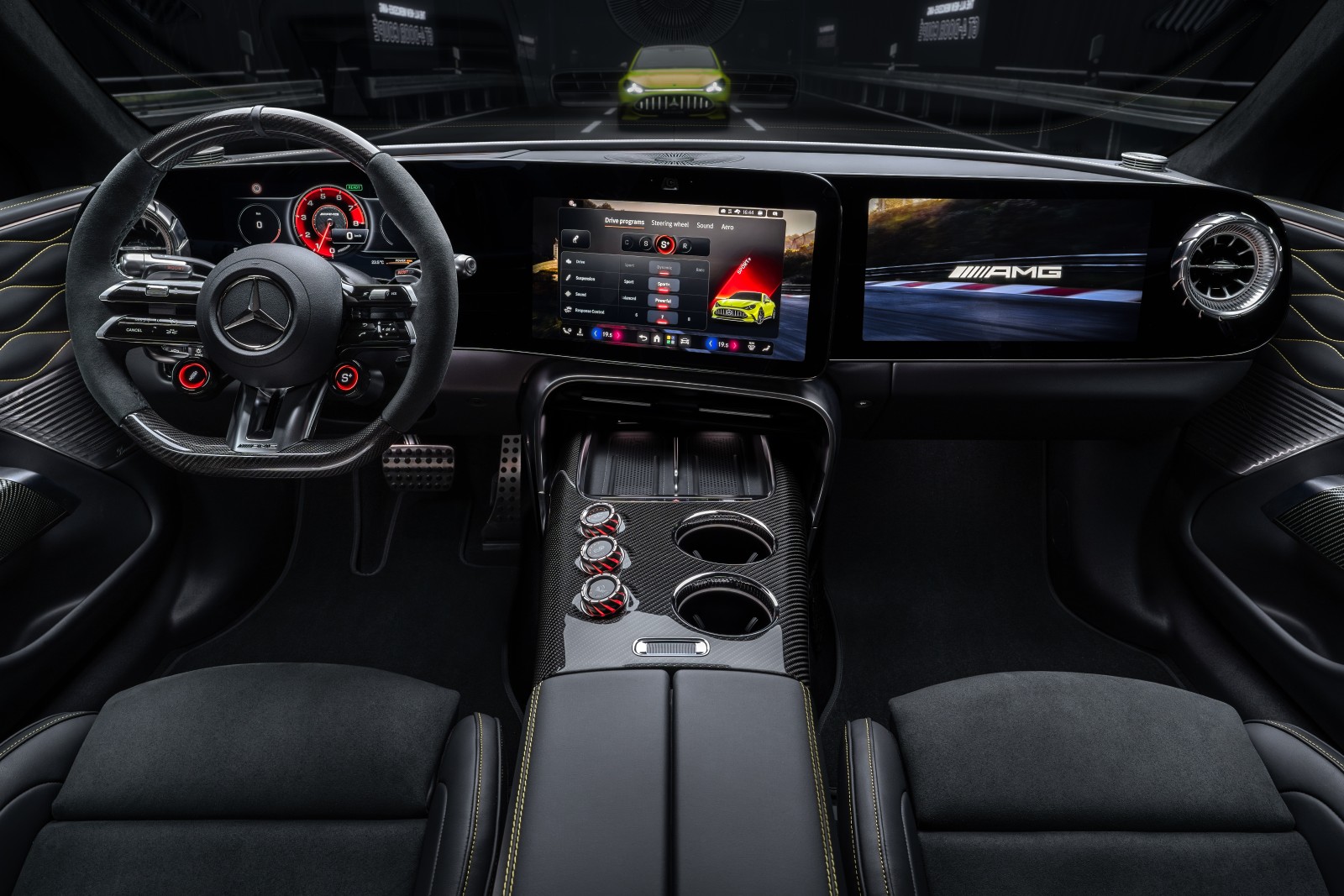
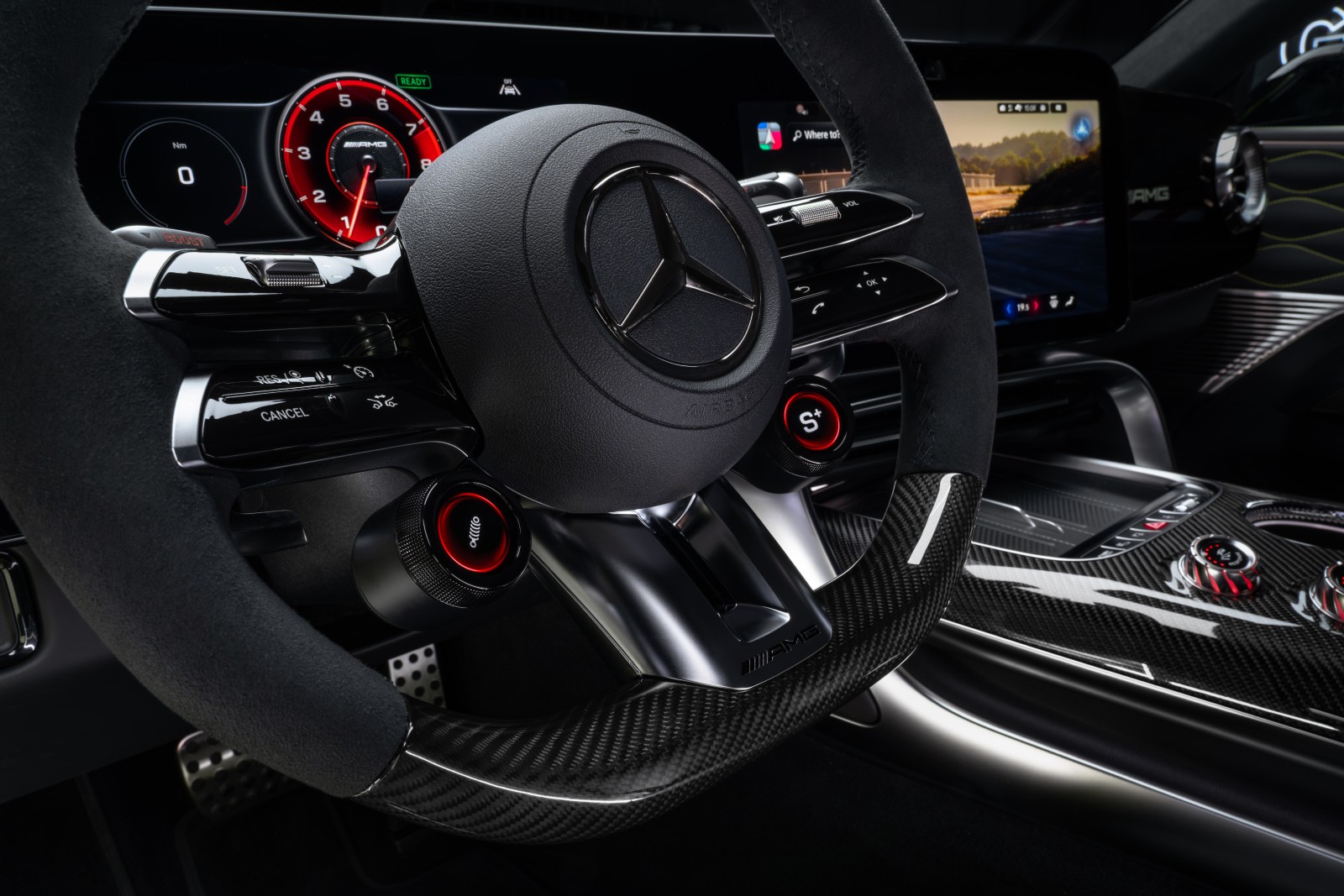
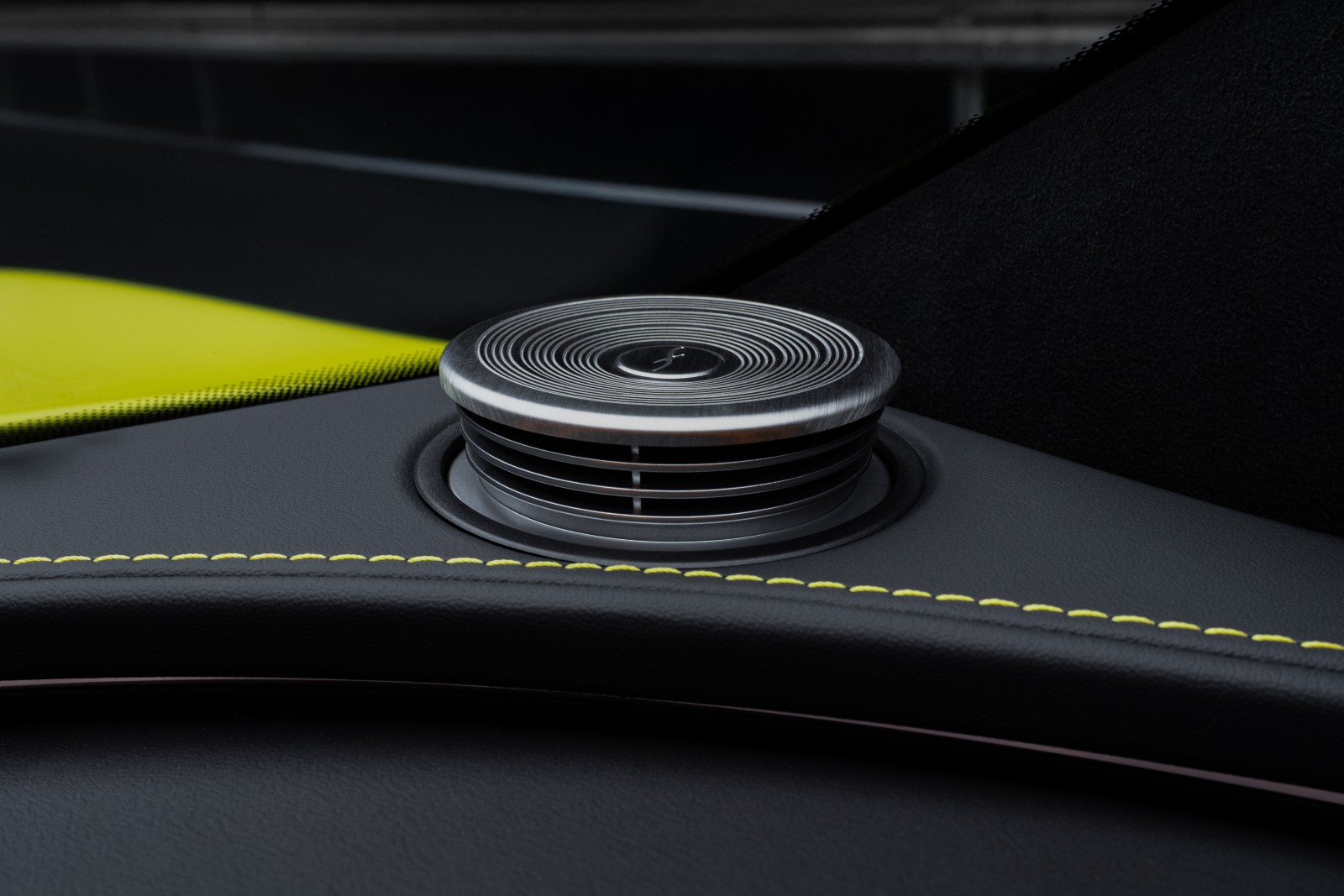
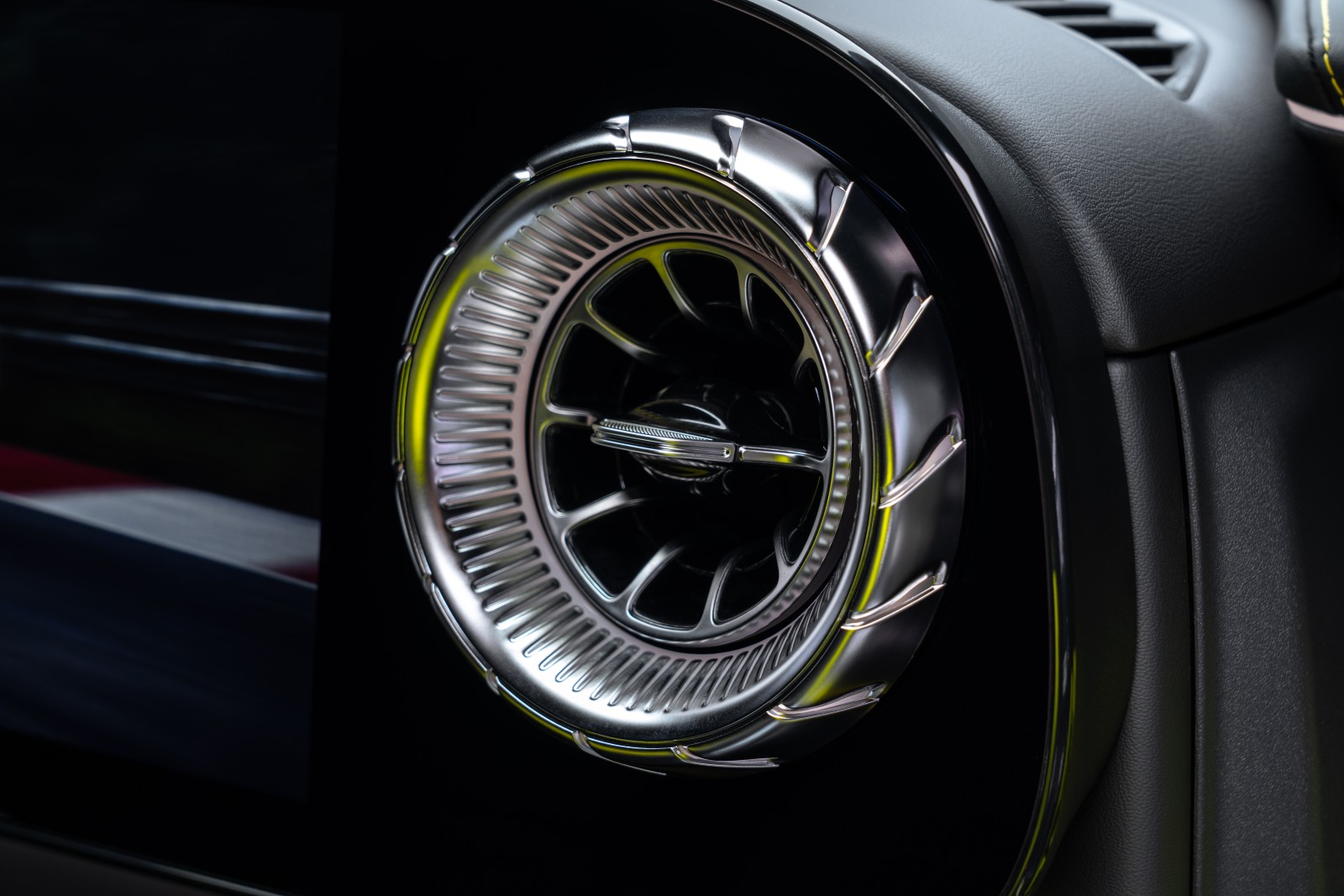
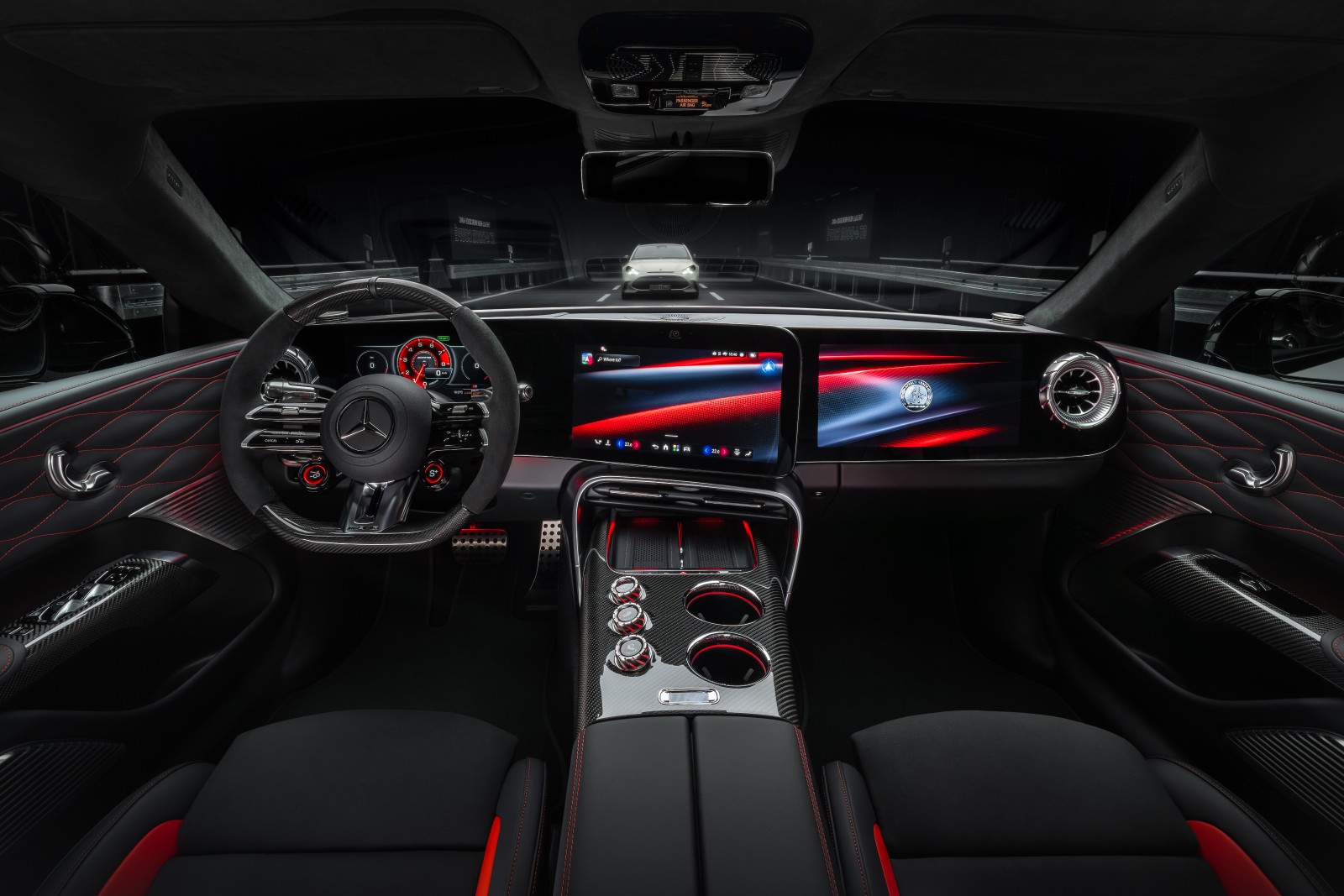
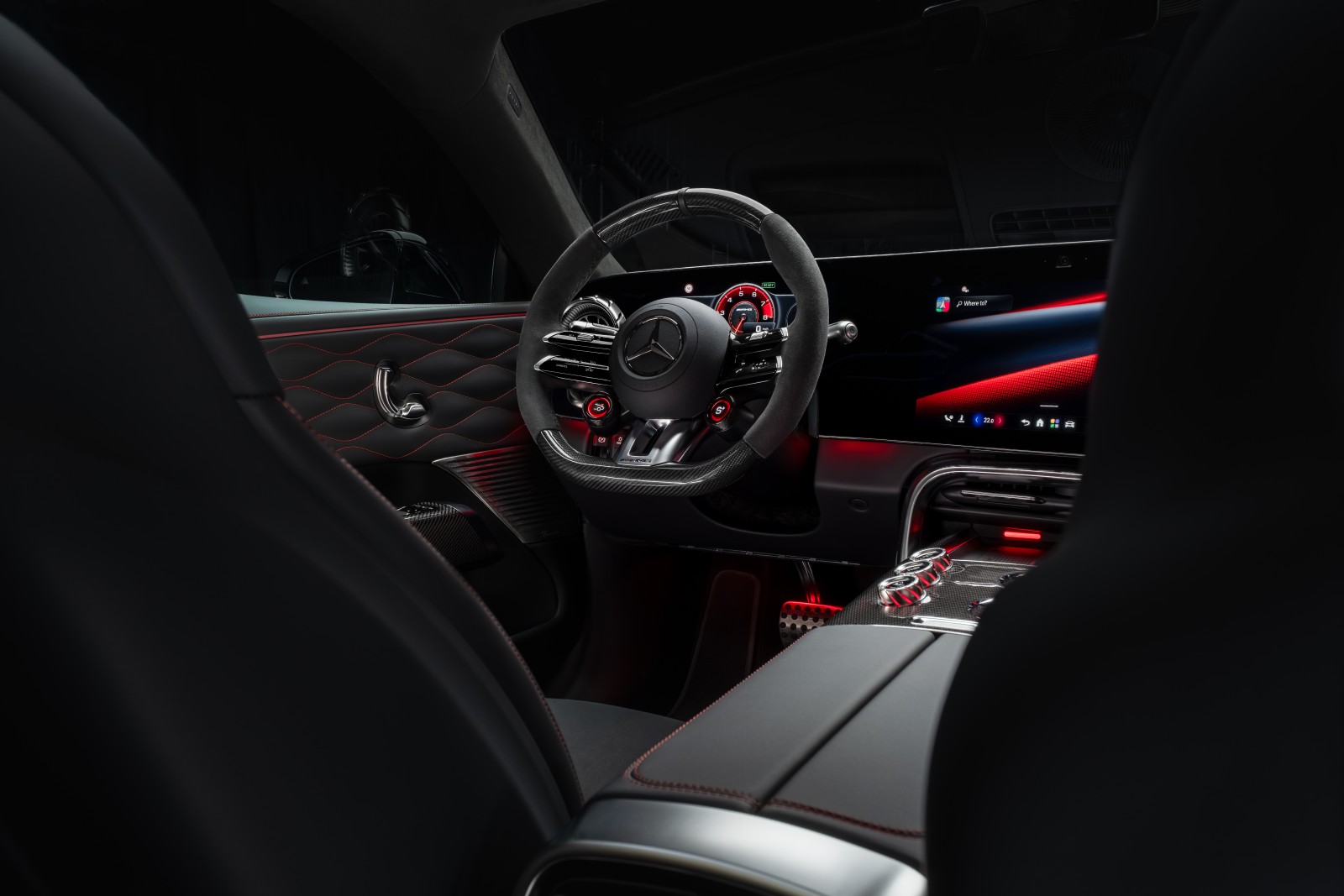
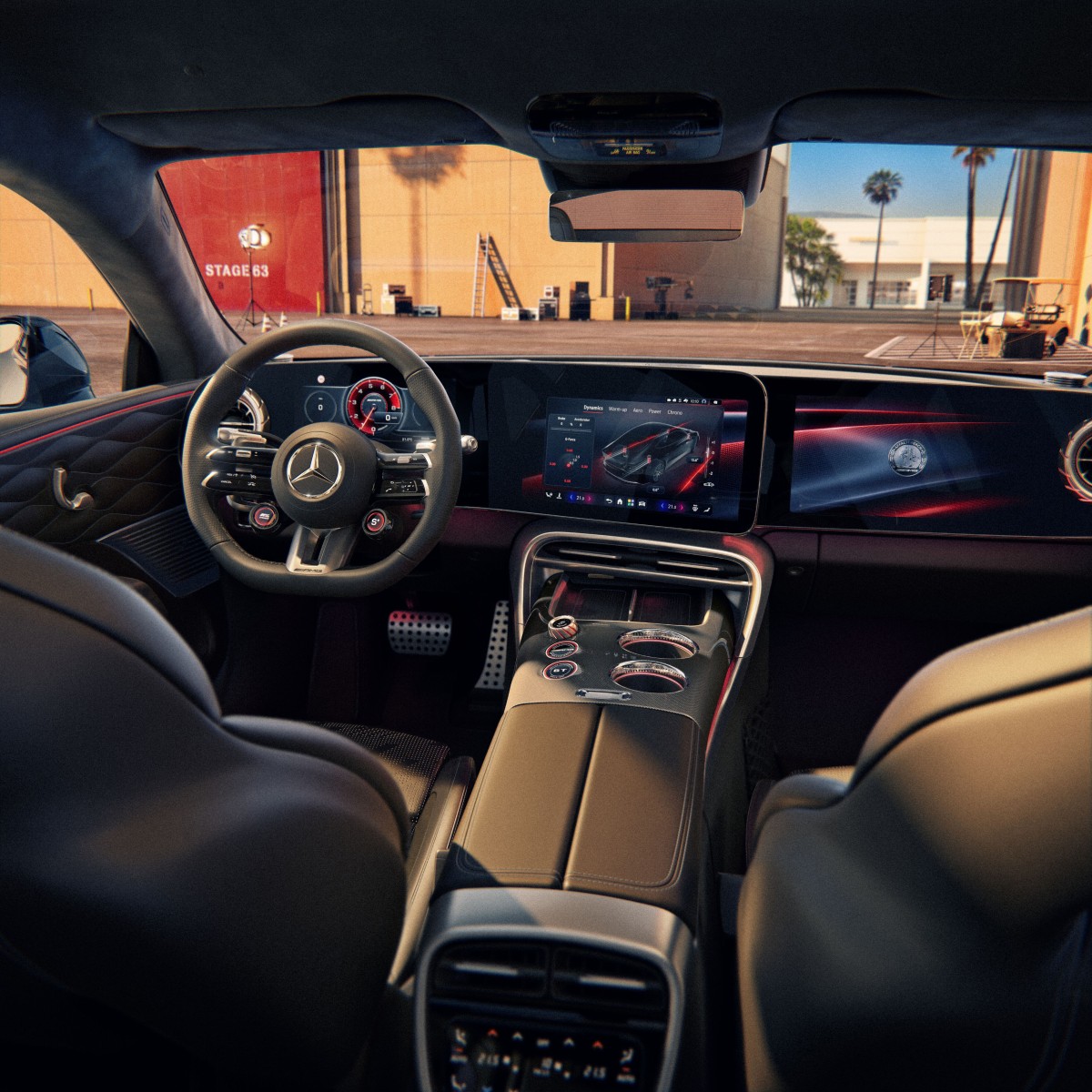
Inside, AMG combines a low sports-car seating position with grand-tourer comfort. The cockpit has a 10.2-inch digital instrument cluster, a 14-inch central display angled toward the driver and an optional 14-inch passenger screen. The center console is built around the three AMG Race Engineer rotary controls, while the steering wheel includes paddles for adjusting recuperation.
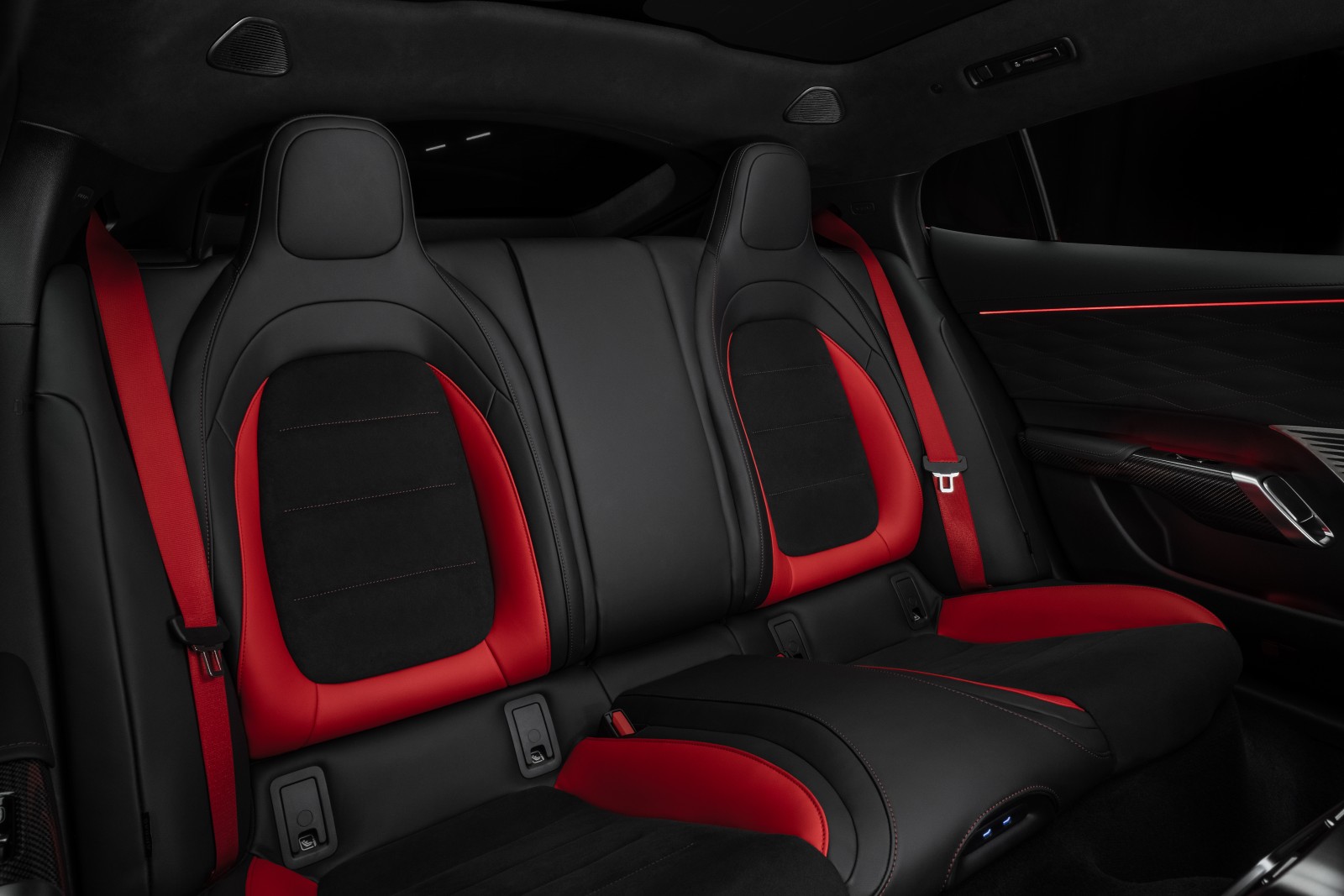
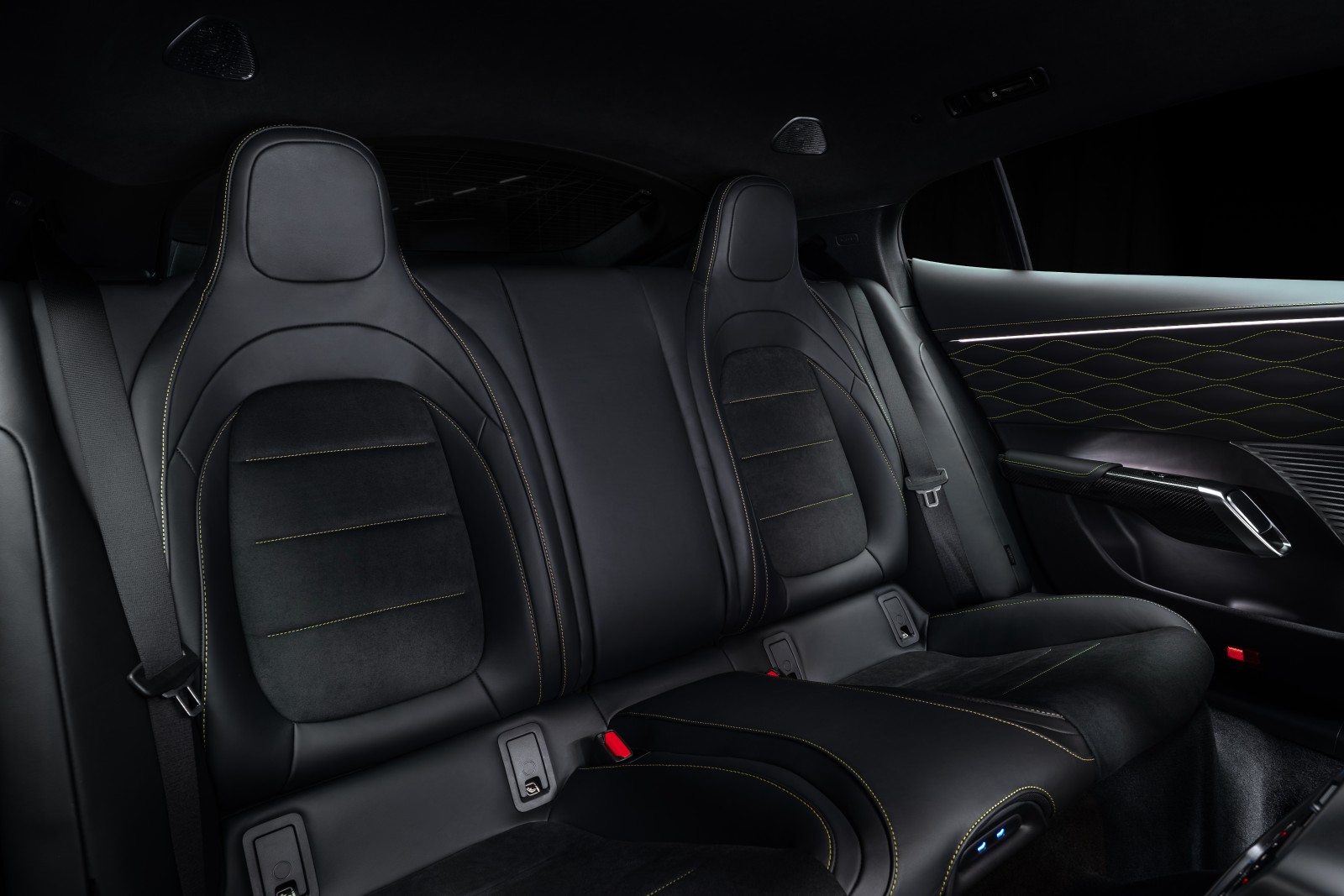
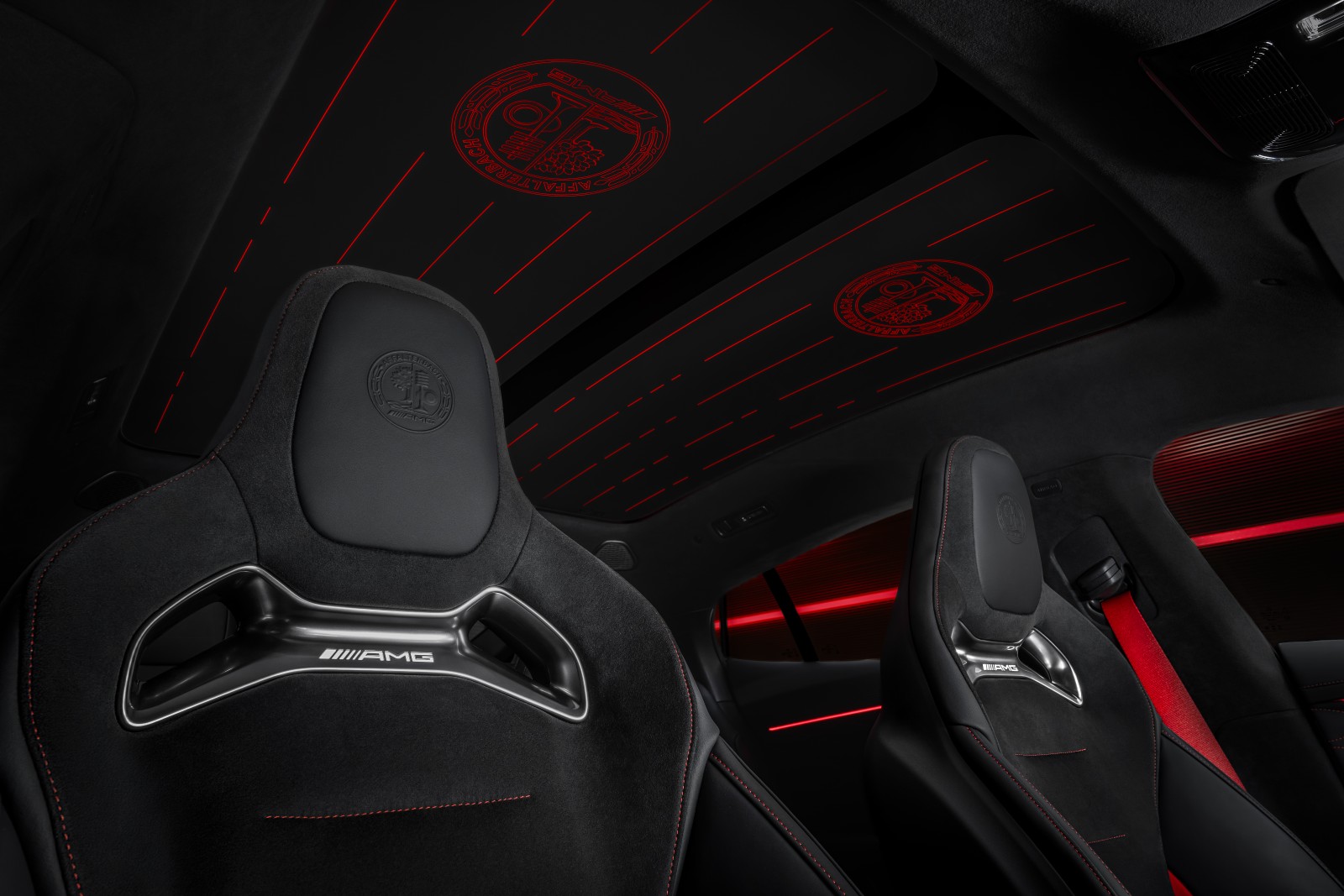
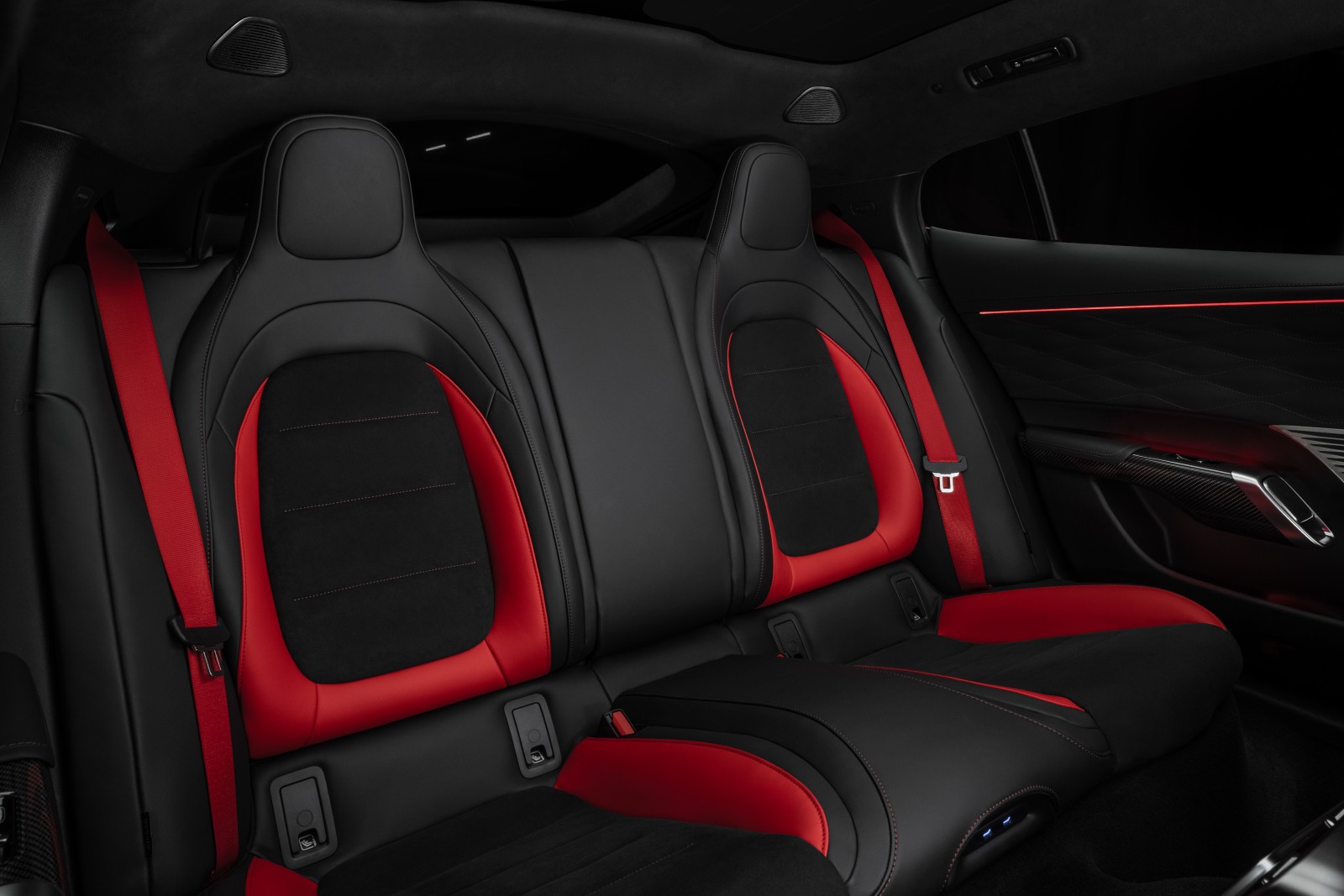
The rear cabin is designed for two passengers as standard, with individual seats and special footwell recesses to improve legroom. A three-seat rear bench is optional. The panoramic Sky Control glass roof can switch between transparent and opaque sections and can also display illuminated AMG graphics at night.
The new MBUX system runs on Mercedes-Benz’s MB.OS software and includes AMG-specific apps for performance data, vehicle setup and track use. AMG Track Pace records more than 80 vehicle parameters and can help drivers analyze lap times, racing lines and braking points.
Production will begin in summer 2026 at Mercedes-Benz’s Sindelfingen plant. The axial-flux motors will be built in Berlin-Marienfelde, where Mercedes has developed new production processes for this technology.
The new Mercedes-AMG GT 4-Door Coupé is not simply an electric replacement for the old model. It is AMG’s attempt to prove that its next-generation EVs can deliver not only huge numbers, but also endurance, sound, feel and adjustability — the qualities that traditionally made AMG cars more than just fast.
Gallery