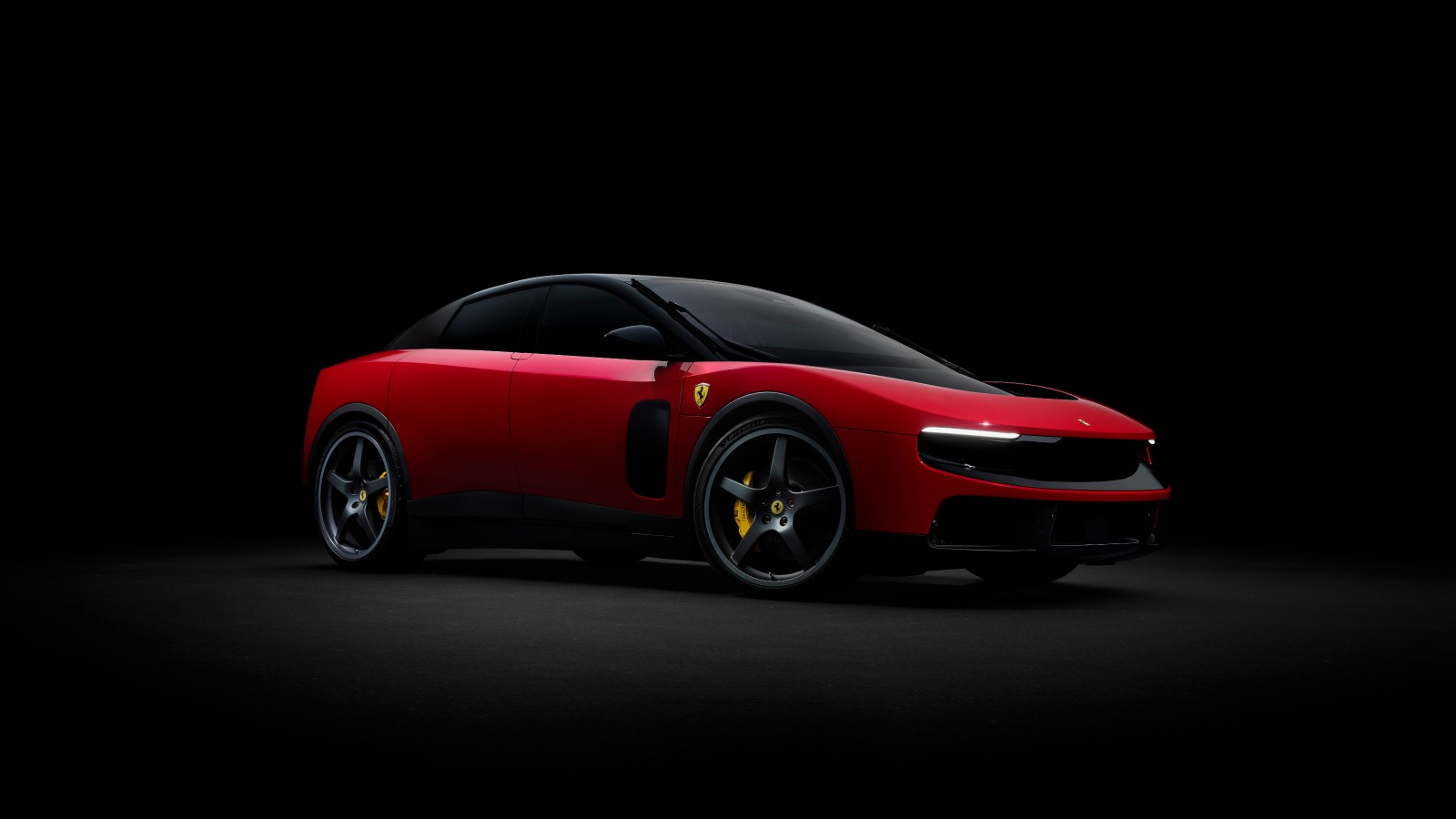
Ferrari Luce Debuts as Maranello’s First Fully Electric Model
Ferrari Luce opens a new chapter for Maranello as the brand’s first fully electric model, combining four motors, five seats and 1,050 cv of performance.
Ferrari has unveiled the Luce, its first fully electric production car and one of the most important new models in the company’s modern history. Rather than presenting it as a replacement for combustion or hybrid Ferraris, Maranello positions the Luce as a new type of Ferrari made possible only by an electric architecture.
The car was revealed in Rome, a symbolic location for the brand. Ferrari’s first victory came there in 1947, when the 125 S won the Gran Premio di Roma. Nearly eight decades later, Ferrari has returned to the city to introduce a model that expands its range into a completely new technical and design direction.
The Luce is built on a dedicated electric platform and uses four electric motors, one for each wheel. Combined output reaches 1,050 cv, while the car can accelerate from 0 to 100 km/h in 2.5 seconds and from 0 to 200 km/h in 6.8 seconds. Top speed is 310 km/h, and estimated range is 530 km.
Its battery is also developed and built in Maranello. The pack has a gross capacity of 122 kWh, operates on an 800-volt architecture and supports fast charging at up to 350 kW. Ferrari says the battery is integrated into the structure of the car, helping improve rigidity while keeping the center of gravity low.
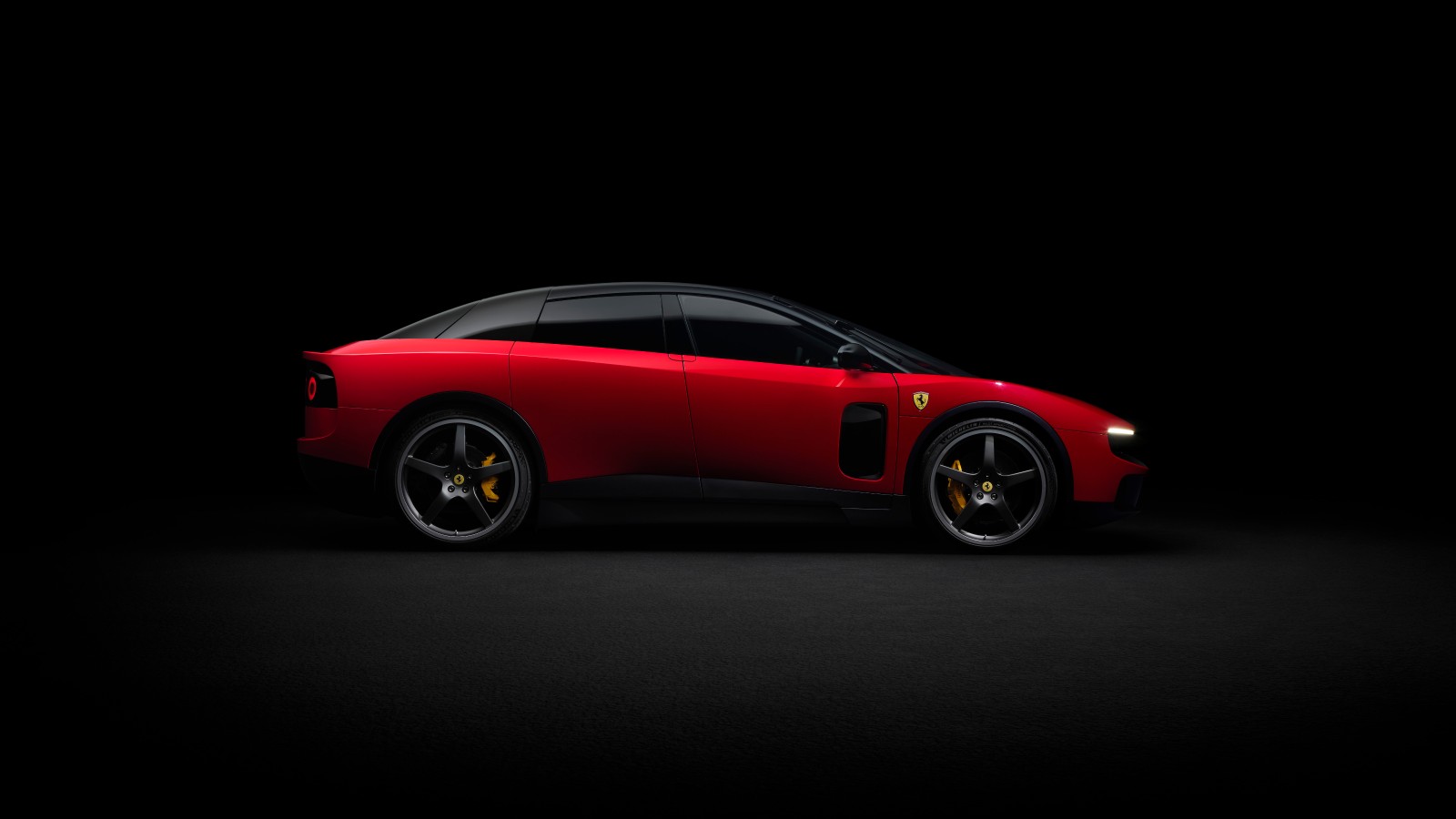
The layout gives Ferrari new packaging freedom. The Luce is only the second four-door Ferrari after the Purosangue, but it is the first Ferrari with five seats. The lack of a central tunnel helps create more interior space, while the car still keeps sports-car proportions and a rear-biased weight distribution of 47:53.
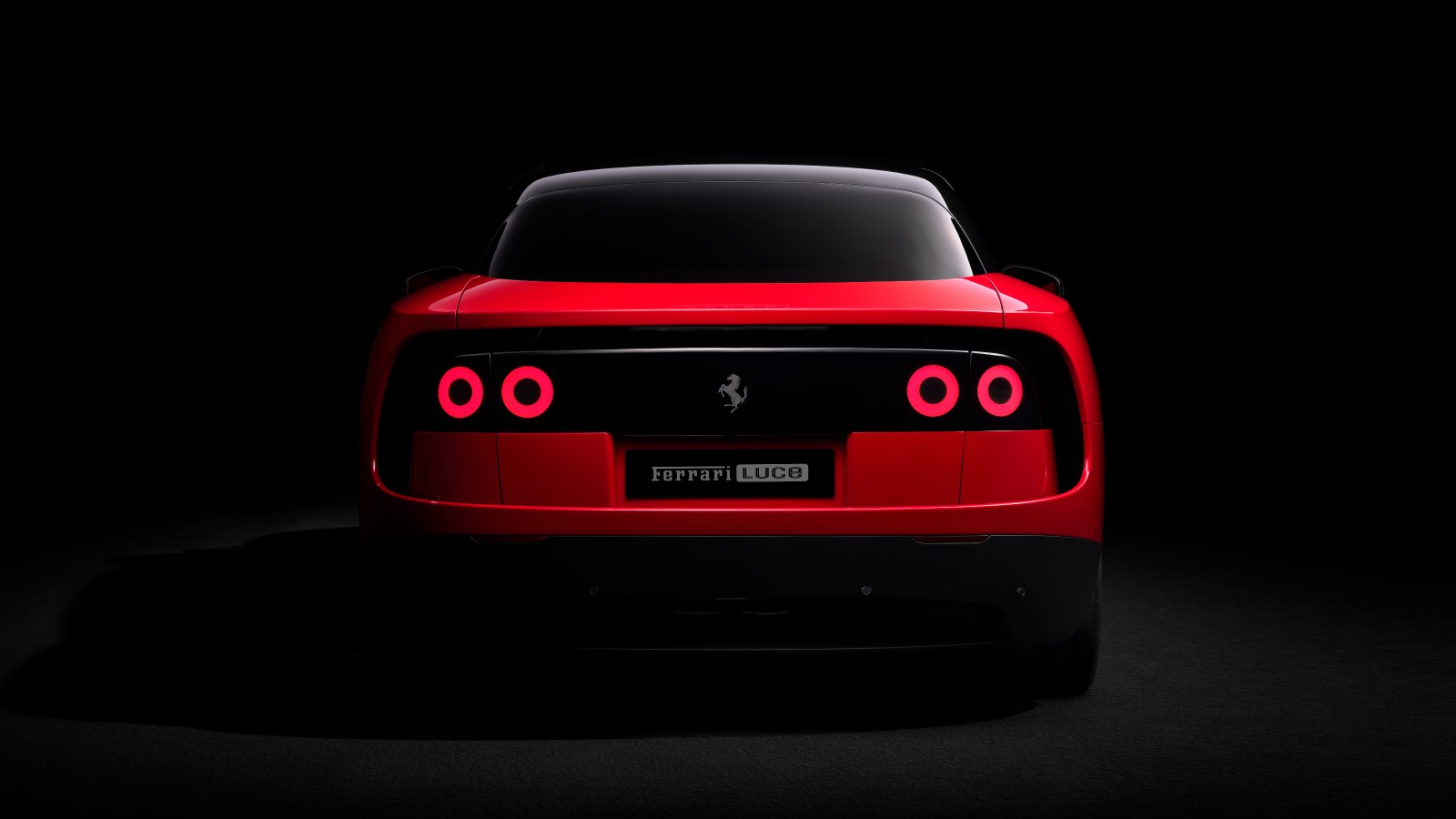
Design was developed with LoveFrom, the creative collective led by Sir Jony Ive and Marc Newson. The result is deliberately different from Ferrari’s recent combustion models. The Luce has a clean glasshouse, smooth body surfaces and floating aerodynamic elements at the front and rear. The lights are integrated into transparent panels, and the rear halo-style lamps reference the 360 Modena and 458 Italia.
The wheels are another striking detail. Ferrari says the Luce has the largest staggered wheel diameters ever fitted to one of its series-production road cars: 23 inches at the front and 24 inches at the rear. Two designs are available, including an aero-focused turbine-style option.
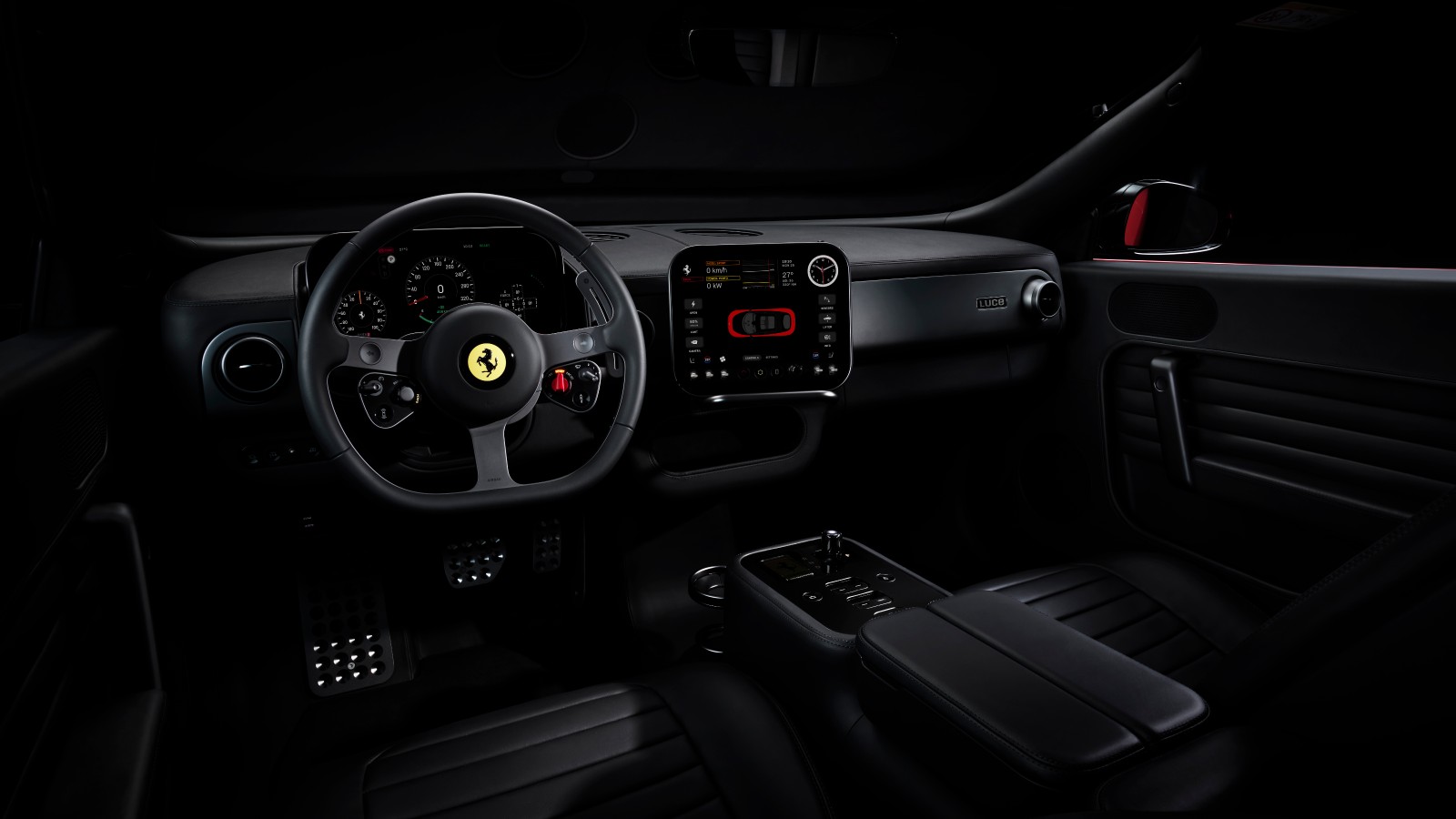
Inside, Ferrari has tried to avoid a purely screen-based cabin. The interface mixes physical controls with digital displays, using mechanical buttons, dials, toggles and switches alongside OLED screens developed with Samsung Display. The steering wheel includes both the traditional Manettino and a new e-Manettino for managing power, traction and range.
One of the most unusual features is the key. It is made from Corning Gorilla Glass and uses an E Ink display, which Ferrari describes as a first for the automotive industry. Docking the key starts the car and unlocks the shifter, turning the startup process into part of the driving ritual.
Ferrari has also taken a different approach to sound. Instead of using a synthetic soundtrack, the Luce captures vibrations from the electric axles through a precision accelerometer, then filters and amplifies the signal. The idea is to create an authentic mechanical sound from the car’s own moving parts, rather than imitating a combustion engine.
Driving dynamics are built around full control of each wheel. Each motor can manage traction and regeneration independently, while four-wheel steering, active suspension and advanced torque vectoring help the car remain agile despite a kerb weight of 2,260 kg. Ferrari says the center of gravity is 95 mm lower than in the Purosangue, with a yaw moment of inertia 15 percent lower.
The Luce also introduces a new Vehicle Control Unit, which coordinates powertrain and chassis systems 200 times per second. The right steering-wheel paddle adjusts torque delivery, while the left paddle changes regenerative braking intensity. Ferrari says this creates a new “torque language” rather than simulating gear changes.
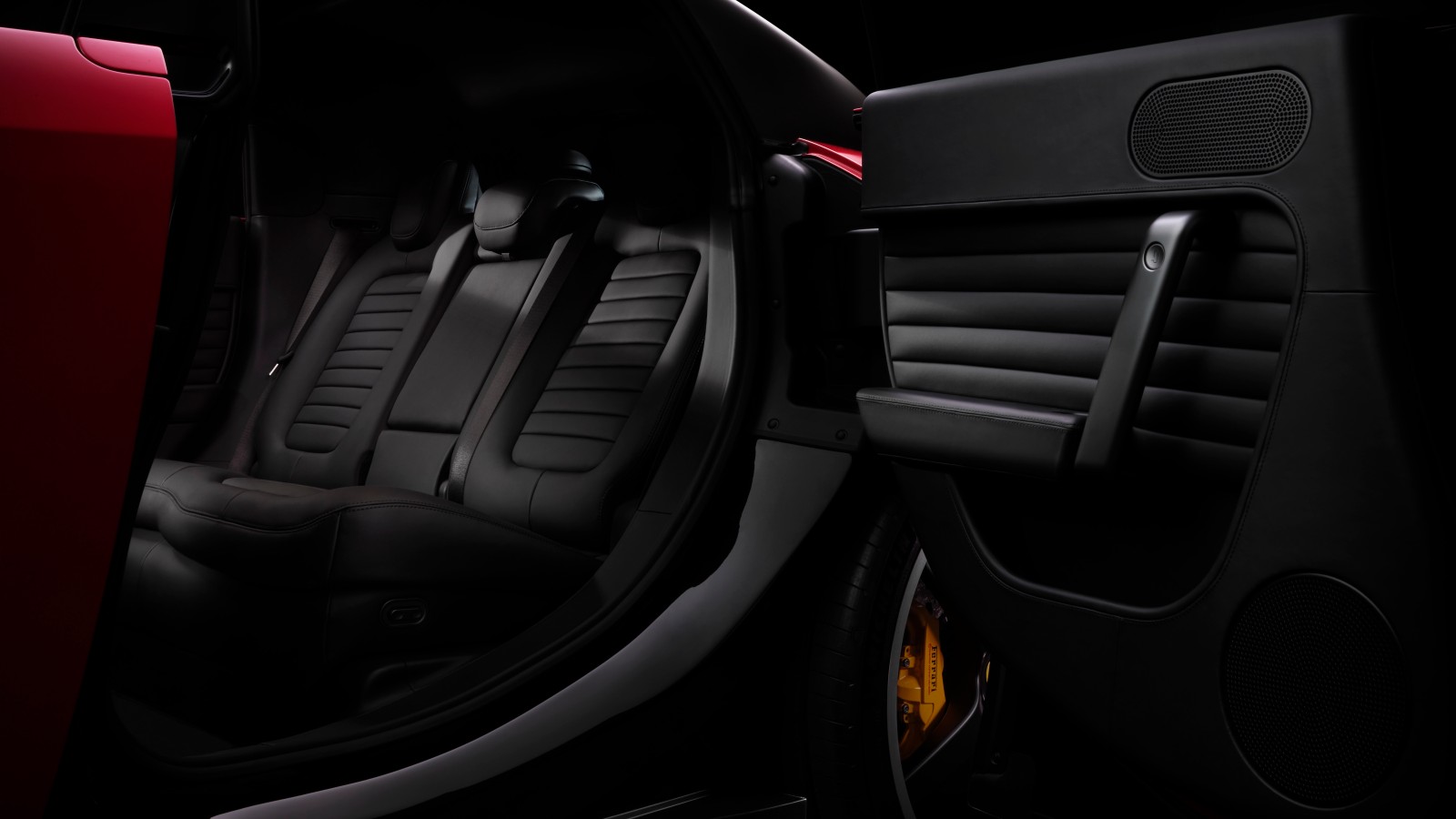
Practicality is clearly part of the brief. The Luce has a 597-liter trunk, advanced connectivity, EV route planning through Google Maps and Apple Maps, and a dedicated MyFerrari Luce app for remote functions such as charging, pre-conditioning and vehicle status. Ferrari will also offer seven years of maintenance and an eight-year warranty for key electric powertrain components.
The Ferrari Luce is not simply Maranello’s answer to existing electric performance cars. It is Ferrari’s attempt to define what a fully electric Prancing Horse should feel like: fast, spacious, highly controlled and still emotionally distinct from the rest of the EV market.