Bugatti Turns To Fine Porcelain For Its Latest One-Off Mistral
Bugatti's newest Mistral swaps carbon flash for kiln-fired ceramic, revealing the car's hidden digital skeleton in hand-painted black lines.
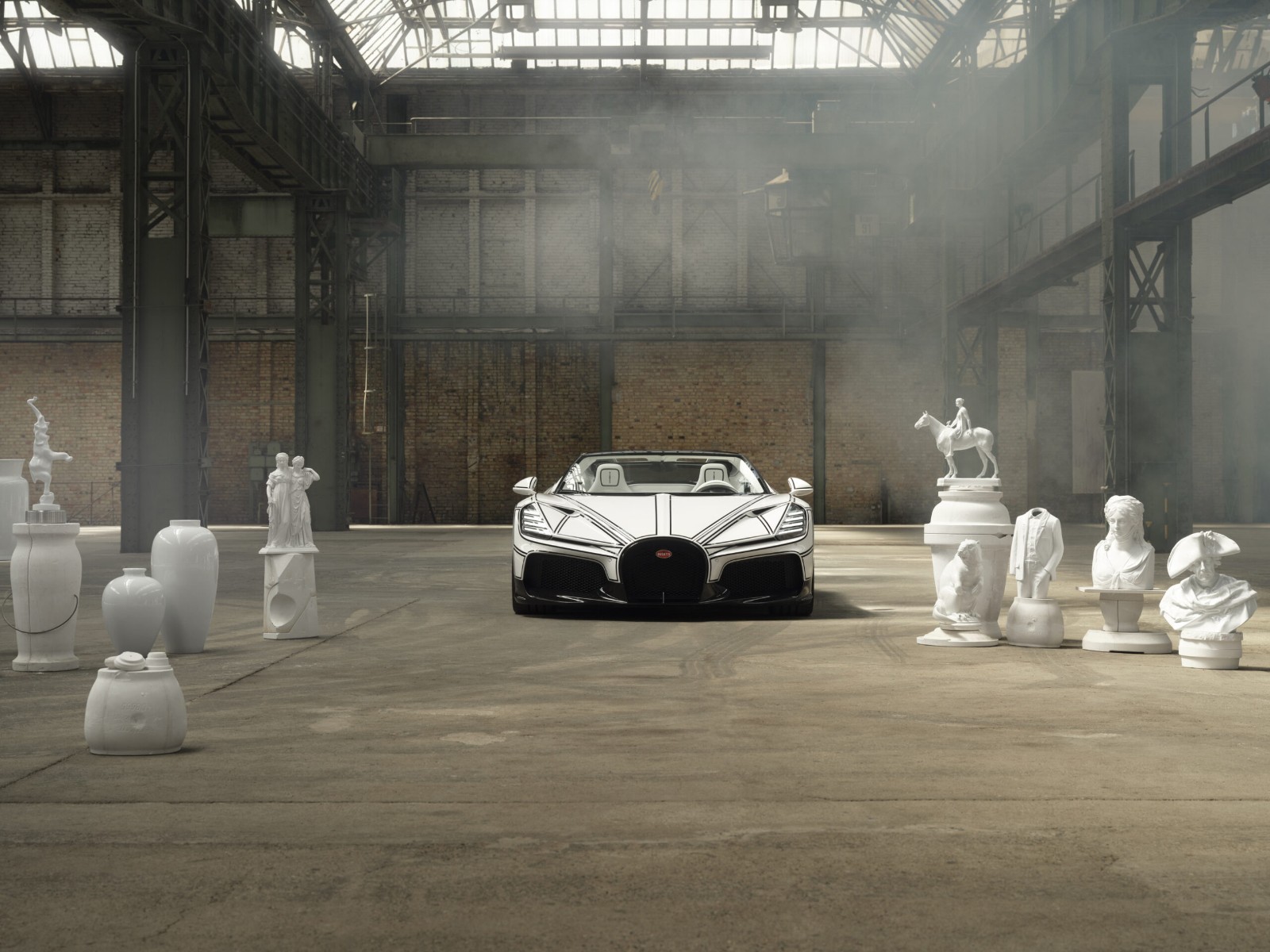
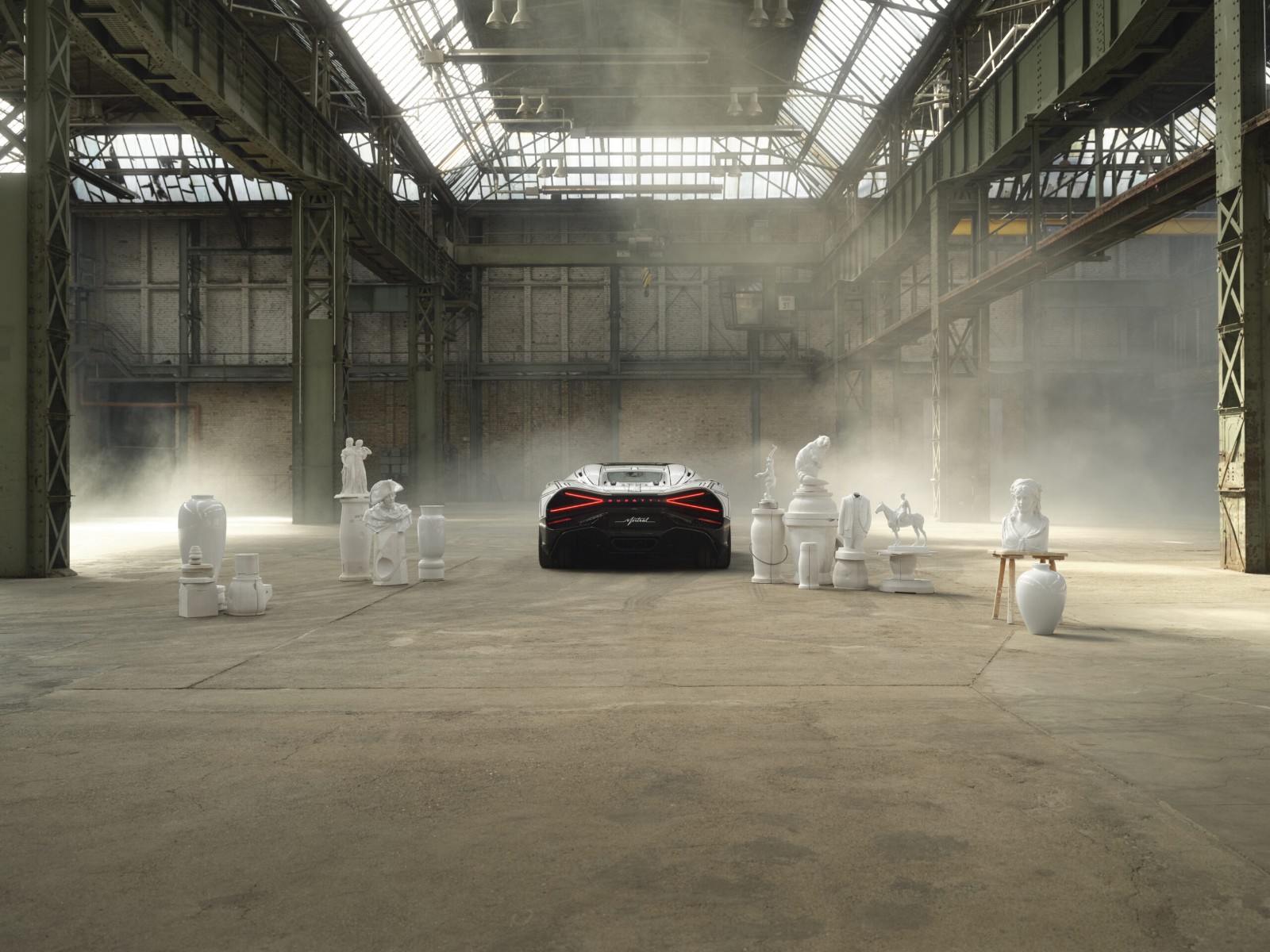
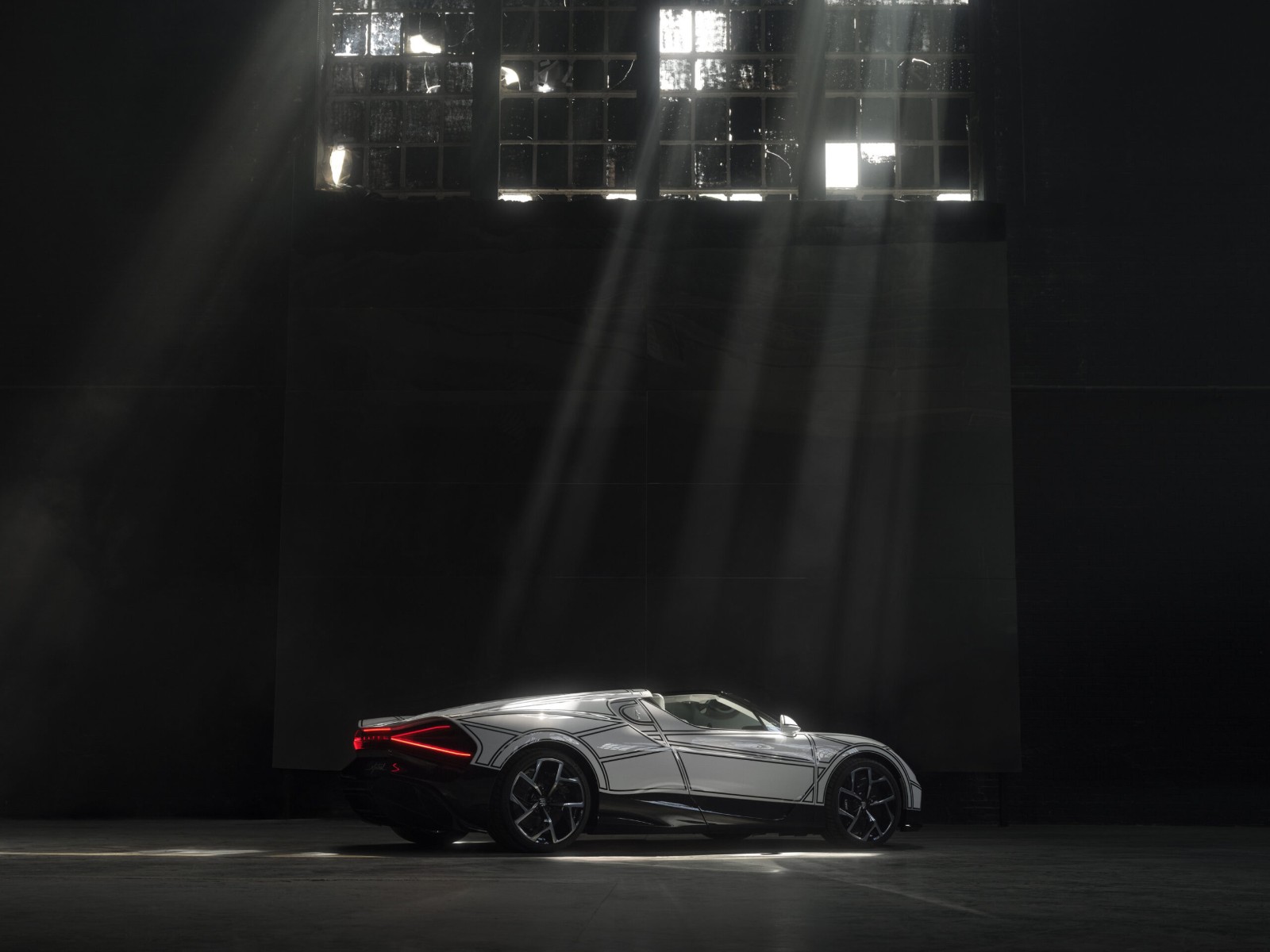
Bugatti has unveiled yet another bespoke take on its W16 Mistral, and this time the French marque has reached for a material more commonly found on a dinner table than a drop-top hypercar. Dubbed Blanc Éternel, this one-off Mistral trades flashy paint or exotic carbon weaves for genuine fired porcelain, applied in select spots across a car that will still hit 261 mph (420 km/h) with the roof stowed.
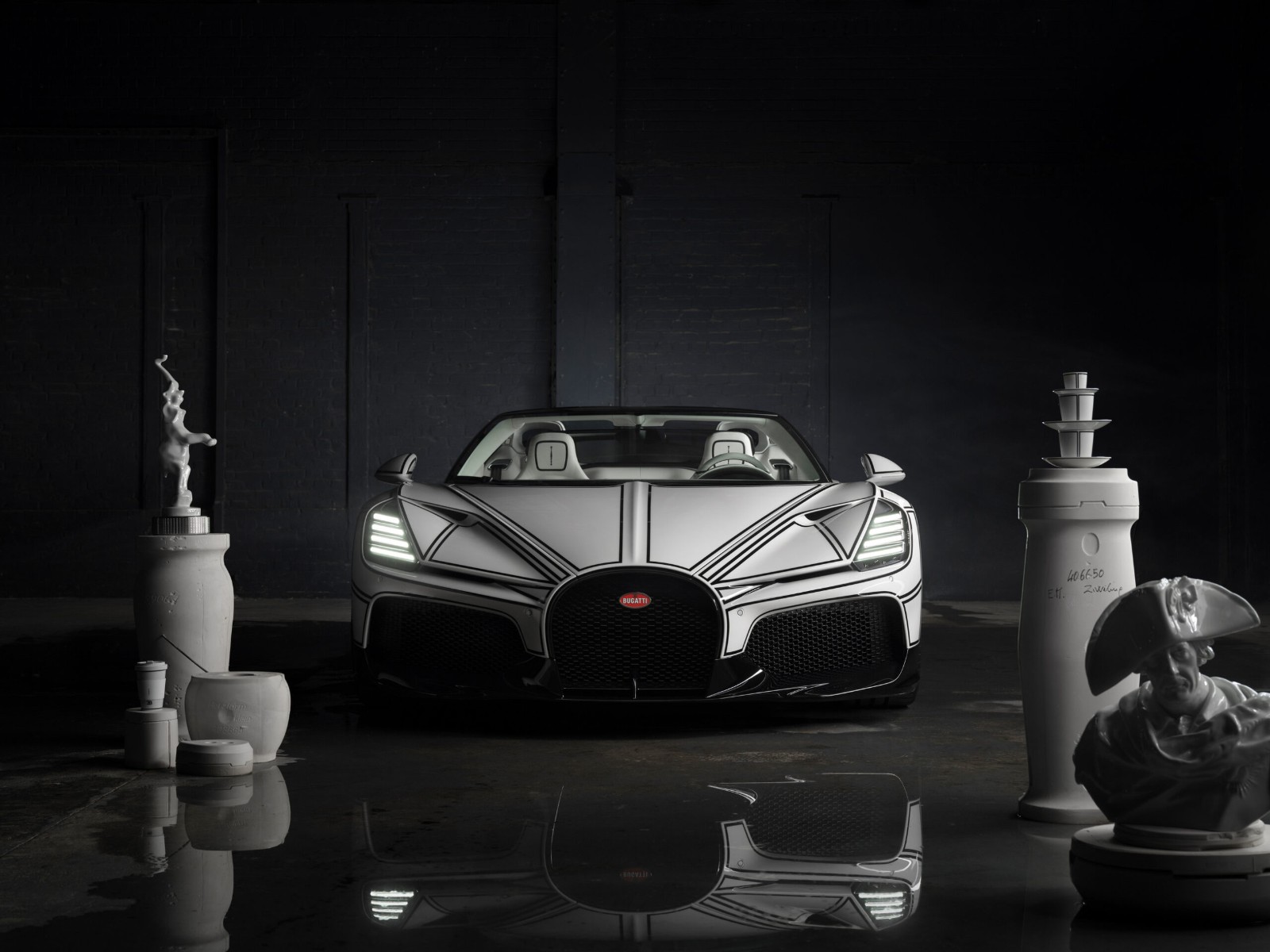
This isn't Bugatti's first brush with fine china. Back in 2011, the brand built the L'Or Blanc, a Veyron Grand Sport Vitesse finished with porcelain accents and blue hand-painted brushstrokes inspired by a vase designer Enzo Mari created for KPM. That car set the precedent; Blanc Éternel picks up the thread more than a decade later, this time built in partnership with the same German ceramics house, Königliche Porzellan-Manufaktur Berlin.
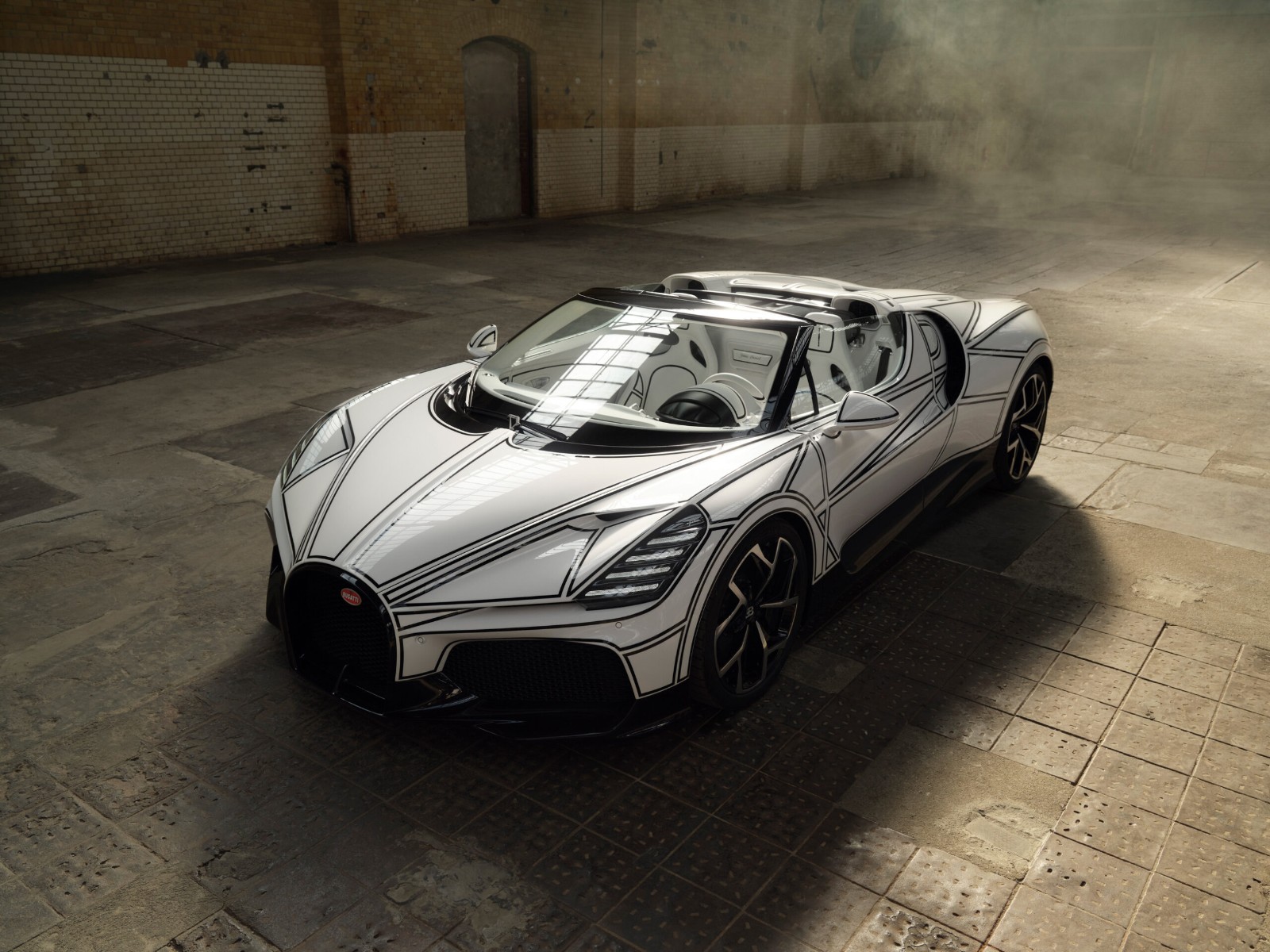
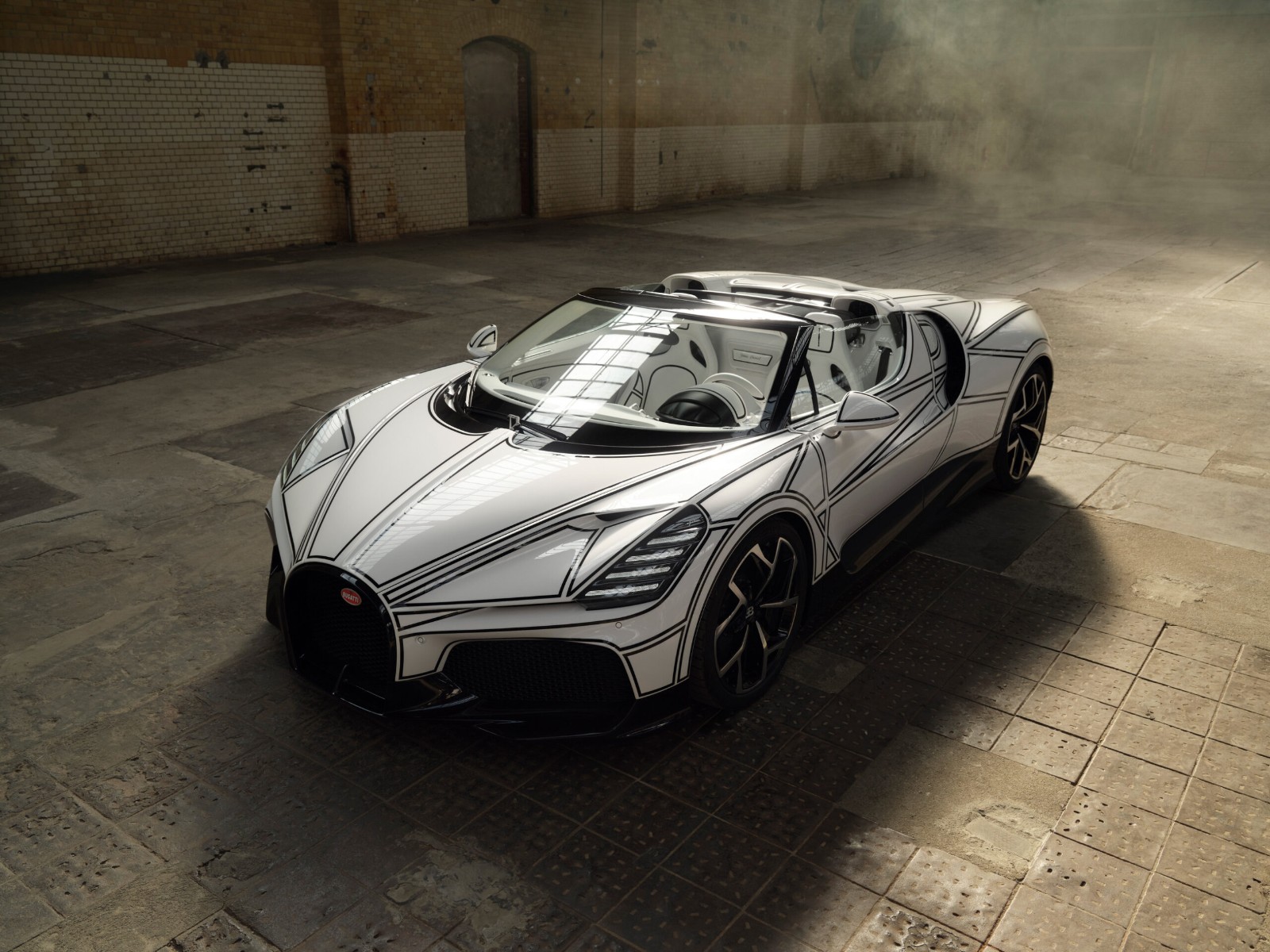
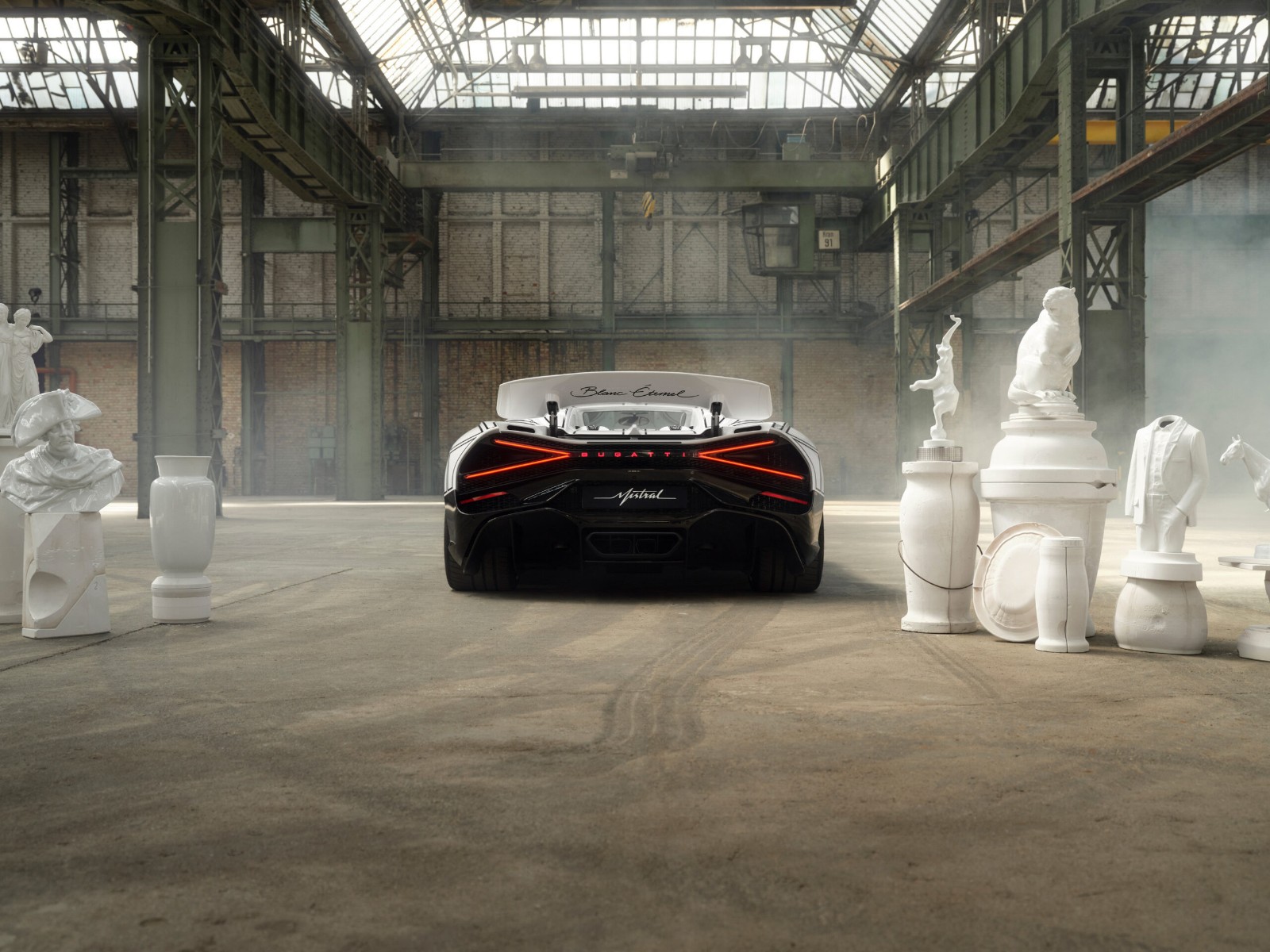
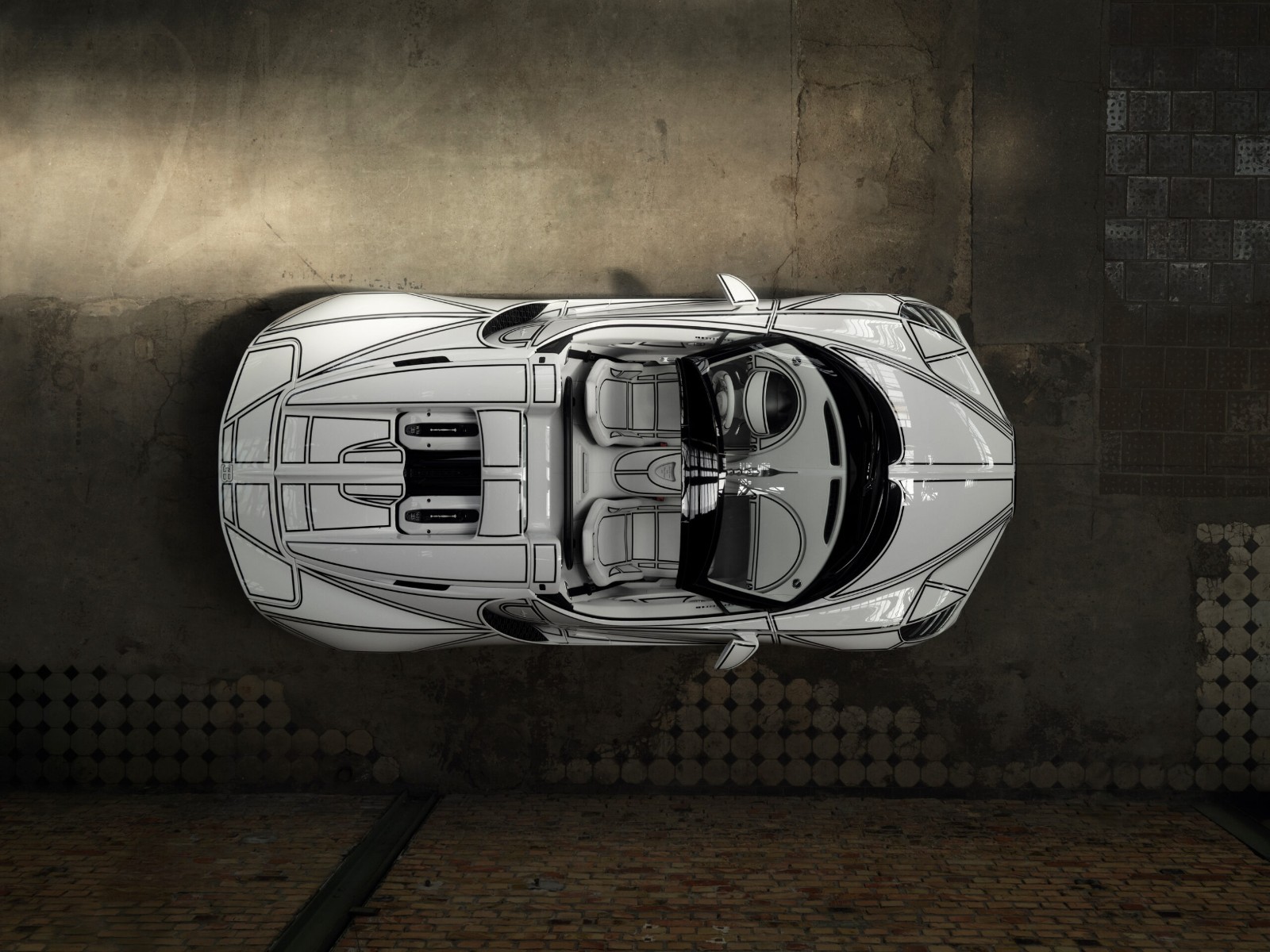
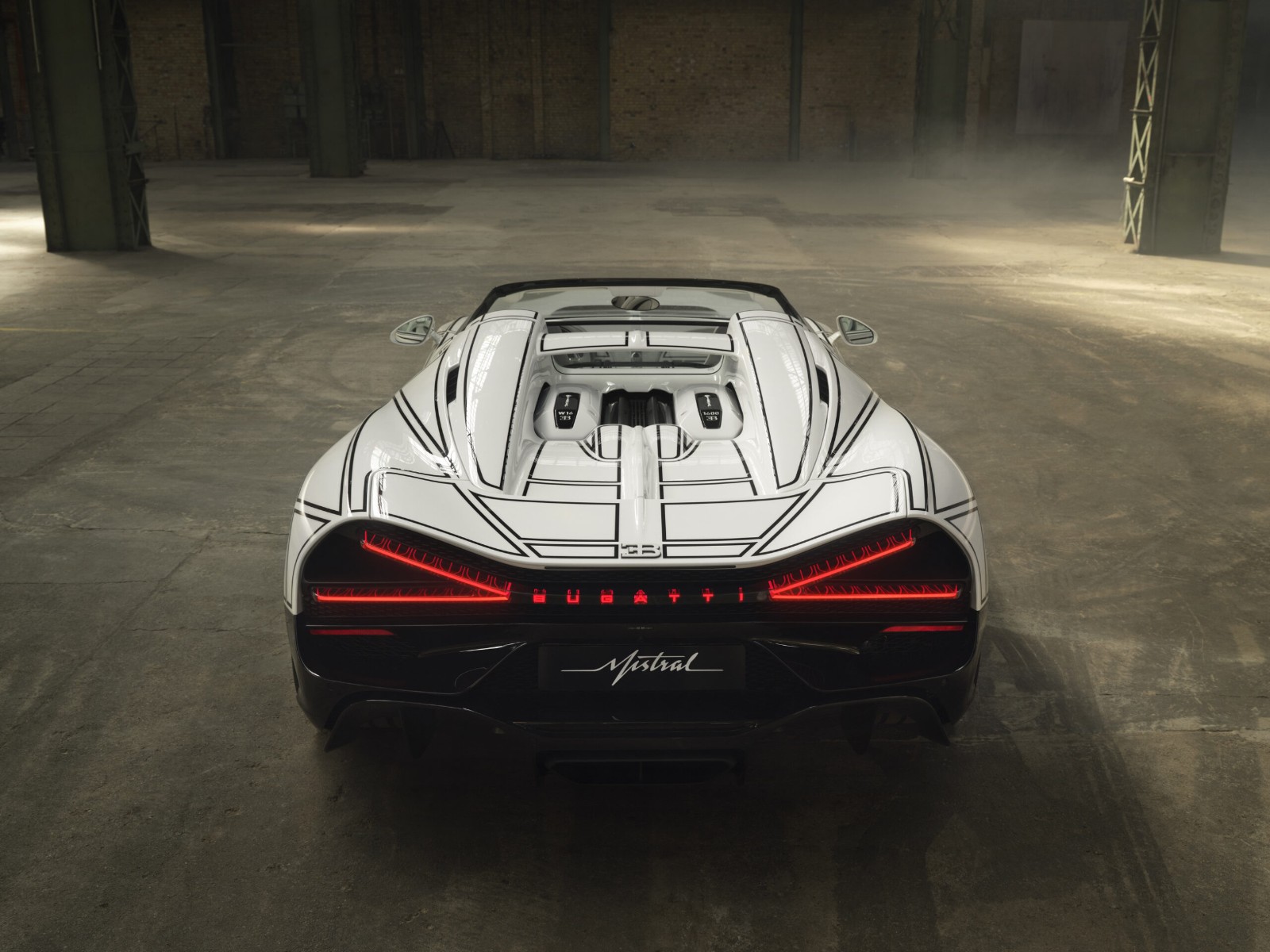
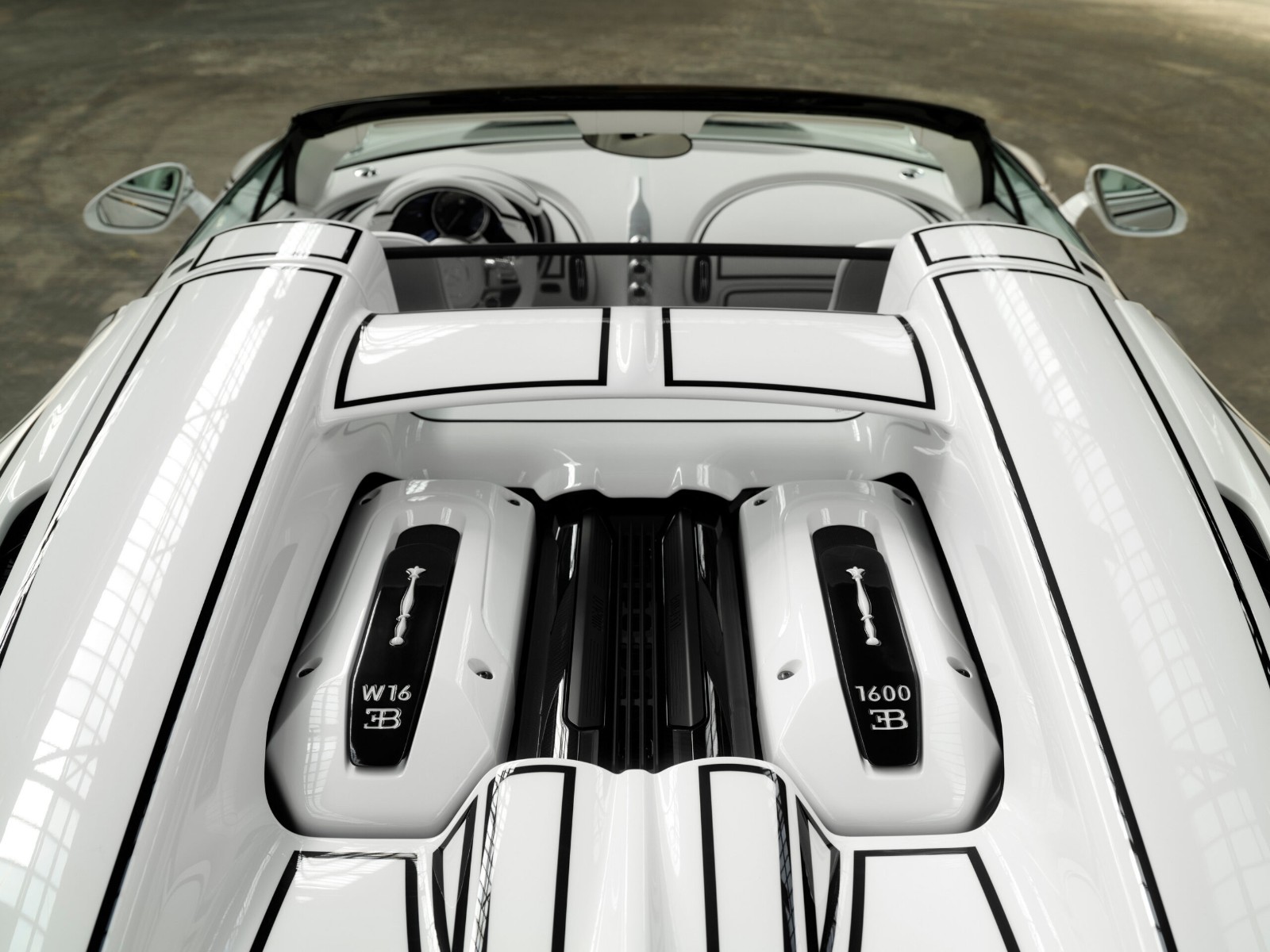
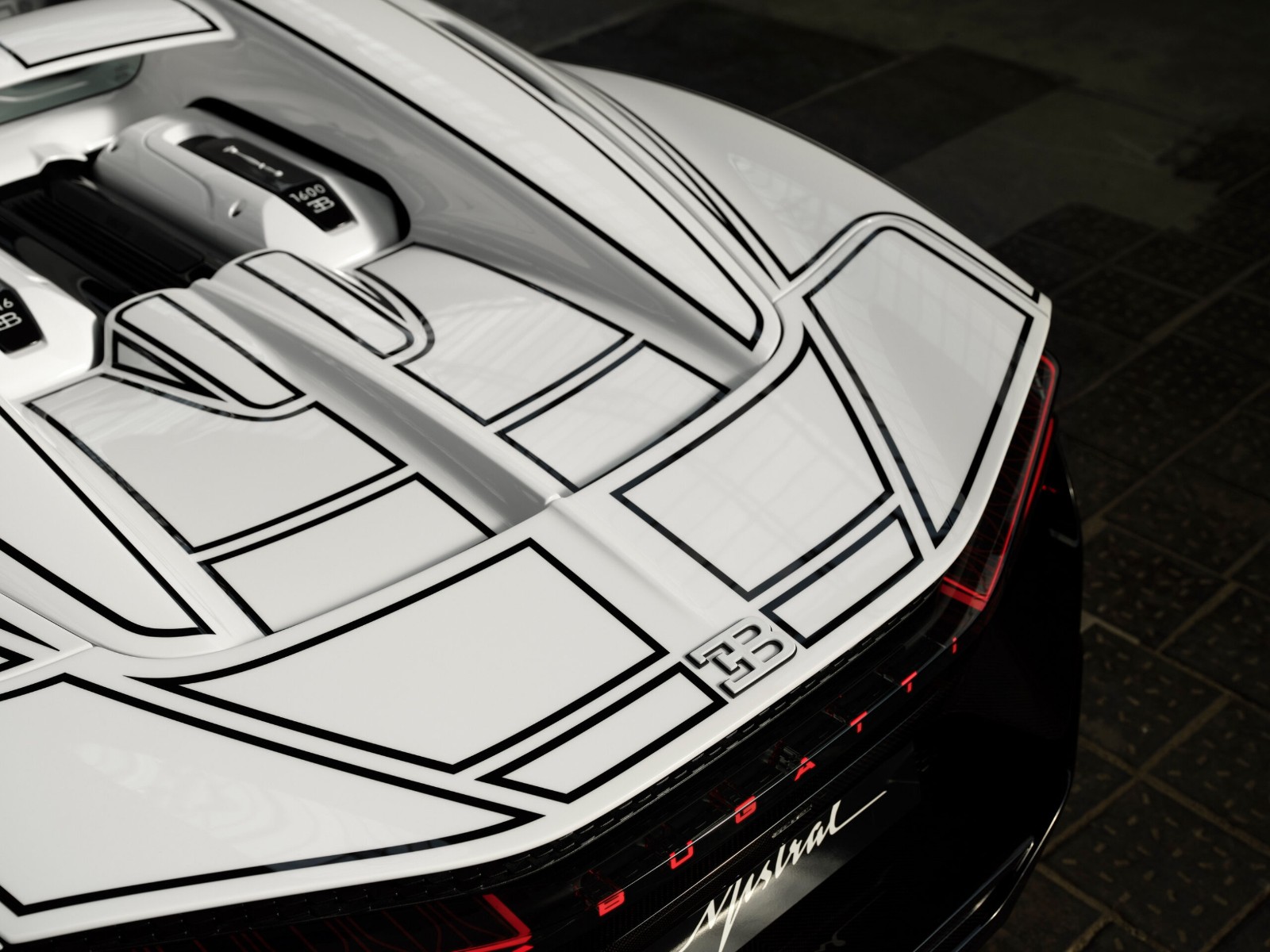
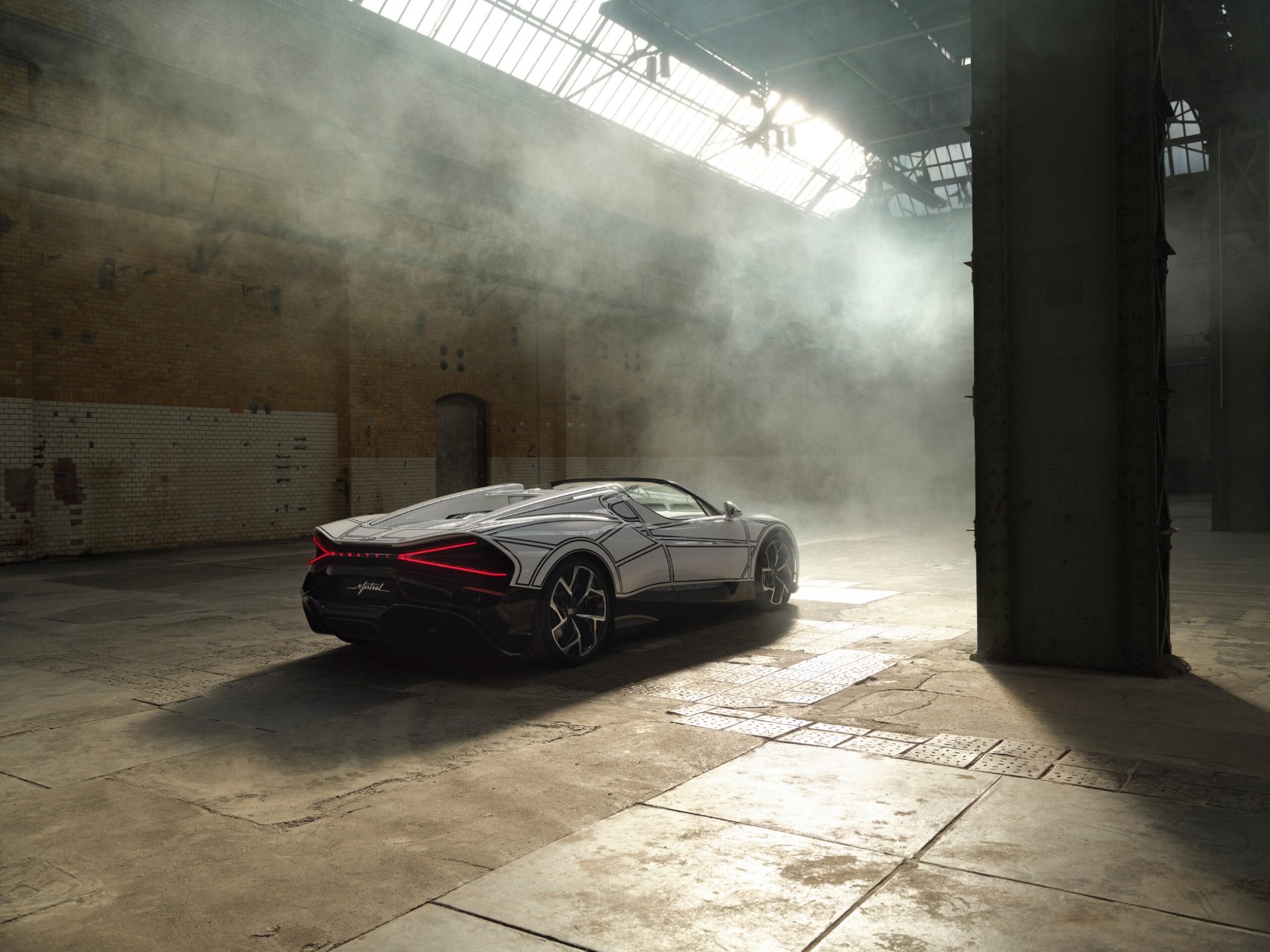
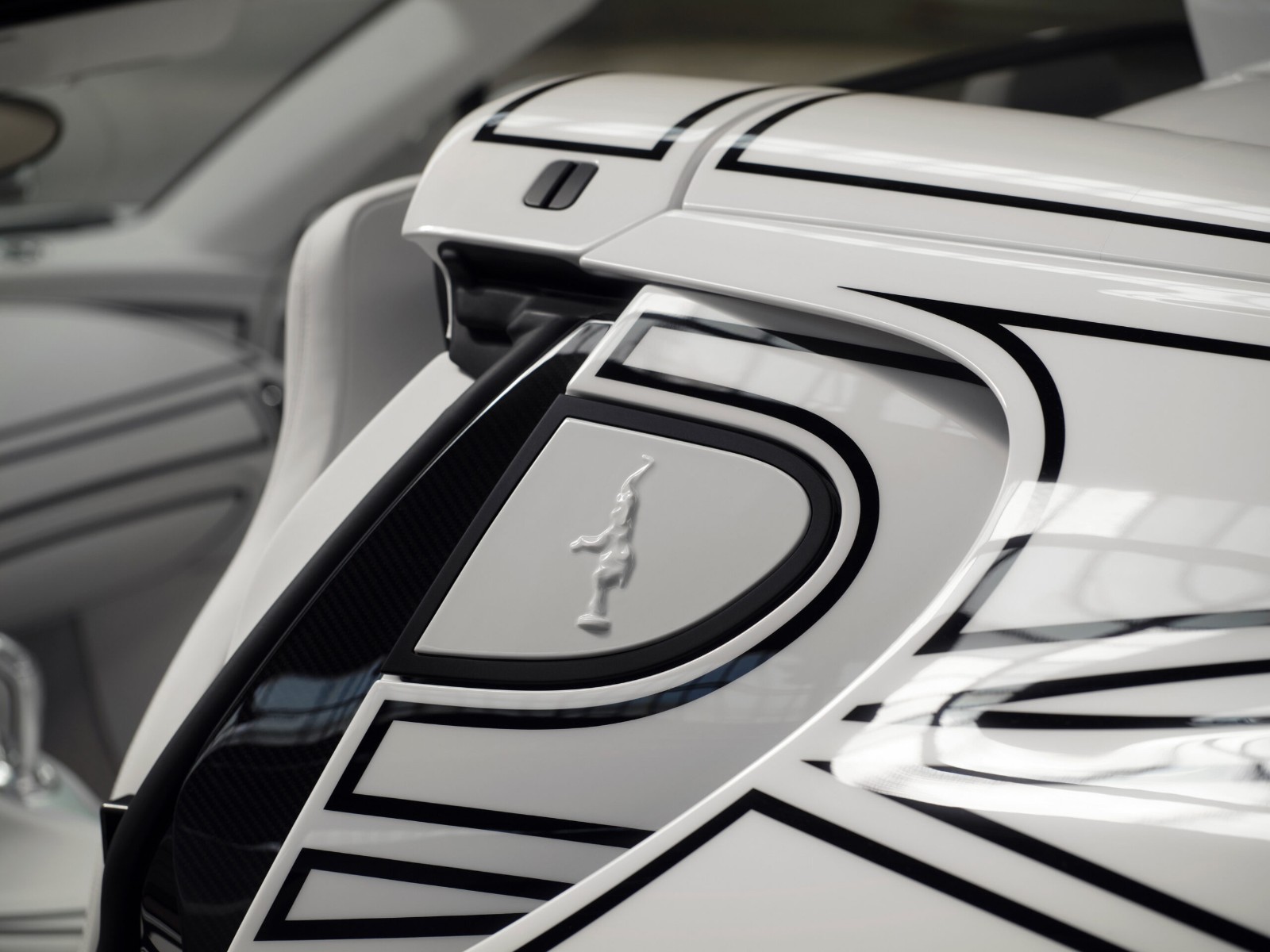
Don't worry, Bugatti hasn't attempted to mold an entire hypercar body out of ceramic. The bulk of Blanc Éternel wears a clean, minimalist white paint job. The porcelain itself shows up as functional trim pieces instead: inlays on the engine cover, the oil filler cap, the fuel filler cap, and the EB badges. Those engine cover inserts even carry KPM's royal scepter emblem baked directly into the material.
Getting porcelain to behave on a car built for triple-digit speeds took some serious engineering. Because raw porcelain shrinks by roughly 17 percent as it's fired in the kiln, Bugatti and KPM had to oversize every component beforehand, calculating exactly how much each piece would contract so the finished inlay would drop perfectly into place on the finished bodywork.
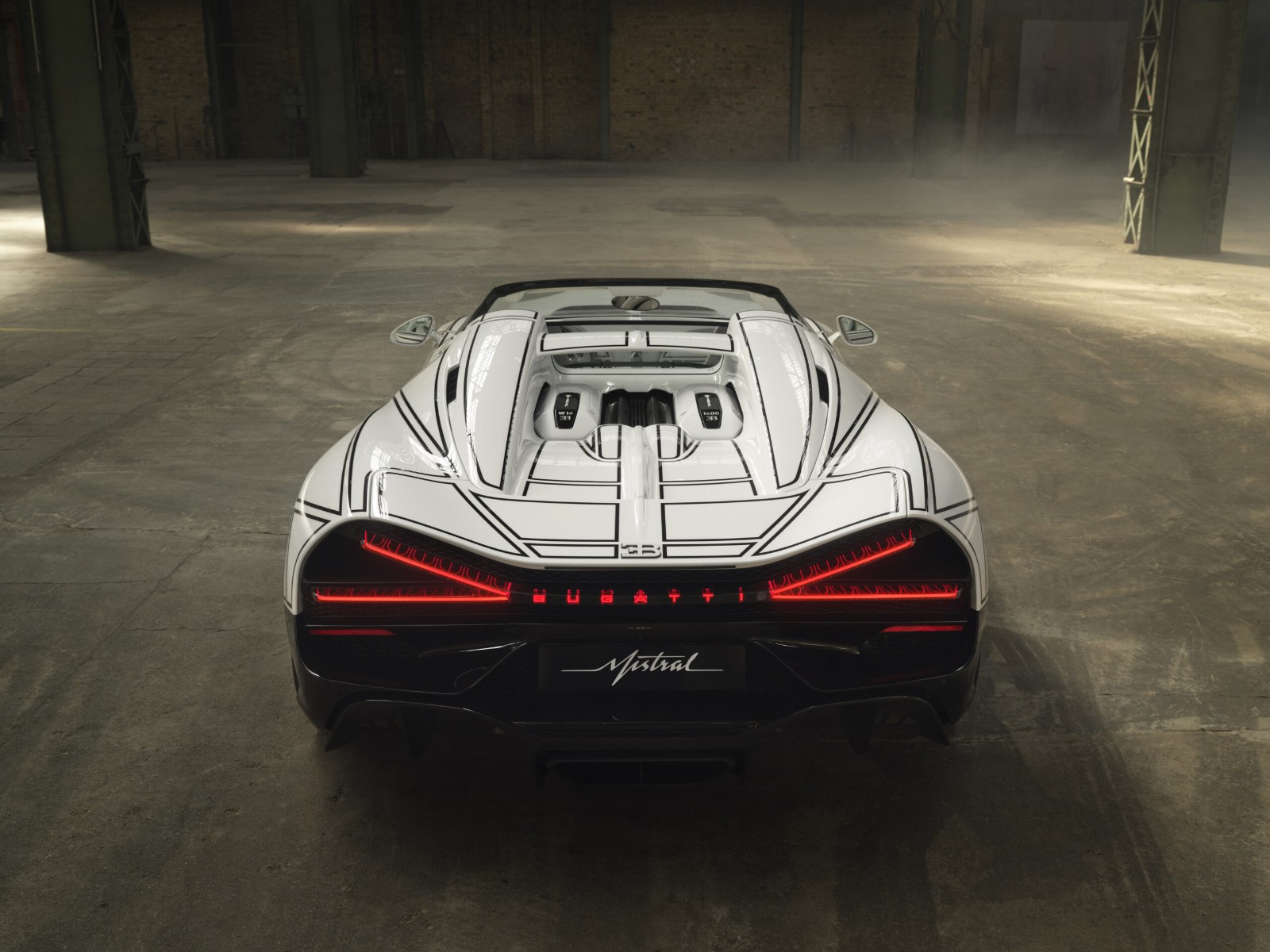
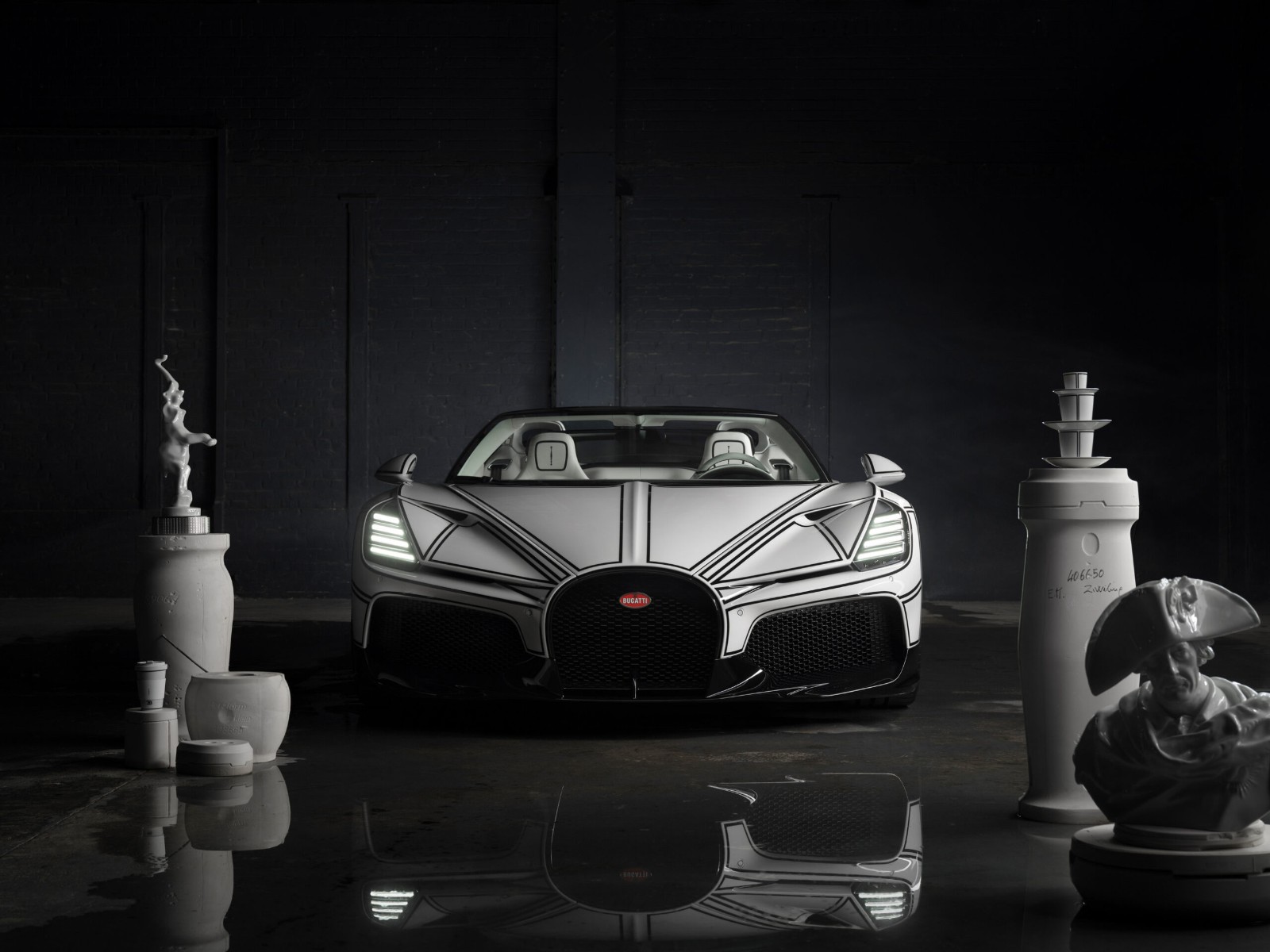
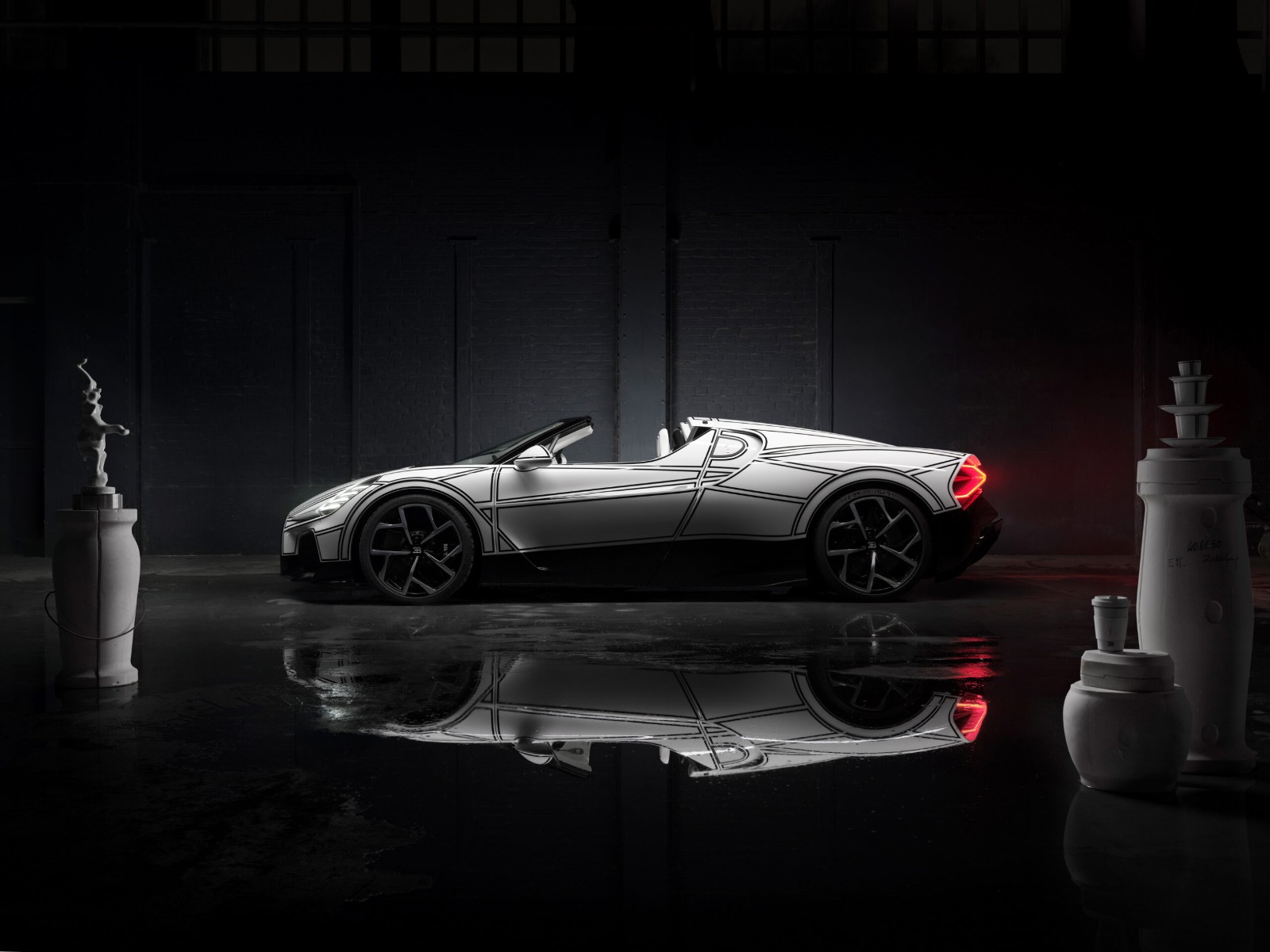
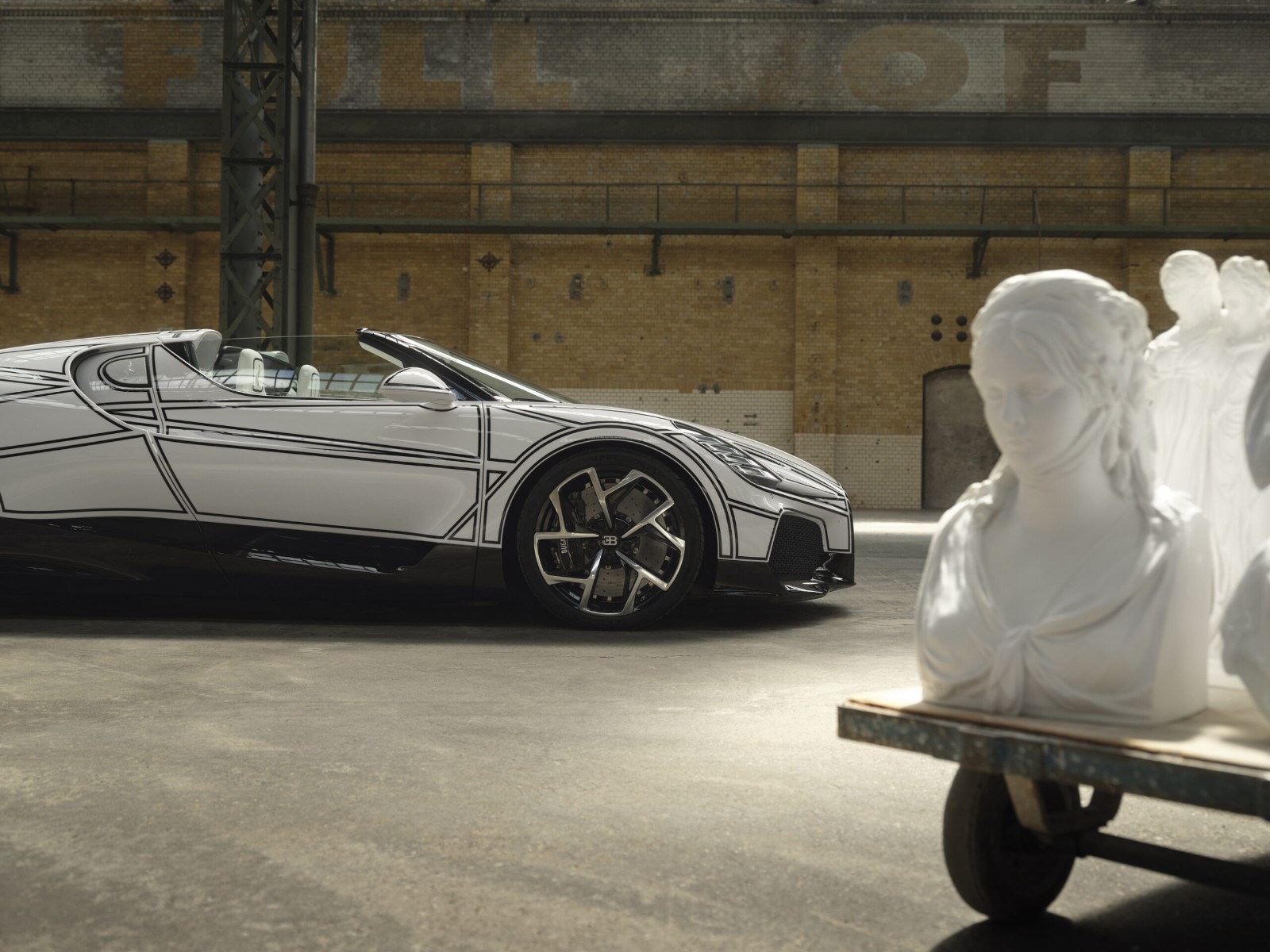
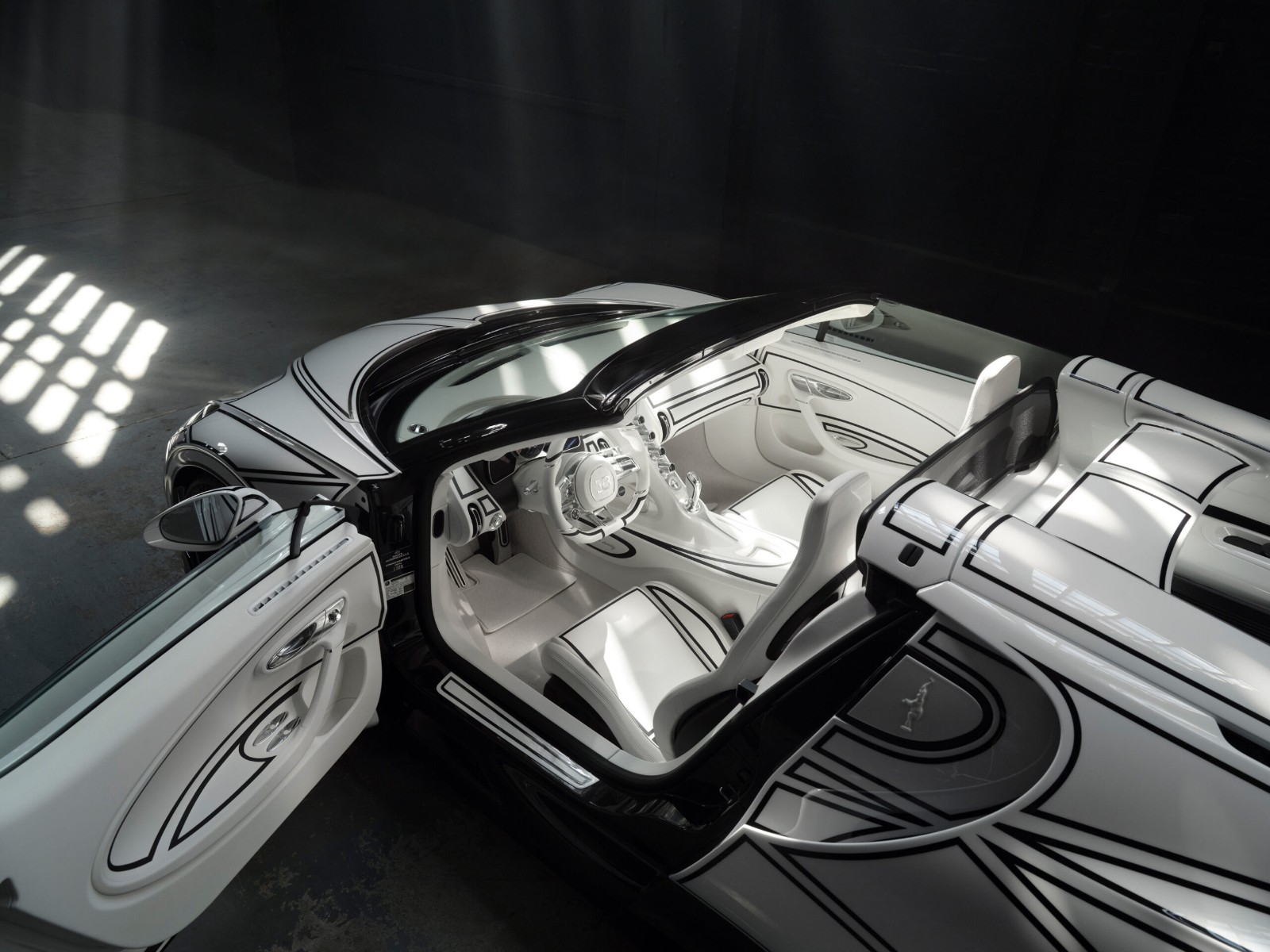
What really separates Blanc Éternel from its Veyron predecessor is the artwork layered over that white paint. Rather than echoing the L'Or Blanc's flowing blue brushwork, Bugatti's team hand-painted dozens of fine black lines across the body that map out the Mistral's NURBS surface data, the underlying digital mesh engineers use to sculpt the car's shape. It's essentially a wireframe rendering brought to life on real sheet metal, exposing geometry that's normally invisible once the panels are finished and painted.
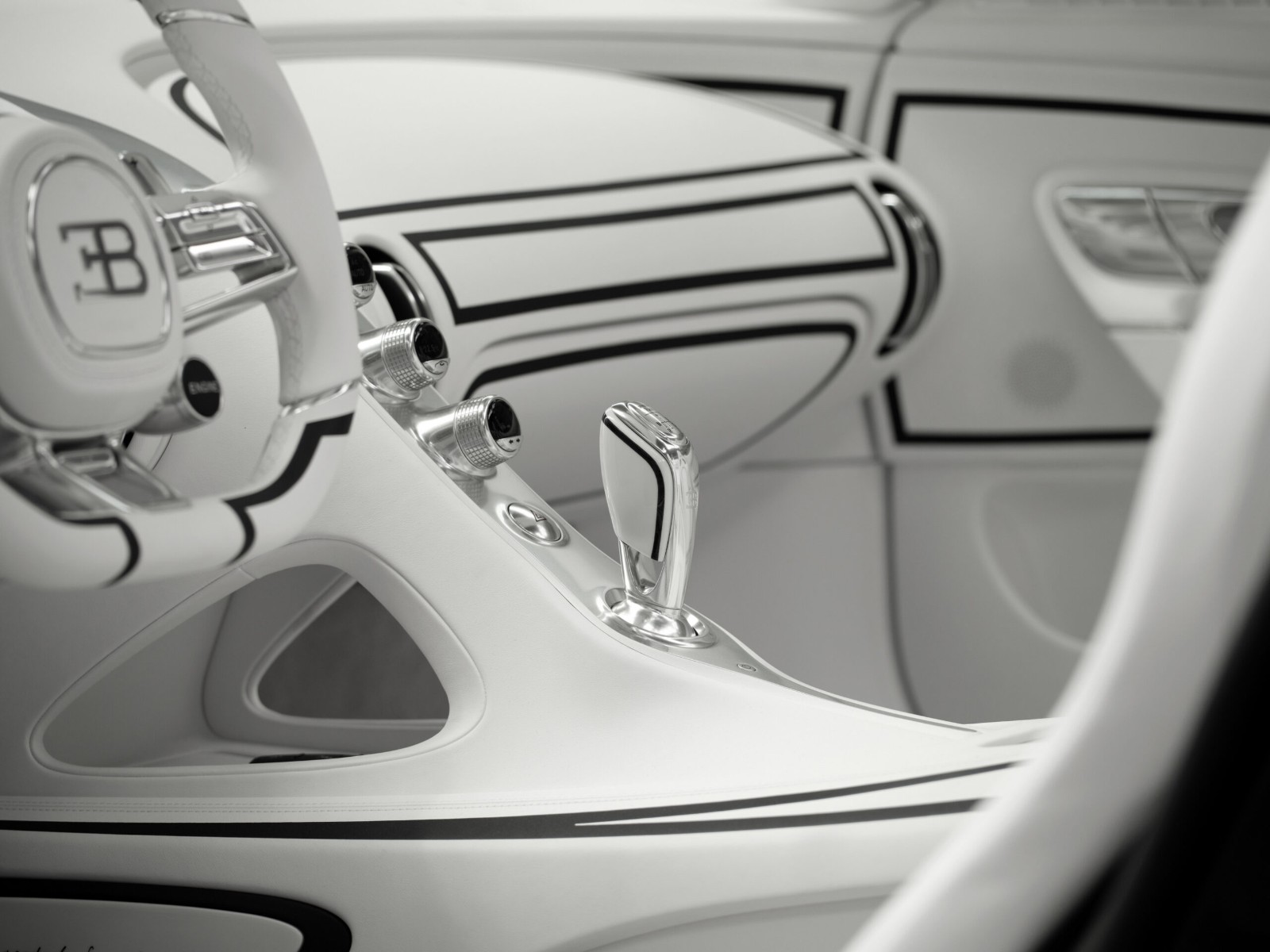
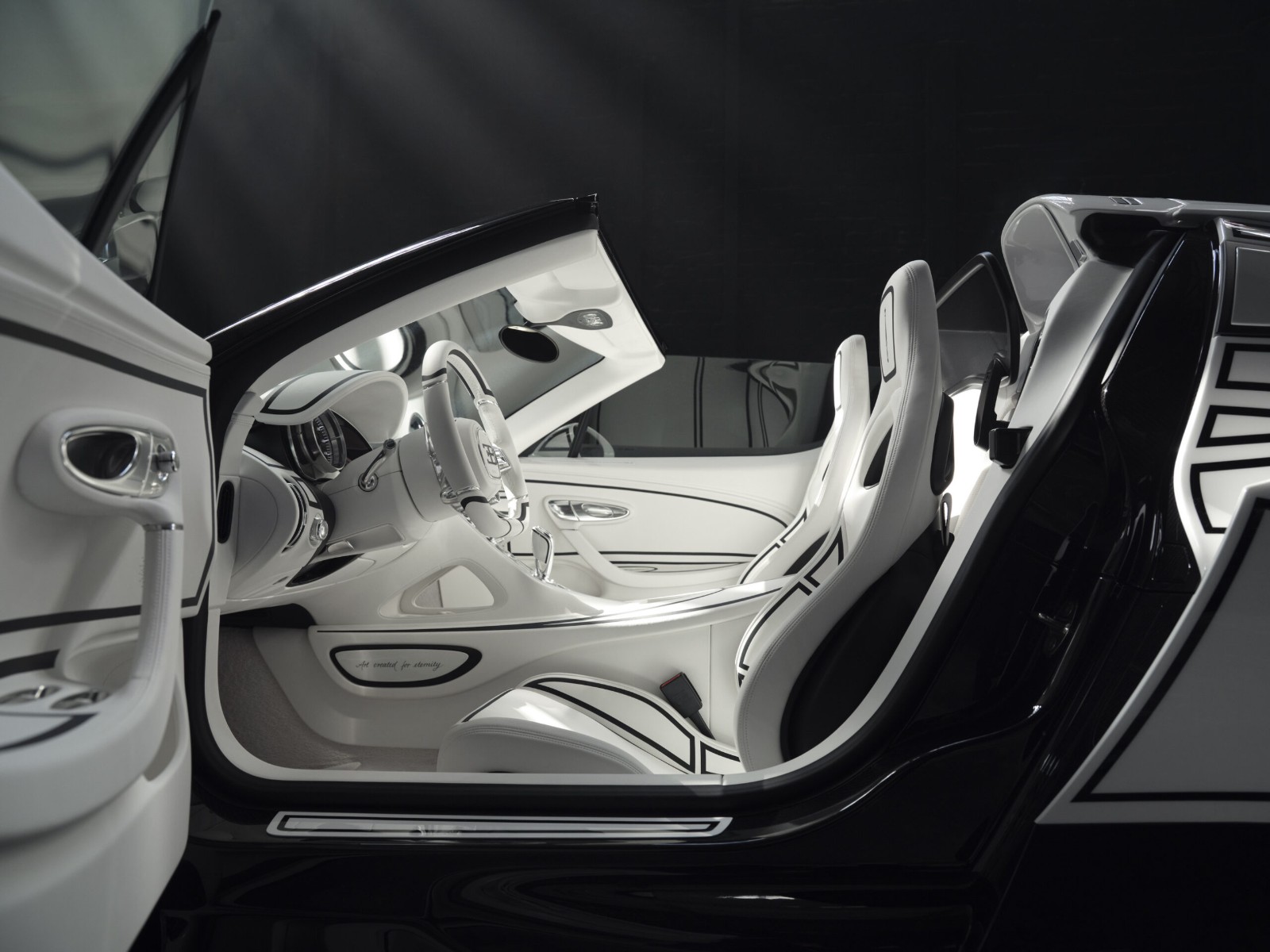
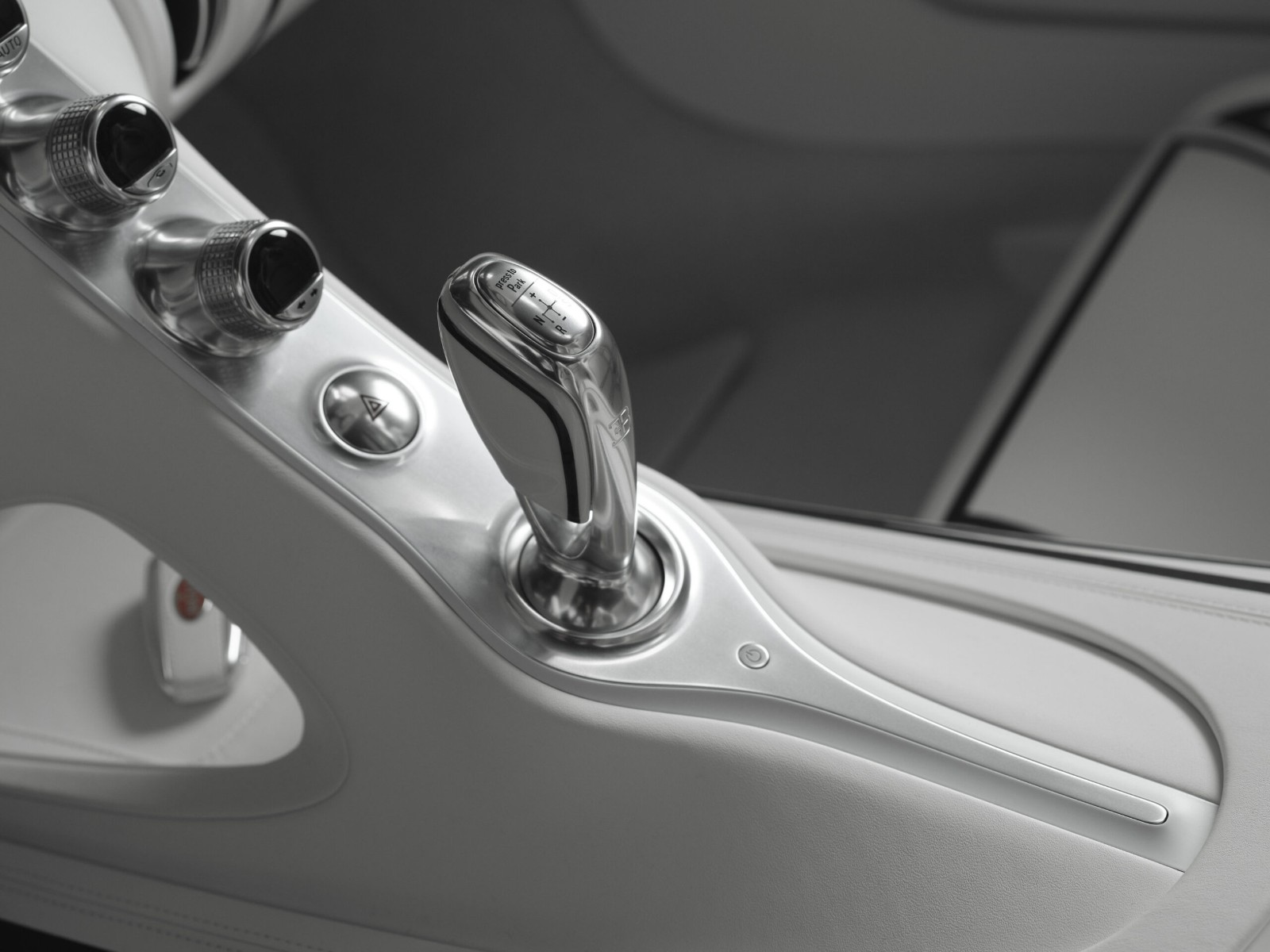
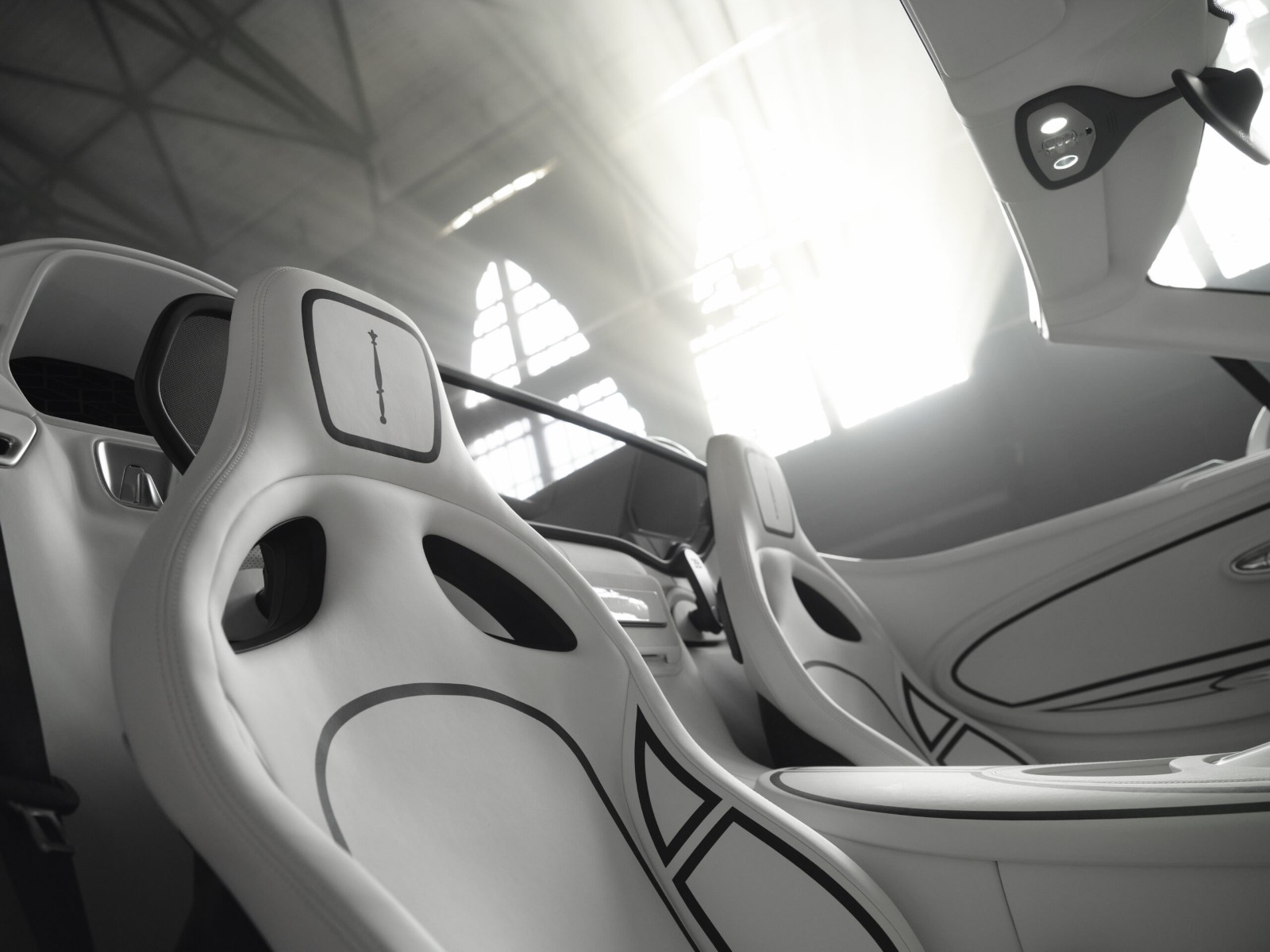
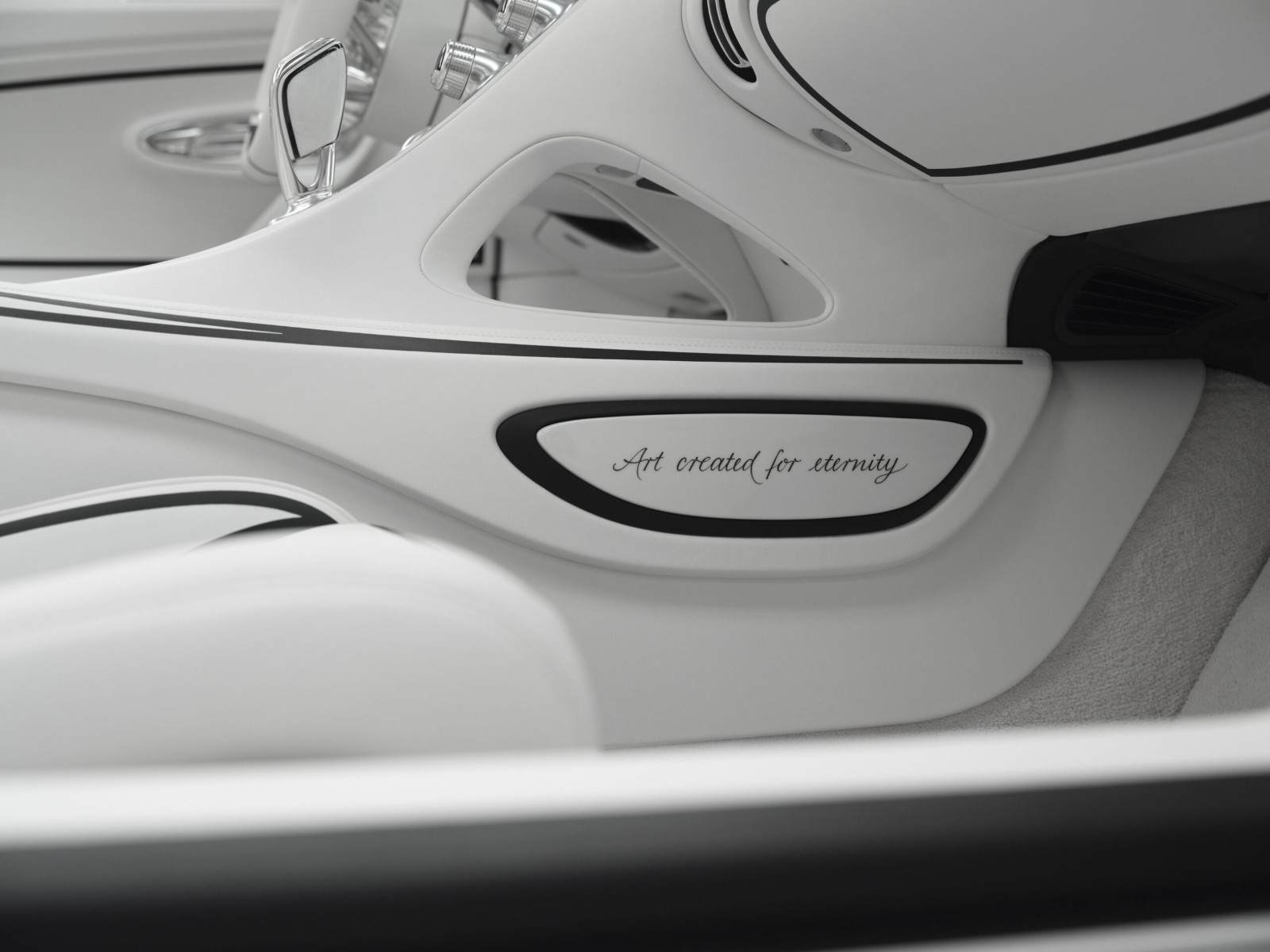
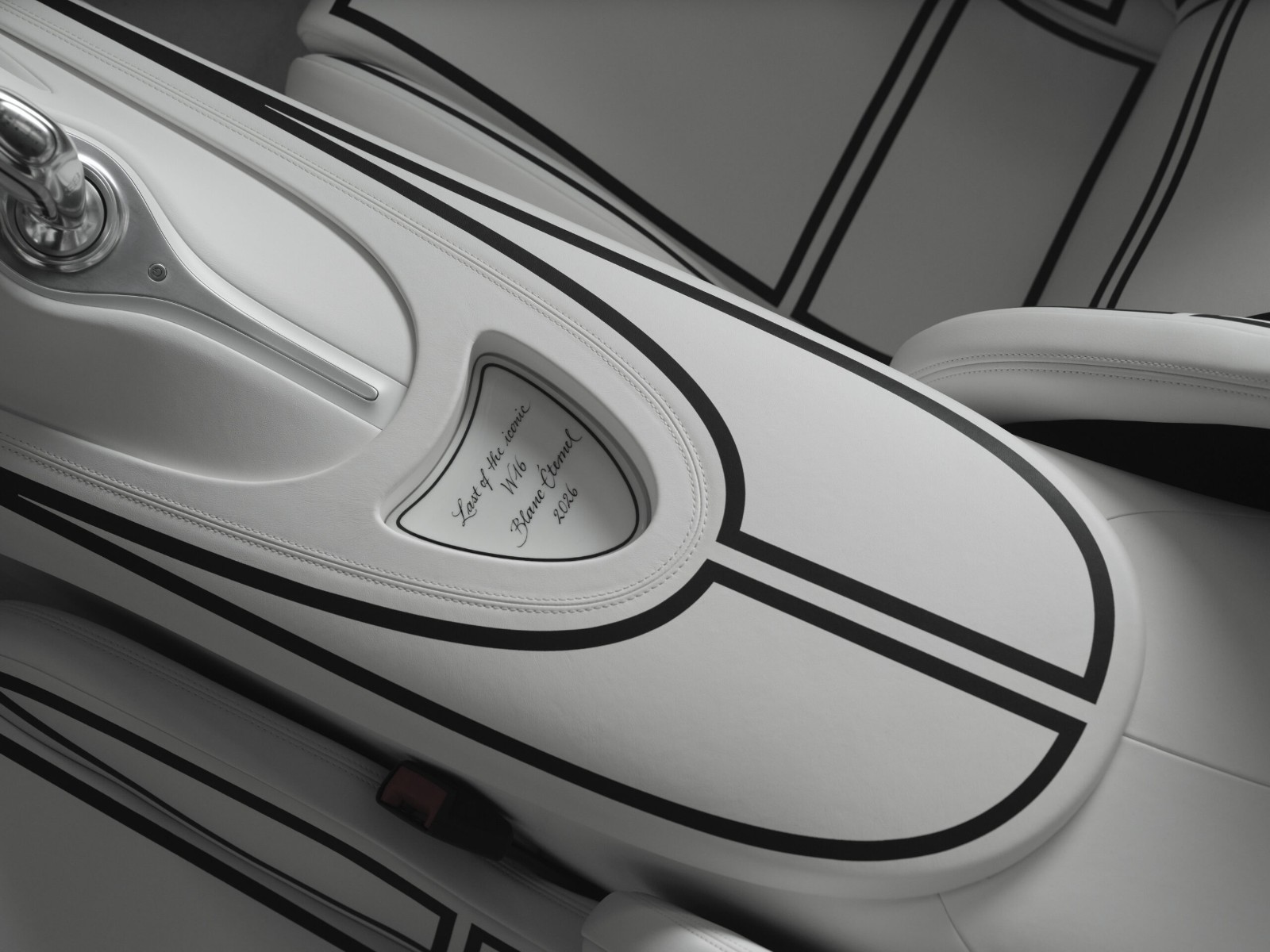
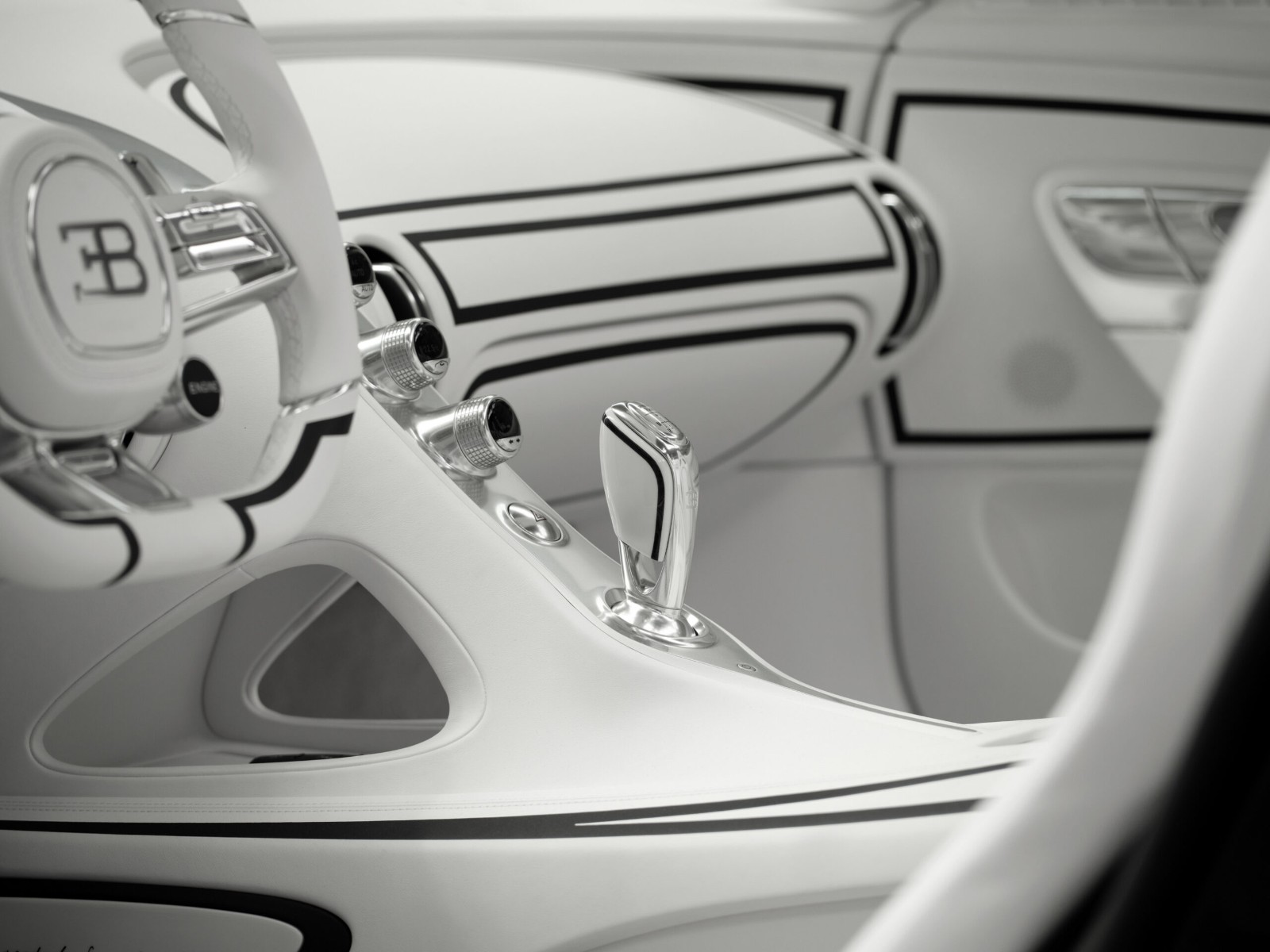
The theme doesn't stop at the exterior. Step inside and porcelain elements continue on the shift lever, speaker grille covers, center console armrest, kneepads, and window switches. The hand-drawn black linework carries through as well, now traced directly onto the white leather upholstery using a freshly developed technique where each leather panel is masked by hand before the artwork is applied.
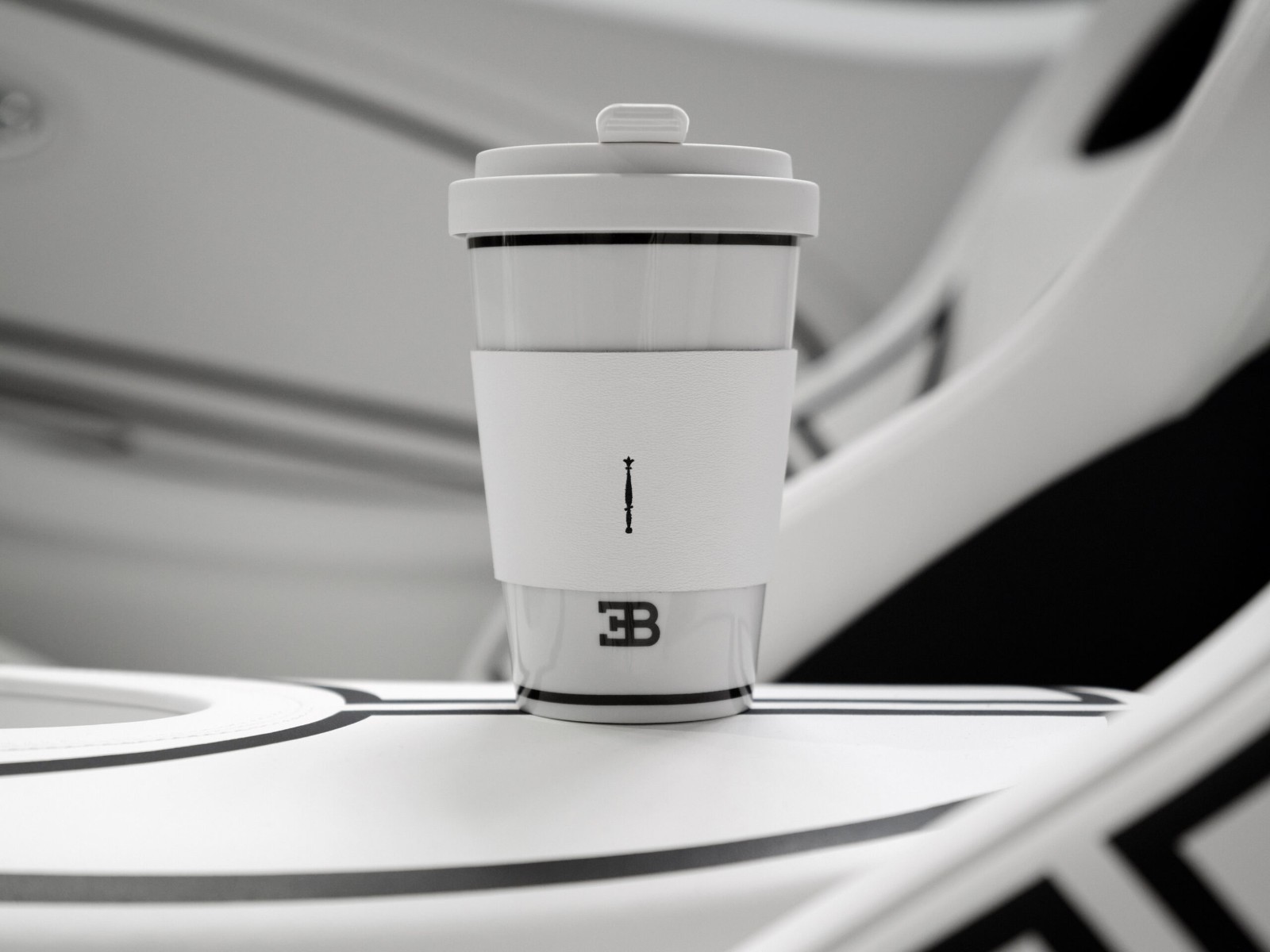
To celebrate reviving the Bugatti-KPM collaboration, the two companies also released a limited-run Blanc Éternel porcelain collection for collectors, featuring the To-Drive Cup and KPM's Aviator Cup in two different sizes. Only 1,000 hand-finished pieces will ever be made, giving fans a (slightly) more attainable slice of this partnership than the car itself.
Gallery